Algeria
 Egypt
 Libya
 Morocco
 Sudan
 Benin
 Burkina Faso
 Cabo Verde
 Côte d'Ivoire
 Ghana
 Guinea
 Guinea-Bissau
 Liberia
 Mali
 Mauritania
 Niger
 Nigeria
 Senegal
 Sierra Leone
 The Gambia
 Togo
 Cameroon
 Central African Republic
 Chad
 DR Congo
 Equatorial Guinea
 Gabon
 Republic of the Congo
 São Tomé and Príncipe
 Burundi
 Comoros
 Djibouti
 Eritrea
 Ethiopia
 Kenya
 Madagascar
 Malawi
 Mauritius
 Mozambique
 Rwanda
 Seychelles
 Somalia
 South Sudan
 Tanzania
 Uganda
 Angola
 Botswana
 Eswatini
 Lesotho
 Namibia
 South Africa
 Zambia
 Zimbabwe
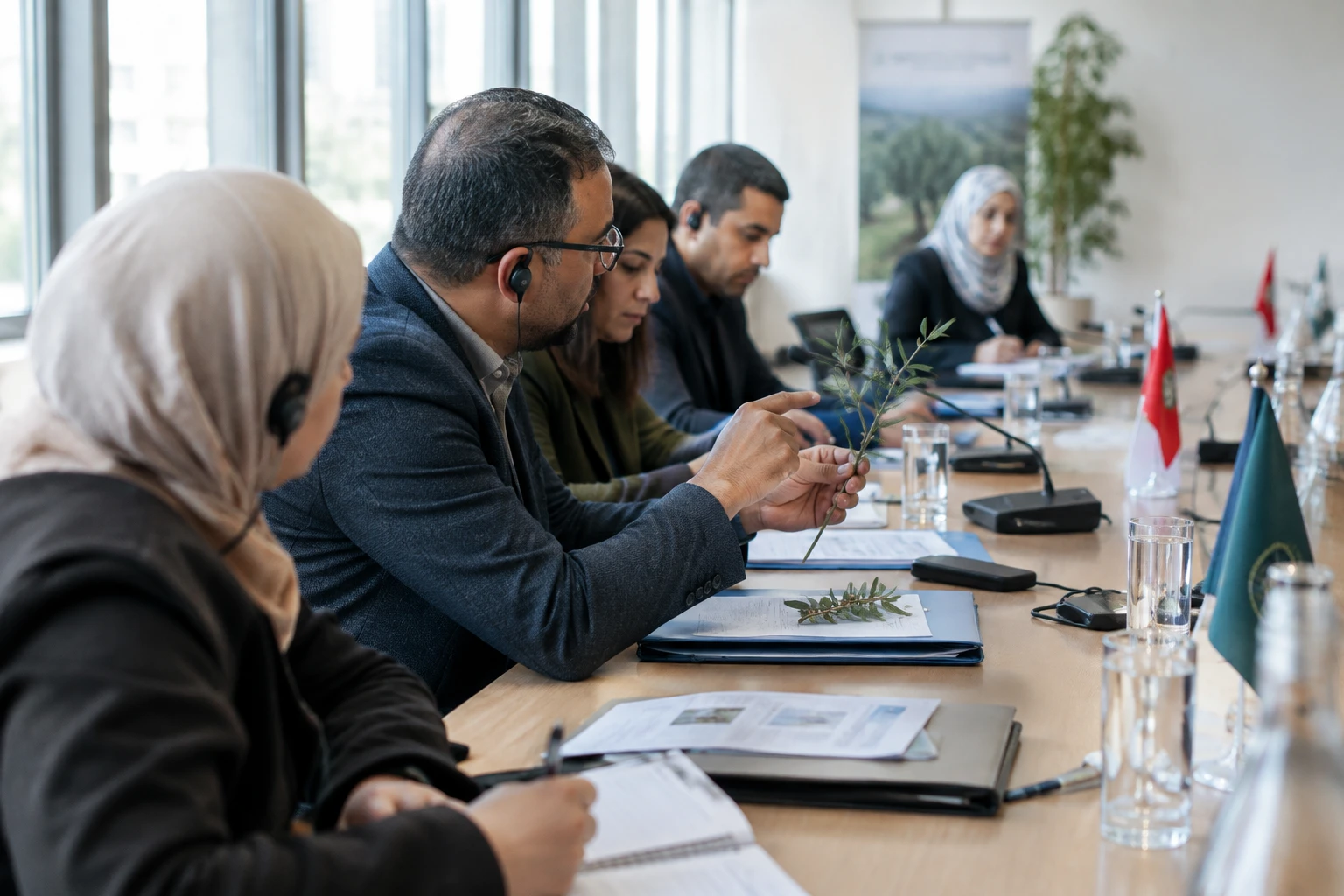
In the olive groves of Melloulech, in Mahdia governorate, the coming season is already being shaped on two fronts: the expected harvest and the health of the trees. Tunisia, whose olive oil is among its leading agricultural exports, must monitor a bacterial outbreak as forecasts point to a smaller crop.
In Mahdia, containing outbreaks before the harvest
Tunisia’s Ministry of Agriculture announced emergency interventions on 15 October after outbreaks of olive knot were detected in production areas in the delegation of Melloulech. Technical teams have been mobilised to monitor the situation and limit any potential spread. Tunisian media have also reported the ministry’s announcement.
The disease is caused by Pseudomonas savastanoi, a bacterium that produces galls on branches and trunks. It can weaken the tree and reduce its output. Wounds caused by pruning or harvesting can facilitate infection; tools and contaminated residues are therefore areas of concern.
The announced plan provides for containing affected areas, pruning heavily infected parts and safely destroying the residues. Preventive treatments are also being considered. So far, no figures have been made public for the area contaminated or any harvest losses attributable to the disease. It is therefore too early to assess its effect on national production.
A harvest already expected to be smaller
The phytosanitary risk comes on top of a less favourable agricultural cycle. The National Chamber of Olive Producers forecasts about 300,000 tonnes of oil for the 2026-27 season, compared with around 500,000 tonnes in the previous season. This estimate, reported by Tunisian media outlet Mosaïque FM, represents a potential decline of 40%.
The chamber’s president, Najah Saïdi Hamed, attributes the forecast to the biennial cycle: after a plentiful harvest, olive trees often yield less the following year. Water availability and weather conditions also affect yields. On the basis of the information available, the bacterium detected in Mahdia cannot be presented as the cause of the expected decline.
Field measures will be decisive. Rapid monitoring can help contain outbreaks, but it requires regular inspections and appropriate practices on farms. Producers in the identified areas are directly exposed to the risk; the effects on other regions will depend on whether the disease spreads.
An issue of income and markets
The economic stakes are tangible. According to figures from Tunisia’s National Institute of Statistics, olive oil exports generated about 4.07 billion dinars in 2025. Agricultural and food exports reached 7.75 billion dinars in the same year. These revenues depend on exportable volumes, stocks and global prices.
A smaller harvest does not therefore automatically mean an equivalent fall in revenue. Higher prices or available stocks could offset part of the decline in volumes. Conversely, small producers and processing units could be affected if local supply contracts or if the disease requires additional operations. Current data do not make it possible to quantify these effects.
For Tunisian consumers, the harvest and export prices also matter: a greater share of sales abroad could tighten domestic supply, but the outcome will depend on commercial decisions and the quantities available. It will therefore be important to distinguish the condition of the olive groves, the volume actually produced and marketing conditions.
Monitoring that extends beyond borders
Tunisia is a member of the Arab Maghreb Union (AMU), a regional framework that also brings together Algeria, Libya, Morocco and Mauritania. Olive production is important in several countries around the Mediterranean; experience in tackling olive diseases and monitoring practices could therefore inform regional technical exchanges.
At African Union level, this episode is a reminder of the importance of protecting commercial crops against climate and phytosanitary hazards. For the 2026-27 season, the next indicators to watch are the extent of the outbreaks in Mahdia, the results of inspections in other producing governorates and the first harvest estimates. Their combined trajectory will show whether the disease remains localised or becomes an additional pressure on the sector.
Details of the outbreaks and announced measures were reported by Webdo, a Tunisian media outlet, and Tunisie Numérique. Production forecasts were reported by Mosaïque FM and Webdo. Export figures are attributed to Tunisia’s National Institute of Statistics. General information on the disease and the region draws on France Olive and the official website of the Arab Maghreb Union.