Algeria
 Egypt
 Libya
 Morocco
 Sudan
 Benin
 Burkina Faso
 Cabo Verde
 Côte d'Ivoire
 Ghana
 Guinea
 Guinea-Bissau
 Liberia
 Mali
 Mauritania
 Niger
 Nigeria
 Senegal
 Sierra Leone
 The Gambia
 Togo
 Cameroon
 Central African Republic
 Chad
 DR Congo
 Equatorial Guinea
 Gabon
 Republic of the Congo
 São Tomé and Príncipe
 Burundi
 Comoros
 Djibouti
 Eritrea
 Ethiopia
 Kenya
 Madagascar
 Malawi
 Mauritius
 Mozambique
 Rwanda
 Seychelles
 Somalia
 South Sudan
 Tanzania
 Uganda
 Angola
 Botswana
 Eswatini
 Lesotho
 Namibia
 South Africa
 Zambia
 Zimbabwe
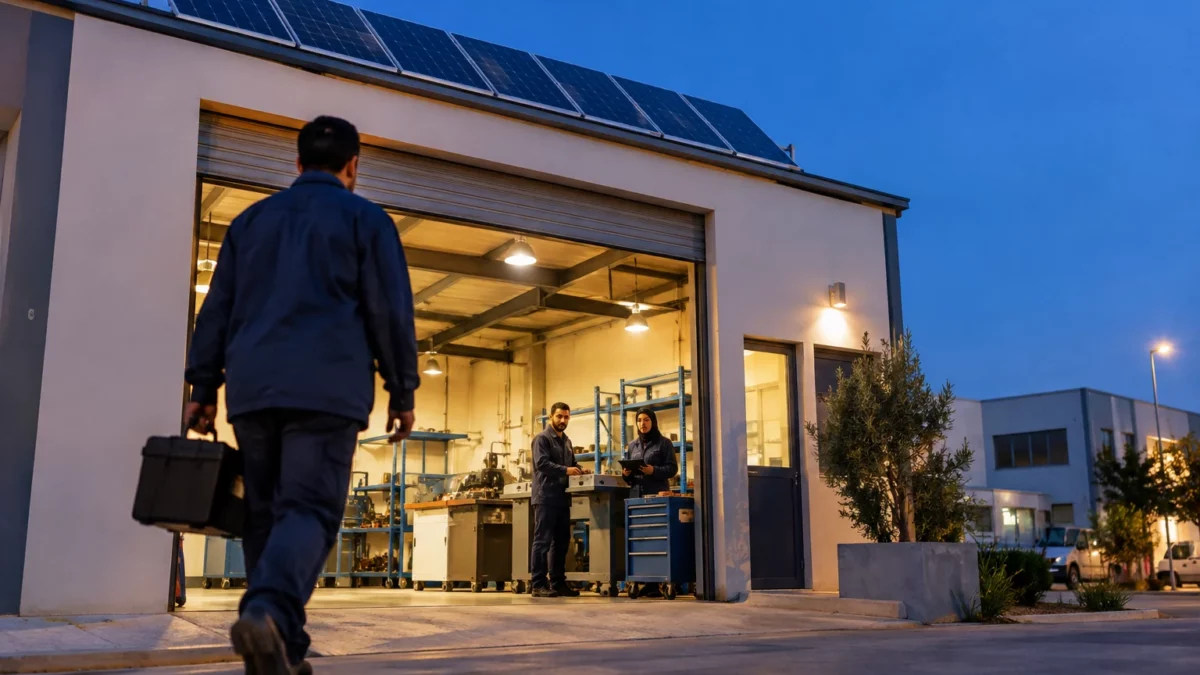
For a small Tunisian business, replacing energy-intensive equipment or reducing water use can improve margins as well as limit its environmental footprint. But such investments require accessible financing, an obstacle the new green facility launched in Tunisia aims to address.
Funding channelled through Tunisian banks
The European Bank for Reconstruction and Development (EBRD) and the European Union have officially launched the Green Economy Financing Facility, or GEFF, in Tunisia. It has a budget of €60 million. Local banks distribute loans to businesses, while the EU provides incentive grants and technical support.
The facility targets investment in renewable energy, energy efficiency, water savings, green buildings and the circular economy. Businesses can receive a grant after their project has been completed and verified. The programme also aims to strengthen partner banks’ expertise in green finance.
Two €10 million loans were granted in December 2025 to Union bancaire pour le commerce et l’industrie (UBCI) and Amen Bank to finance private businesses, particularly micro, small and medium-sized enterprises. The EBRD says that by the end of September 2026, its portfolio and projects in preparation exceeded €20 million and covered 56 projects. It has also held training sessions in Tunis, Sfax, Sousse and Grombalia. These details are reported by the EBRD and, for the launch and facility size, corroborated by Tunisian media outlet Mosaïque FM.
Credit, a decisive step for small businesses
The model relies on banks: the EBRD provides them with funding, and they then assess and grant loans to businesses. This arrangement can bring financing closer to economic actors. It does not, however, guarantee by itself that smaller businesses will be able to borrow. Their access will depend in particular on banks’ criteria, their ability to present a viable project and the terms of the loan.
An EU-funded guarantee of up to €9 million will also cover part of second-loss exposure. It is intended to enable TCX, a provider of foreign-exchange risk hedging instruments, to offer solutions to Tunisian banks on preferential terms. The aim is to facilitate loans in dinars and reduce the currency exposure associated with foreign-currency financing.
The challenge varies according to the size and location of businesses. A well-structured company close to banking centres may have more resources to prepare a technical application. A small business or one far from major hubs will also need access to information and support. Training sessions held outside the capital are an initial step towards wider regional coverage, but they do not yet show how many businesses in each region will actually secure financing.
Energy and water, two constraints on competitiveness
In Tunisia, cutting consumption addresses an immediate economic concern: energy costs weigh on businesses, while water scarcity puts several activities at risk. The programme’s value therefore lies in linking sometimes costly works to operating savings. It remains to be verified, project by project, whether the expected gains translate into a lasting reduction in costs.
The EBRD estimates that projects in the current portfolio could save 24,153 gigajoules of primary energy each year and avoid 1,661 tonnes of CO₂-equivalent emissions. These are expected results, not savings already recorded across the programme as a whole. Monitoring them will make it possible to measure the investments’ real effects.
The national framework gives the initiative a wider significance. Tunisia’s nationally determined contribution, or climate plan submitted under the Paris Agreement, sets a target for reducing the carbon intensity of the economy by 2030. The official document filed with the United Nations climate convention sets a target of 46.4% compared with 2010. Funding needs for 2026-2035 are estimated at about $55 billion by the Tunisian authorities, an amount on a completely different scale from the GEFF budget. Tunisia’s NDC 3.0 sets out these priorities.
A programme to monitor beyond Tunis
Tunisia is a member of the Arab Maghreb Union (AMU), a regional co-operation framework in North Africa. For Tunisian businesses, efficiency gains can matter to their competitiveness at home as well as in regional trade. But the GEFF remains a financing facility operating in the country: it is not, by itself, a common industrial or energy policy for the Maghreb.
The central question now is whether the funding can be converted into accessible and verifiable investment. The number of projects financed, their geographical distribution, the share of small businesses among beneficiaries and the savings actually measured will make it possible to assess the facility. Its launch opens a financing channel; its impact will depend on access to credit and on results monitored over time.