Algeria
 Egypt
 Libya
 Morocco
 Sudan
 Benin
 Burkina Faso
 Cabo Verde
 Côte d'Ivoire
 Ghana
 Guinea
 Guinea-Bissau
 Liberia
 Mali
 Mauritania
 Niger
 Nigeria
 Senegal
 Sierra Leone
 The Gambia
 Togo
 Cameroon
 Central African Republic
 Chad
 DR Congo
 Equatorial Guinea
 Gabon
 Republic of the Congo
 São Tomé and Príncipe
 Burundi
 Comoros
 Djibouti
 Eritrea
 Ethiopia
 Kenya
 Madagascar
 Malawi
 Mauritius
 Mozambique
 Rwanda
 Seychelles
 Somalia
 South Sudan
 Tanzania
 Uganda
 Angola
 Botswana
 Eswatini
 Lesotho
 Namibia
 South Africa
 Zambia
 Zimbabwe
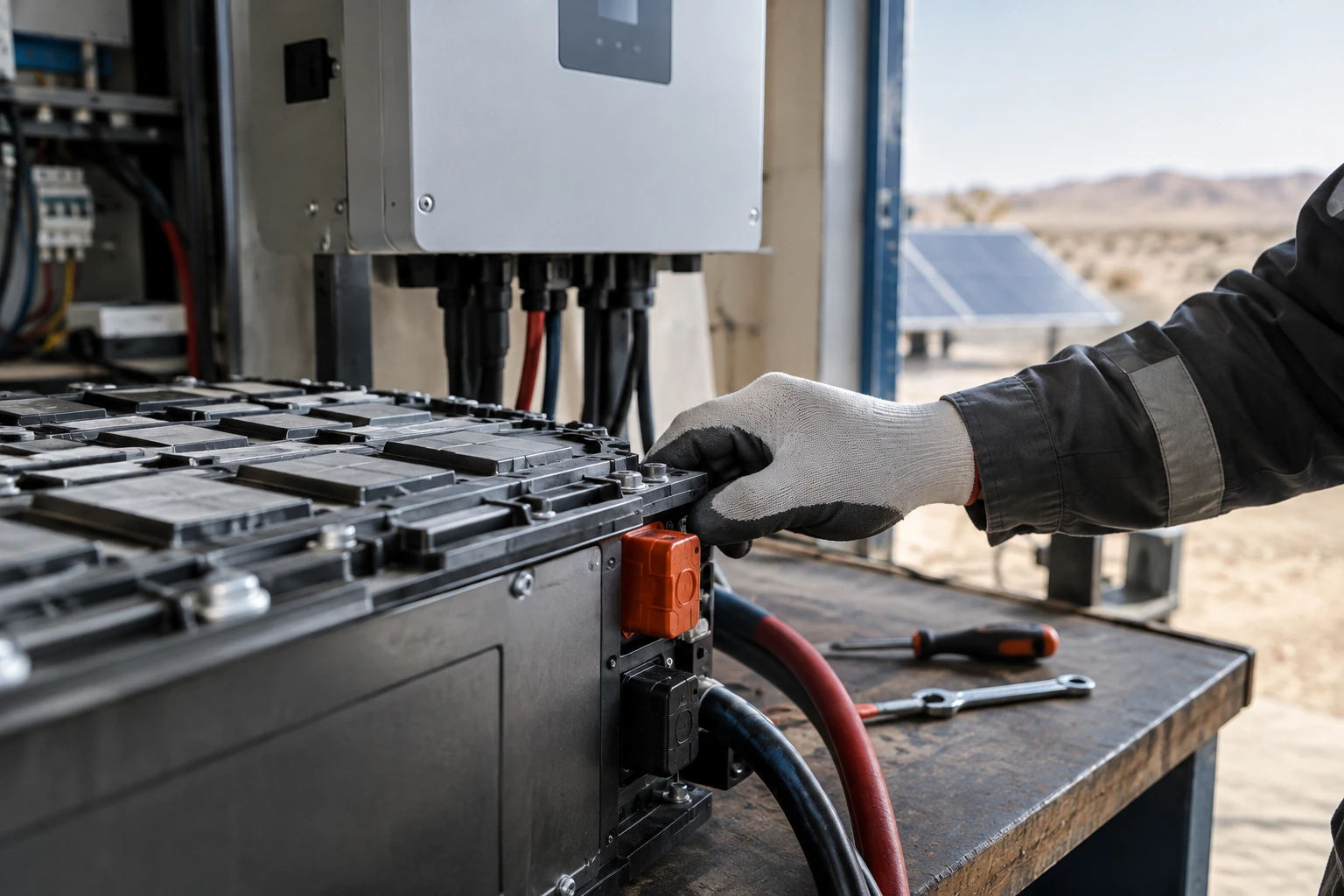
In Tataouine, the challenge is not simply to generate electricity when the sun is shining. It must also be possible to supply it to the grid when output falls and demand rises. According to the authorities, the Béni Mhira project will be the first in Tunisia to pair a solar power plant with batteries connected to the national grid.
A solar project designed with the grid in mind
Located in Tataouine governorate in the south of the country, the planned plant is expected to generate 50 megawatts (MW). Its storage system will have a power capacity of 10 MW and be able to store up to 20 megawatt-hours (MWh). In other words, the batteries will be able to store some of the solar electricity and then release it when the panels generate less.
The project is being led by the Tunisian Electricity and Gas Company (STEG), the state-owned utility. The scheme is also expected to include the equipment needed to connect it to the grid. Tunisia’s news agency TAP reports that a high-voltage line of about 1.2 kilometres is planned. STEG, for its part, had issued a tender describing a 50 MW plant and 20 MWh of storage.
The financing and guarantee agreements were signed in Tunis on Wednesday 11 November 2026. They involve the European Bank for Reconstruction and Development (EBRD), the Clean Technology Fund (CTF), the Tunisian state and STEG. The announced package includes a €30 million loan from the EBRD and a €20 million contribution from the CTF. A €4 million grant for technical assistance is also planned, according to information provided on the financing structure.
The signing brought together the Minister of Economy and Planning, Samir Abdelhafidh, the head of the EBRD’s office in Tunisia, George Akhalkatsi, and STEG chief executive Fayçal Trifa. Work is expected to begin in the first quarter of 2027, with commissioning targeted for summer 2028. This timetable remains provisional: construction will depend in particular on procurement procedures and progress on the site.
Storing electricity, a step towards diversifying supply
Storage addresses a well-known limitation of solar energy: output varies throughout the day. Batteries do not generate additional electricity. They make it possible to shift some of the energy produced during the day to periods when sunlight declines or demand is higher. Their effectiveness will therefore also depend on how they are managed and on the grid’s capacity to absorb this output.
For residents and businesses, the impact is indirect but tangible. Better integration of generation into the grid can help secure supply and reduce reliance on thermal power plants during certain periods. It does not, by itself, guarantee lower bills or an end to power cuts: these outcomes will depend on the electricity system as a whole, its infrastructure and its financial balance.
Tunisia remains heavily dependent on natural gas for electricity generation. The World Bank also notes that exposure to imported fuels leaves the country vulnerable to fluctuations in international prices. Diversifying energy sources can therefore reduce this exposure, although solar equipment and batteries require investment, technical expertise and grid planning.
Béni Mhira is part of Tunisia’s national energy transition goals. The country aims for renewables to account for 35% of its electricity system by 2030 and 50% by 2035. Meeting these targets will require the development of generation capacity, as well as power lines and flexibility solutions. STEG is also planning other, larger-scale storage projects, a sign that the issue extends beyond the Tataouine site alone.
A national and regional issue
Tataouine’s selection gives the project a territorial dimension. The plant will be built far from Tunis, in a region with significant solar potential. But the installation of equipment in the south does not, by itself, show what share of the economic benefits will remain in the region. Construction jobs, maintenance, locally deployed expertise and the arrangements for grid connection will also matter to residents when assessing the project.
At regional level, Tunisia is a member of the Arab Maghreb Union (AMU), whose five members are Tunisia, Algeria, Libya, Morocco and Mauritania. The organisation provides a forum for dialogue, but Béni Mhira is primarily a project for Tunisia’s grid. Its regional significance lies chiefly in a question shared by the Maghreb countries: how can more solar and wind power be integrated without jeopardising continuity of supply?
The project should therefore be judged against verifiable milestones: work actually beginning in 2027, delivery of the announced specifications, grid connection and commissioning expected in 2028. The plant alone will not transform Tunisia’s electricity mix. It will, however, test a combination likely to play a growing role: generating locally, storing some of the energy and adapting the grid to variable renewable supply.
Background and cross-checking sources: Tunis Afrique Presse on the agreements and the Béni Mhira project, La Presse de Tunisie on the financing and storage, STEG tender notice and Tunisia’s energy targets as presented by the World Bank.