Algeria
 Egypt
 Libya
 Morocco
 Sudan
 Benin
 Burkina Faso
 Cabo Verde
 Côte d'Ivoire
 Ghana
 Guinea
 Guinea-Bissau
 Liberia
 Mali
 Mauritania
 Niger
 Nigeria
 Senegal
 Sierra Leone
 The Gambia
 Togo
 Cameroon
 Central African Republic
 Chad
 DR Congo
 Equatorial Guinea
 Gabon
 Republic of the Congo
 São Tomé and Príncipe
 Burundi
 Comoros
 Djibouti
 Eritrea
 Ethiopia
 Kenya
 Madagascar
 Malawi
 Mauritius
 Mozambique
 Rwanda
 Seychelles
 Somalia
 South Sudan
 Tanzania
 Uganda
 Angola
 Botswana
 Eswatini
 Lesotho
 Namibia
 South Africa
 Zambia
 Zimbabwe
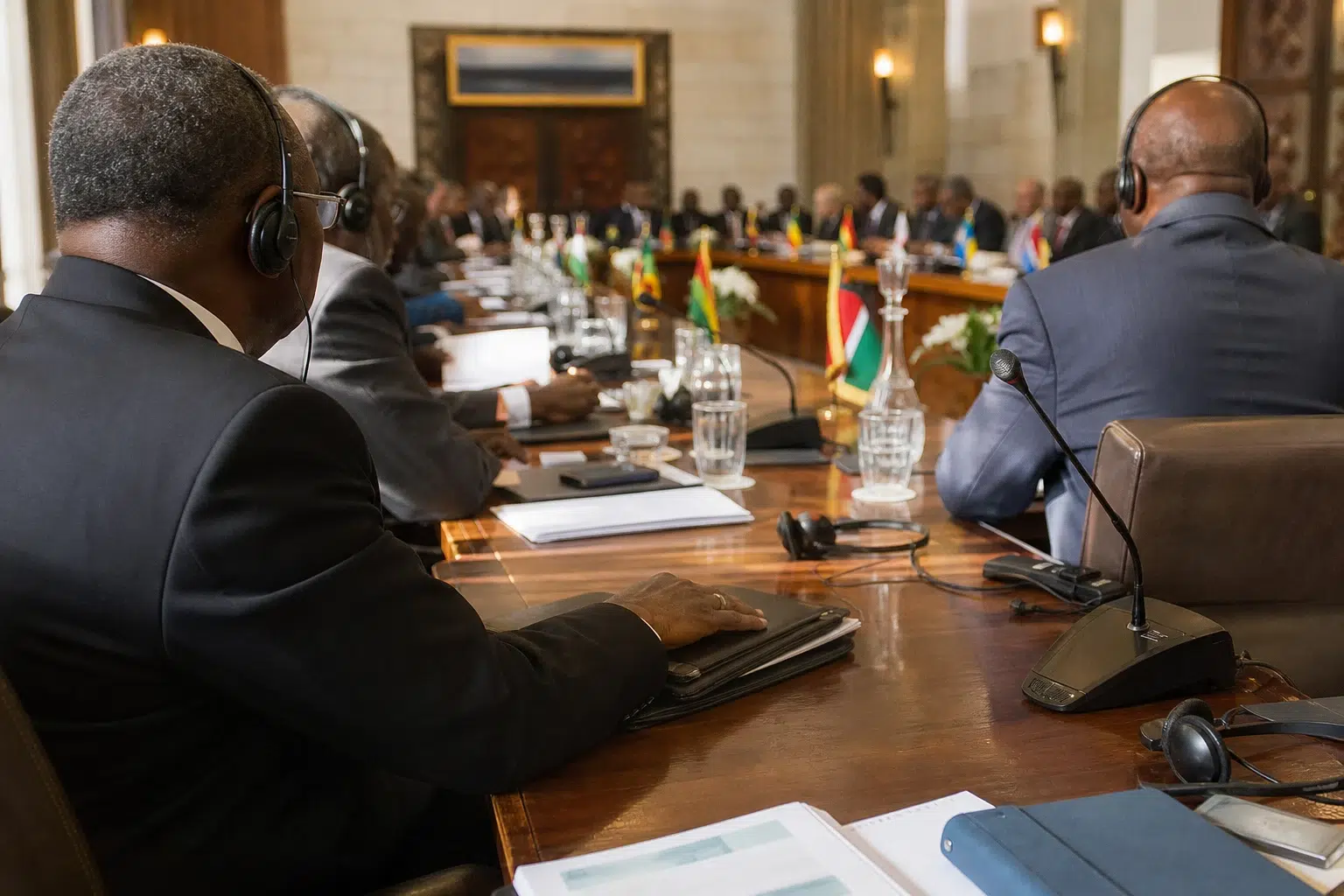
In Tunis, solidarity with Gaza is now facing the courts
In the Tunisian capital, a mobilisation for Gaza has taken an even more sensitive turn: the defence of activists facing prosecution in Tunisia itself. On Saturday, hundreds of people marched in Tunis to demand the release of four figures linked to the Soumoud flotilla, as their health raised concern among relatives and several human rights organisations.
The case goes beyond the legal proceedings alone. In Tunisia, the Palestinian cause remains a powerful political touchstone, championed by the public, civil society networks and groups of lawyers, in a country where civic mobilisation remains possible but is often closely watched by the authorities. The case also highlights how transnational solidarity with Gaza in the Maghreb depends on very concrete local balances: oversight of funds, freedom to organise and the space afforded to independent initiatives.
A financial investigation at the heart of a pro-Palestinian movement
The four activists in question have been detained since March in a case involving suspected fraudulent use of funds collected for the Global Sumud Flotilla, an initiative involving civilian vessels intended to deliver aid to Gaza. According to several Tunisian media outlets and the AP, the economic and financial judicial division opened the investigation after reports of “suspicious financial flows” around the flotilla’s Tunisian co-ordination.
Among the names most frequently cited are Wael Naouar, Ghassen Henchiri, Nabil Chennoufi and Ghassen Bouazi. The same sources say that some release orders have already been issued in the case, while other defendants remain in pre-trial detention. This legal development shows that the case is not settled: it combines financial allegations, ongoing proceedings and a dispute over how to interpret the very nature of the collections intended for the flotilla.
For the detainees’ relatives and several civil society figures, this legal interpretation is not enough. The Tunisian Human Rights League says the activists are “prisoners of conscience”; Bassem Trifi has said that at least one of them has been on a prolonged hunger strike and is in concerning health. Other groups denounce an attempt to criminalise independent solidarity with the Palestinians.
The flotilla, between humanitarian gesture and sovereignty dispute
The Soumoud flotilla did not emerge in a political vacuum. In the summer and autumn of 2025, several vessels linked to the initiative docked at Sidi Bou Saïd, near Tunis, before the project was disrupted by a suspicious fire and then by incidents that organisers attributed to drones. The Tunisian authorities, for their part, disputed some accounts and opened parallel investigations.
This sequence gave Tunisia rare visibility on the Mediterranean map of mobilisations for Gaza. The country became a symbolic transit point for an international campaign with humanitarian aims, bringing together volunteers from many countries and several activist platforms. But this high-profile role also had a downside: increased surveillance, disputes over funding and tensions between civic engagement and administrative control.
The debate points to a broader question for Tunisia. From Tunis, the issue is not only the war in Gaza. It also concerns freedom of association, the ability of groups to raise funds and trust in the funding channels used by civil society. In a strained economic climate, where civil society remains one of the few visible spaces for expression, each case of this kind takes on a political dimension far broader than its criminal-law aspects alone.
What the case says about the Maghreb and Africa
The case’s significance extends beyond Tunisia. In the Maghreb, where the Arab Maghreb Union remains largely inactive, mobilisations over Gaza often reveal more social and activist links than state co-ordination. They also show how a regional cause can shape, from Tunis, a space of solidarity that speaks as much to the Arab world as to African and Mediterranean public opinion.
For the African Union, the case is a reminder of a simple fact: Middle East crises also feed into political debates in North Africa, where the public, trade unions, lawyers and associations remain important channels for mobilisation. The development to watch here is not just a verdict. It is also how detentions evolve, how civil society responds and how the Tunisian authorities balance public order, oversight of funding and the expression of solidarity, which remains deeply rooted in public opinion.