Egypt
 Libya
 Morocco
 Sudan
 Tunisia
 Benin
 Burkina Faso
 Cabo Verde
 Côte d'Ivoire
 Ghana
 Guinea
 Guinea-Bissau
 Liberia
 Mali
 Mauritania
 Niger
 Nigeria
 Senegal
 Sierra Leone
 The Gambia
 Togo
 Cameroon
 Central African Republic
 Chad
 DR Congo
 Equatorial Guinea
 Gabon
 Republic of the Congo
 São Tomé and Príncipe
 Burundi
 Comoros
 Djibouti
 Eritrea
 Ethiopia
 Kenya
 Madagascar
 Malawi
 Mauritius
 Mozambique
 Rwanda
 Seychelles
 Somalia
 South Sudan
 Tanzania
 Uganda
 Angola
 Botswana
 Eswatini
 Lesotho
 Namibia
 South Africa
 Zambia
 Zimbabwe
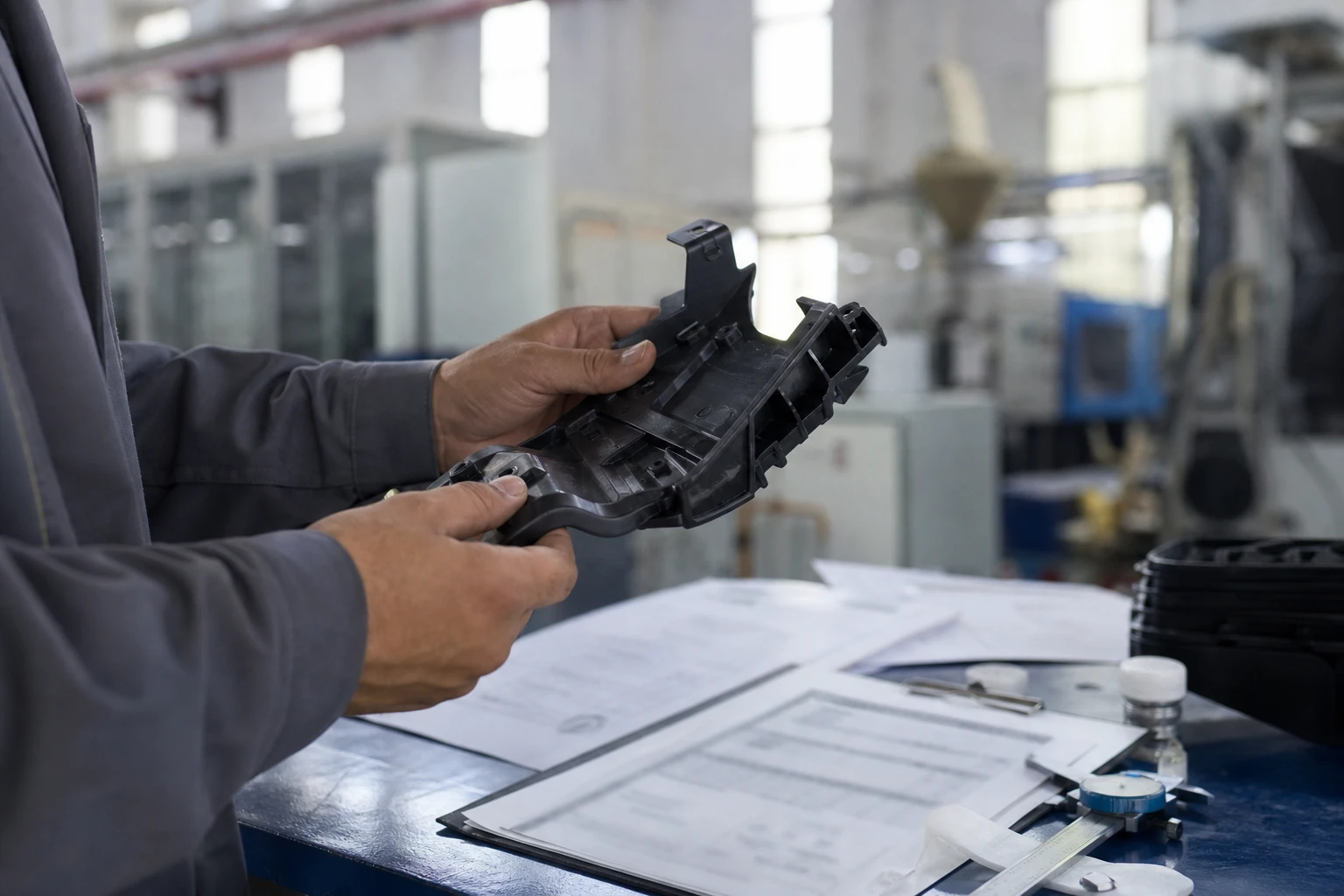
In Tissemsilt, Algeria is no longer relying solely on car assembly. It is now seeking to manufacture the parts that give a vehicle an industrial presence. The opening of the General Plastic Injection plant is intended to address one of the sector’s weak points: the lack of subcontractors able to supply locally made components quickly.
From Tissemsilt to Algiers, an industrial link takes shape
Algerian Prime Minister Sifi Ghrieb inaugurated the General Plastic Injection plant, or GPI, on Thursday 24 September 2026 in the Sidi Mansour industrial zone, in the municipality of Khemisti, in Tissemsilt province, in the centre-west of the country.
The project belongs to the state-owned holding company Algeria Chemical Specialities, which brings together several Algerian chemical industry companies. The site draws on the assets of the former Plastic Algeria Components company. The government is thus seeking to reactivate existing industrial equipment rather than start from scratch.
GPI’s creation was announced during a working visit to Tissemsilt on 29 April 2026. Production was then expected to begin in September. This timeline distinguishes the project’s launch in the spring from its industrial inauguration, which took place at the end of September.
According to information released at the ceremony, the plant can produce plastic components to equip between 150,000 and 200,000 vehicles a year. The announced integration rate reaches 40% in the first phase. This figure refers to the share of value added and components made locally in car production.
The site also has a fleet of machines covering several capacity levels. The company says it can manufacture technical plastic parts for the automotive industry, as well as for other industrial sectors. This diversification is intended to limit dependence on a single market and improve business continuity.
Potential markets include household appliances, cables, medical equipment, packaging, household goods, cosmetics, glasses and some components for drones. Road signs are also among the possible applications.
Cutting imports without undermining carmakers
The Algerian government now wants licensed carmakers to source from this plant any plastic parts that can be made in the country. Sifi Ghrieb said the moulds needed for these parts should be transferred to Tissemsilt before the end of 2026.
This approach addresses a practical problem. An assembly plant can produce vehicles while importing a large proportion of its components. In that case, the activity creates less value locally and remains exposed to logistical delays, exchange-rate fluctuations and import restrictions.
For carmakers, however, the challenge will be to maintain consistent standards of quality, cost and delivery. A locally made part is only competitive if it meets the manufacturer’s specifications and production remains stable. Access to moulds, resins, tooling and technical skills will therefore be decisive.
The policy directly concerns plants already operating or being rolled out in Algeria. Fiat, a brand of the Stellantis group, is already producing vehicles in the country. Other projects bring Algerian companies together with foreign partners, notably in passenger cars, light commercial vehicles and heavy goods vehicles.
The public scheme provides tax incentives, easier access to land and preferential terms for certain inputs. In return, carmakers must move towards higher levels of local integration. The specifications provide, in particular, for a minimum threshold of 10% by the end of the second year of production, rising to 40% by the end of the fifth year.
These targets make a network of Algerian suppliers essential. Without tier-one, tier-two or tier-three suppliers, integration remains limited to assembly. GPI aims to occupy an intermediary position between raw material producers, parts manufacturers and carmakers.
A public strategy built on partnerships
The Tissemsilt plant is not a stand-alone project. It is part of a policy to gradually rebuild a national automotive industry, following the difficulties encountered by several assembly programmes launched over the past decade.
The lack of local suppliers has long weighed on the profitability and continuity of projects. The withdrawal of some foreign carmakers from the Algerian market showed the limits of a model largely dependent on imported kits and parts. The new approach therefore seeks to build the ecosystem around the factories, and not just the factories themselves.
In March 2025, state-owned company Anabib signed an agreement with China’s Auto Lumiar to establish a joint venture specialising in car parts. The project, planned for Réghaïa, in Algiers province, is to begin by producing headlights and bumpers. The Algerian-Chinese partnership announced by Algerian Radio provides for the range to be expanded later.
Another project, the stamping plant launched in Batna, is to manufacture bodywork components. Led by the Société de Maintenance de l’Est, a subsidiary of the Industrial Cement Group of Algeria, it represents an announced investment of 6 billion dinars and aims for a capacity corresponding to about 150,000 vehicles a year. The project unveiled in Batna complements the production chain being established in Tissemsilt.
For the areas concerned, the impact extends beyond direct jobs. A plastics plant can boost industrial maintenance, logistics, technical training and the creation of specialist small businesses. In Tissemsilt, the activity also offers a chance to strengthen the productive fabric of a province away from the major industrial hubs along the coast.
A test for Algerian industry and the region
GPI’s success will be measured less by its inauguration than by its ability to deliver compliant parts to the various carmakers on time. The actual increase in the integration rate and the share of components made by Algerian private companies will also need to be assessed.
The project comes as Algeria seeks to diversify its economy beyond hydrocarbons. The automotive industry can create value chains in metallurgy, chemicals, electronics, plastics and industrial services. It could also serve as a platform for African markets, provided costs, standards and logistics infrastructure are competitive.
Across North Africa, this strategy puts Algeria in competition with Morocco, Tunisia and Egypt, which already have longer-established automotive supplier networks. Algeria’s response rests on a sizeable domestic market, state-owned companies still active in several sectors and partnerships with foreign groups.
The next step will therefore be industrial, but also institutional. Algiers will have to ensure lasting co-ordination between carmakers, suppliers, training centres, banks and government departments. Without this continuity, each plant will remain a separate project. With it, Tissemsilt could become one of the first links in a more integrated Algerian automotive industry, better connected to African value chains.