Algeria
 Egypt
 Libya
 Morocco
 Sudan
 Tunisia
 Benin
 Burkina Faso
 Cabo Verde
 Côte d'Ivoire
 Ghana
 Guinea
 Guinea-Bissau
 Liberia
 Mali
 Mauritania
 Niger
 Nigeria
 Sierra Leone
 The Gambia
 Togo
 Cameroon
 Central African Republic
 Chad
 DR Congo
 Equatorial Guinea
 Gabon
 Republic of the Congo
 São Tomé and Príncipe
 Burundi
 Comoros
 Djibouti
 Eritrea
 Ethiopia
 Kenya
 Madagascar
 Malawi
 Mauritius
 Mozambique
 Rwanda
 Seychelles
 Somalia
 South Sudan
 Tanzania
 Uganda
 Angola
 Botswana
 Eswatini
 Lesotho
 Namibia
 South Africa
 Zambia
 Zimbabwe
Teranga tested by online platforms
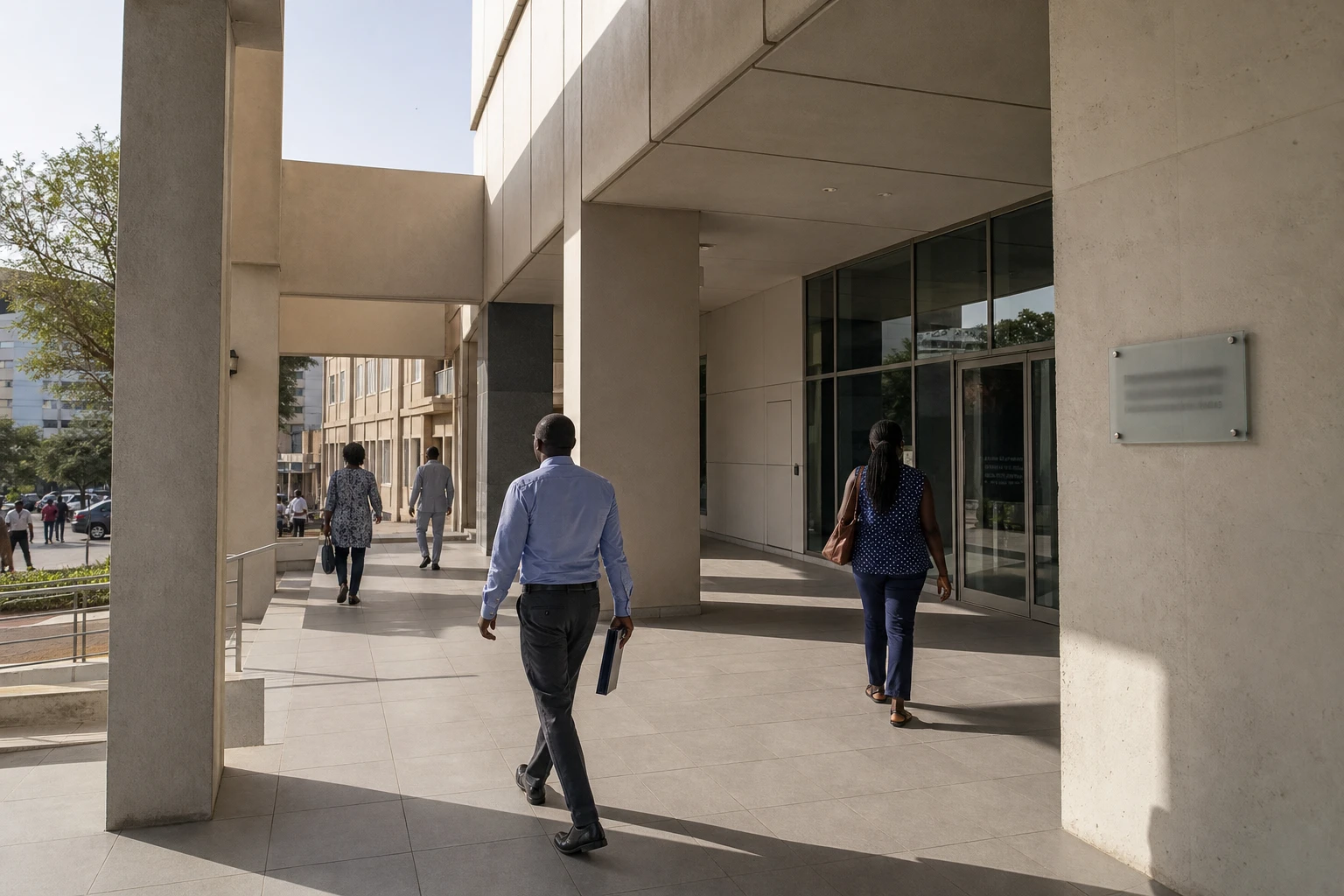
In Senegal, hospitality is more than a word. It is a social norm, a national image and sometimes a diplomatic tool. But that reputation is now colliding with another reality: hostile messages targeting foreign communities are increasingly circulating on social media, and several human rights organisations say the line is getting closer to being crossed.
The issue goes beyond a simple difference of opinion. In an ECOWAS country, where the free movement of people and the right of residence and establishment were enshrined as early as 1979, stigmatising foreigners also weakens a long-standing regional principle. This movement is no technical detail: it shapes trade, work, family mobility and part of the urban and border economies of West Africa.
Warnings from civil society and self-regulatory bodies
In Dakar, the Council for the Observance of Rules of Ethics and Professional Conduct in the Media publicly warned on 16 July 2026 against giving media coverage to xenophobic remarks targeting foreign communities living in Senegal. The body stressed that press freedom cannot be used as a pretext for spreading xenophobia, racism or intolerance.
A few weeks later, the African Meeting for the Defence of Human Rights, the Senegalese League of Human Rights and Amnesty International Senegal also warned of a rise in anti-foreigner rhetoric carried by the media and social networks. They called for collective expulsions to be avoided and cases to be handled individually, in accordance with international standards.
These statements have one thing in common: they do not deny the difficulties associated with irregular migration, document fraud or certain forms of trafficking. They simply reject the shortcut that turns real problems into generalised suspicion of entire nationalities. This is where the tension becomes political: security warnings, when they go too far, can become public stigmatisation.
Senegal has a legal framework, but its enforcement is crucial
Senegal is not without legal tools. Its penal code criminalises insults targeting a group on the grounds of origin when they are intended to incite hatred between citizens or residents. The country also has a cybercrime law that targets, among other things, racist or xenophobic content published online. In other words, the problem is not the absence of rules, but the ability to enforce them consistently and proportionately.
The administrative framework is also becoming more organised. Since May 2026, the government has been working to approve a National Migration Referral Mechanism, developed with more than fifty institutions. This work shows that the Senegalese state is seeking to better coordinate the reception, residence, return and referral of migrants. In this context, rhetoric of rejection muddies the public message and complicates the work of the relevant services.
One simple point should also be remembered: in Senegal, migration affects urban centres, transit areas, ports, commercial districts and municipalities where workers from the sub-region settle. The effects of hostile speech are therefore not abstract. They can affect families, small businesses, neighbourhood life and, more broadly, relations between Senegalese people and foreign residents. The same is true of Senegalese people living abroad, whose own rights in turn depend on a climate of respect.
What this episode says about Senegal and West Africa
Senegal occupies a distinctive position in the region. It is both an Atlantic gateway and a place of mobility for West African workers, as well as a country regularly cited for its institutional stability. When xenophobic rhetoric gains visibility, it is not only the country’s image that is tarnished. The balance between sovereignty, regional mobility and social cohesion is also put under pressure.
The continental stakes are clear. For years, the African Union has promoted the idea of a more mobile, more integrated Africa, less constrained by inherited borders. Free movement, whether within West Africa or across the continent, rests on a simple political condition: accepting that mobility can be regulated without being demonised. When a country such as Senegal allows hostile rhetoric to become normalised, it sends a contradictory signal to the entire region.
What happens next will depend less on statements than on the institutions’ ability to act swiftly and consistently. The media are being urged to avoid amplifying such rhetoric. Platforms remain a sensitive link, as virality can turn an isolated remark into a collective narrative. And the state will have to strike a balance between legal firmness, public education and protecting social cohesion. Ultimately, the test is not only one of security or regulation. It is whether a society can address its tensions without abandoning its own conception of dignity.