Algeria
 Egypt
 Libya
 Morocco
 Sudan
 Tunisia
 Benin
 Burkina Faso
 Cabo Verde
 Côte d'Ivoire
 Ghana
 Guinea
 Guinea-Bissau
 Liberia
 Mali
 Mauritania
 Niger
 Nigeria
 Sierra Leone
 The Gambia
 Togo
 Cameroon
 Central African Republic
 Chad
 DR Congo
 Equatorial Guinea
 Gabon
 Republic of the Congo
 São Tomé and Príncipe
 Burundi
 Comoros
 Djibouti
 Eritrea
 Ethiopia
 Kenya
 Madagascar
 Malawi
 Mauritius
 Mozambique
 Rwanda
 Seychelles
 Somalia
 South Sudan
 Tanzania
 Uganda
 Angola
 Botswana
 Eswatini
 Lesotho
 Namibia
 South Africa
 Zambia
 Zimbabwe
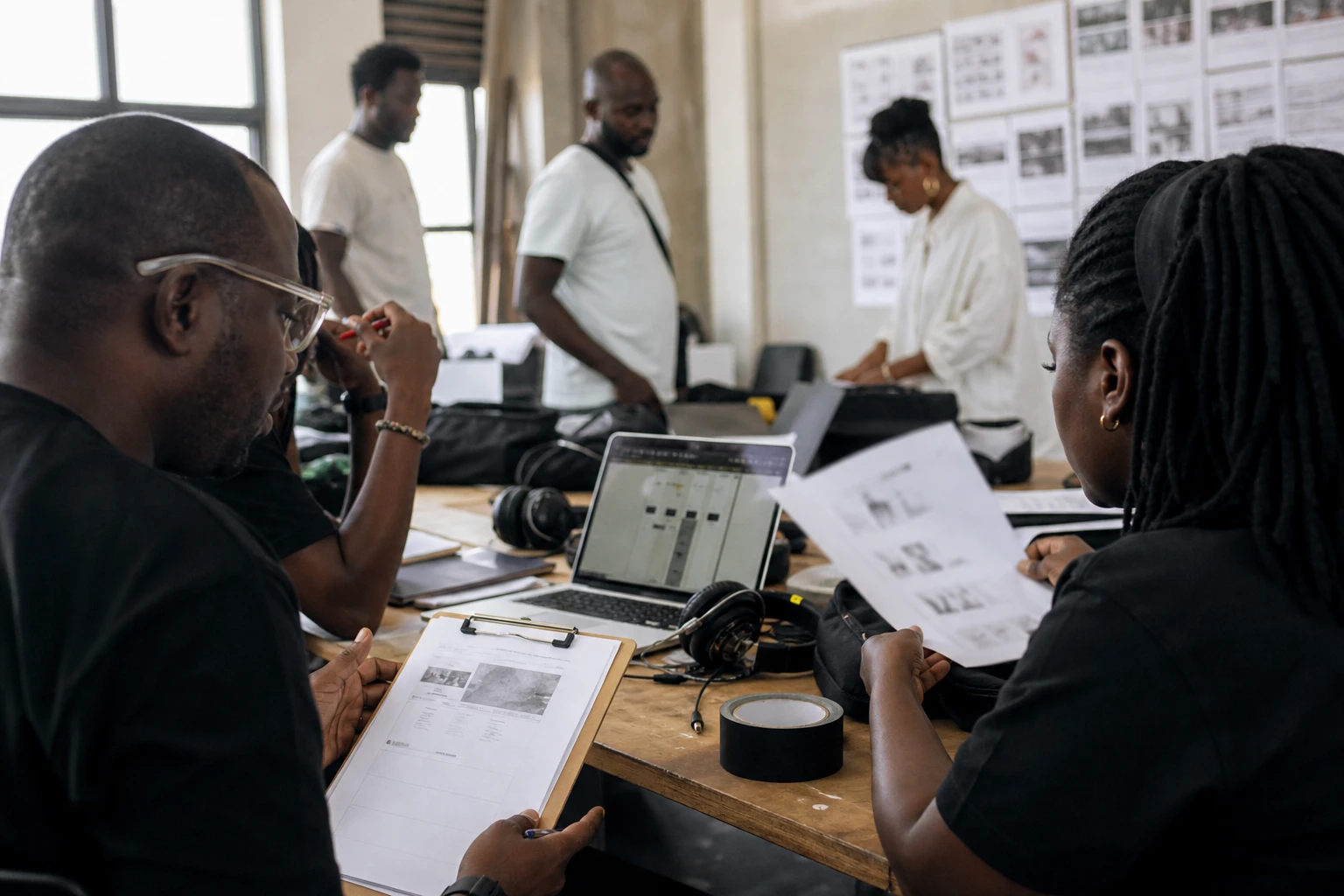
When a shoot claims to speak of emancipation, the gaze remains the real subject
Good intentions are not enough on a film set. A film can seek to denounce racism, speak of equality or correct the blind spots of European cinema while reproducing old habits of domination. That is exactly where the strength of Gavagai lies: in the grey area where art proclaims its principles but stumbles over its own methods. The story takes on greater significance because it unfolds in Senegal, with Dakar in the background, at a time when the country is seeking to consolidate a more visible, structured and sovereign film industry.
In this story, the setting is not merely decorative. Senegal does not appear as a simple landscape for visual export. It is a space for work, negotiation and the exercise of the gaze. The question, then, is not only what the director films. It is also about understanding who decides, who speaks, who performs, and who bears the invisible power dynamics on set. In a country where cinema remains an arena for institution-building and continental projection, this question hits home.
The film, Senegal and the mechanics of misunderstanding
Gavagai, directed by Ulrich Köhler, depicts the shooting of a radical adaptation of Medea in Senegal. The fiction follows Nourou, played by Jean-Christophe Folly, and Maja, played by Maren Eggert. Their romantic relationship develops during the shoot, amid artistic and cultural tensions. Months later, the film returns to a Berlin premiere disrupted by a racist incident. The heart of the story remains the same: how can a project that purports to be progressive reproduce very old power dynamics?
The choice of Senegal is not neutral. According to production information, the shoot took place in two stages, first in Berlin and then in Dakar. This movement between Europe and Africa is not merely geographical. It says something about the production chains of contemporary cinema: transnational funding, co-productions, mixed crews, the movement of talent, but also persistent hierarchies between centre and periphery. The film was made as a German-French co-production, with support from European organisations, while the Senegalese part points to a location that has become strategic for several international productions.
This context sheds light on the film’s significance in Senegal. For several years, Dakar and Senegalese cultural institutions have sought to strengthen the country’s place in the cinema value chain. The Directorate of Cinematography at the Ministry of Culture says the Senegalese state is tasked with regulating, promoting, funding and supporting the sector, including through international cooperation. Senegalese Press Agency coverage also shows local professionals building links with Cannes and the Berlinale, while advocating wider distribution of Senegalese works within the country.
What this film is really about: the question of power
In Gavagai, the most compelling subject is not romance. It is symbolic power. Who controls the image of Africa? Who decides what makes a story set in Senegal authentic? Who speaks on behalf of the universal, and who is assigned the role of the “Other”? The film seems to pose these questions without resolving them. It depicts an artistic project that seeks to be critical but ultimately reveals its blind spots: cultural insularity, class prejudice, the automatic assumptions of the European gaze and the difficulty of truly listening to local actors.
Nourou, played by Jean-Christophe Folly, embodies this ambiguity. He is neither a background extra nor a merely functional victim. He has a trajectory, a presence and the capacity to respond. In a story of this kind, that matters enormously. African cinema has long been told from the outside, with roles often limited to illustration, suffering or exoticism. The stakes here are different: to show that an African actor is not merely a body in the frame, but a subject of the work and a partner in the creation of meaning.
This reading resonates with the moment Senegal is going through. The country has a vibrant cultural foundation, an established film administration and an ecosystem with a growing presence in international markets. Recent initiatives involving Dakar, Cannes and the Berlinale show a clear ambition: not merely to host shoots, but to have a greater say in stories, contracts, distribution channels and choices of representation. In this sense, Gavagai is as much about the gaze directed at Senegal as it is about how Senegal intends to take back control of that gaze.
A resonance that extends beyond European cinema
The film goes beyond its value as a case study because it touches on a continental question: how can works shot in Africa and partly funded from outside the continent avoid recycling relationships of dependence? The answer is not purely artistic. It is also institutional. It depends on the growth of balanced co-productions, the presence of strong African crews, post-production facilities on the continent and better regional circulation of films. In Senegal, this struggle is already visible in the growing number of premieres, festivals, training programmes and projects supported by FOPICA, the Film and Audiovisual Industry Promotion Fund.
Across Africa, the challenge is easy to state. The more countries on the continent build their own industries, the less they depend on an external gaze to exist on screen. Dakar is not on the sidelines of this movement. It is a base. Köhler’s film is therefore interesting for a specific reason: it reminds us that criticism of neocolonialism only counts if it is also willing to examine concrete practices, budgets, casting, sites of power and the place given to African artists in decision-making. That is where the credibility of genuinely shared cinema is at stake.
Ultimately, Gavagai questions not only Western bad conscience. It stages its limits. And that is precisely what makes it useful for understanding Senegal’s cultural present: a country where stories are now contested in cinemas, at festivals and through co-productions as much as on the sets themselves.