Algeria
 Egypt
 Libya
 Morocco
 Sudan
 Tunisia
 Benin
 Burkina Faso
 Cabo Verde
 Côte d'Ivoire
 Ghana
 Guinea
 Guinea-Bissau
 Liberia
 Mali
 Mauritania
 Niger
 Nigeria
 Sierra Leone
 The Gambia
 Togo
 Cameroon
 Central African Republic
 Chad
 DR Congo
 Equatorial Guinea
 Gabon
 Republic of the Congo
 São Tomé and Príncipe
 Burundi
 Comoros
 Djibouti
 Eritrea
 Ethiopia
 Kenya
 Madagascar
 Malawi
 Mauritius
 Mozambique
 Rwanda
 Seychelles
 Somalia
 South Sudan
 Tanzania
 Uganda
 Angola
 Botswana
 Eswatini
 Lesotho
 Namibia
 South Africa
 Zambia
 Zimbabwe
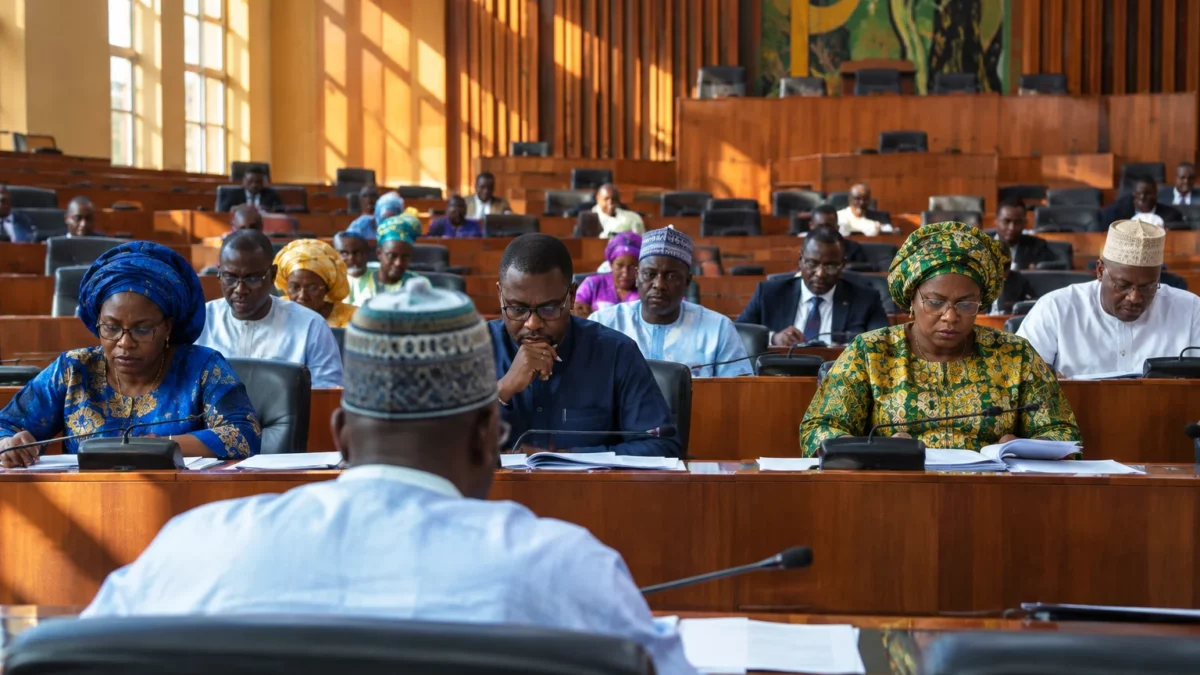
In Senegal, the split between Bassirou Diomaye Faye and Ousmane Sonko is no longer confined to public statements. It is now embedded in party structures, as the president leads the state while his former ally retains strong parliamentary influence.
A separation formalised in party rules
On Tuesday 17 November, Pastef-Les Patriotes’ National Council recorded the loss of membership of 32 people, including Bassirou Diomaye Faye. The party cites Article 6 of its statutes. Senegalese media report that this provision stipulates that a member loses their membership if they join another political organisation. The statement therefore presents the decision as a consequence of the party’s rules, rather than as a disciplinary expulsion.
The head of state launched his own party, Kiiraay – Les Patriotes républicains, in July 2026. Its creation had made the political split visible. Pastef’s decision now sets out its consequences within the party. It also affects 31 other people. Reports published in Senegal name several officials and ministers among them, but the lists reported are not all identical. It is therefore best to stick to the total announced by the party.
The timing gives this formalisation added significance. On 14 November, Ousmane Sonko reportedly told officials gathered in Dakar that, “politically, the divorce is complete”. The remark was reported by several Senegalese media outlets. The 17 November measure thus follows a public declaration of a break, but the two events alone are not enough to establish a direct causal link.
From electoral alliance to institutional stand-off
Their shared political journey brought the pair to power in 2024. Bassirou Diomaye Faye, then Pastef’s candidate, won the presidential election on 24 March. Sonko, a central figure in the movement, became prime minister. The victory united two sources of political legitimacy: that of the elected president and that of the leader who had built the party and mobilised its supporters.
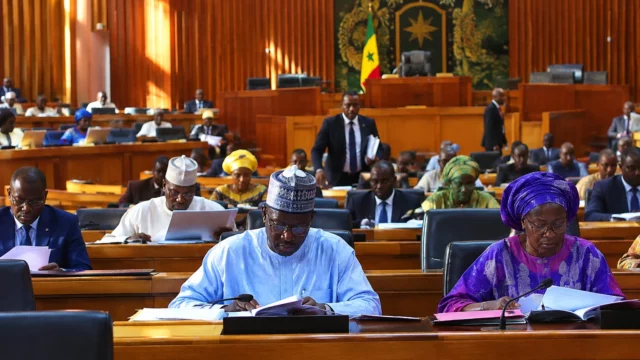
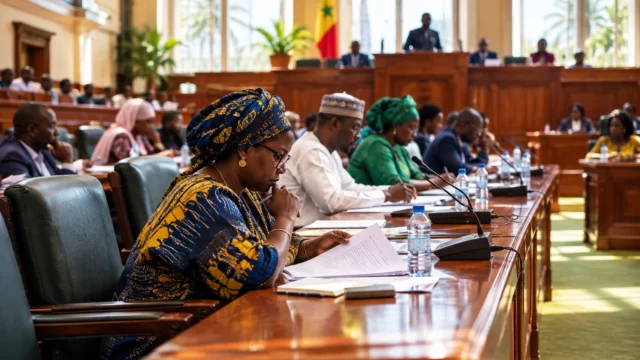
This arrangement changed in May 2026, when Faye ended Sonko’s tenure as head of government. Sonko subsequently became president of the National Assembly. Pastef remains in the majority in the chamber, according to accounts of Senegal’s political crisis. Senegal is therefore left with an executive led by the president and a parliament in which the party of his former prime minister has decisive weight.
The distance between the two leaders has also widened over economic choices and the management of public debt. In November, the budget debate was described as a point of tension between the government and the Assembly. Institutional disagreements can therefore affect the passage of legislation and the conduct of public policy, beyond personal rivalries.
What this decision changes — and what it does not
The loss of party membership does not remove Bassirou Diomaye Faye from the presidency. Nor does it, by itself, change the composition of the National Assembly. It does, however, clarify the political affiliation of the people concerned and confirms that two centres of power are taking shape around the executive and Pastef.
For the ministers affected, the issue is particularly tangible. No longer belonging to the party does not automatically mean they will leave the government. But their position becomes more difficult if the presidential team and the parliamentary majority pursue divergent policies. For citizens, the impact will be measured above all by the institutions’ ability to pass the budget, maintain public services and address everyday concerns, particularly jobs and the cost of living.
The realignment is also playing out across the country. Pastef retains a grassroots network and a parliamentary presence, while Kiiraay is seeking to establish itself as a new party. The reach of that organisation cannot yet be inferred from its launch. The next elections and each camp’s ability to maintain its local networks will provide firmer indications.
A test for Senegalese institutions and the region
Senegal is a member of ECOWAS, the Economic Community of West African States. In a region marked by political transitions and sometimes strained relations between states and regional organisations, the stability of Senegalese institutions matters beyond its borders. This does not mean the current crisis necessarily threatens the constitutional order: rather, it tests cooperation between the branches of power elected by the people.
The immediate question is how the political system will function: will the government and the parliamentary majority be able to agree on budgetary and legislative decisions despite the split between Faye and Sonko? The answer will affect the implementation of public commitments and the confidence of both economic actors and households. It will also be watched in a West Africa where rivalries at the top can quickly affect the work of institutions.
Pastef’s decision therefore marks less a new administrative step than a milestone in the realignment of power in Senegal. It formalises a party split without resolving the balance of power between the president and parliament. The strength of this new arrangement will be tested in votes, budget decisions and the organisation of the next elections.