Algeria
 Libya
 Morocco
 Sudan
 Tunisia
 Benin
 Burkina Faso
 Cabo Verde
 Côte d'Ivoire
 Ghana
 Guinea
 Guinea-Bissau
 Liberia
 Mali
 Mauritania
 Niger
 Nigeria
 Senegal
 Sierra Leone
 The Gambia
 Togo
 Cameroon
 Central African Republic
 Chad
 DR Congo
 Equatorial Guinea
 Gabon
 Republic of the Congo
 São Tomé and Príncipe
 Burundi
 Comoros
 Djibouti
 Eritrea
 Ethiopia
 Kenya
 Madagascar
 Malawi
 Mauritius
 Mozambique
 Rwanda
 Seychelles
 Somalia
 South Sudan
 Tanzania
 Uganda
 Angola
 Botswana
 Eswatini
 Lesotho
 Namibia
 South Africa
 Zambia
 Zimbabwe
From the ruling that closes a sporting saga to Benghazi, where the war in Ukraine spilled over into a Libyan port, this week’s news is a reminder of how decisions taken at a distance can have very tangible effects on the continent. In several countries, issues also play out in everyday life: road safety, freedom of expression, health and young people’s mobility.
Senegal regains the title as African football faces questions over its rules
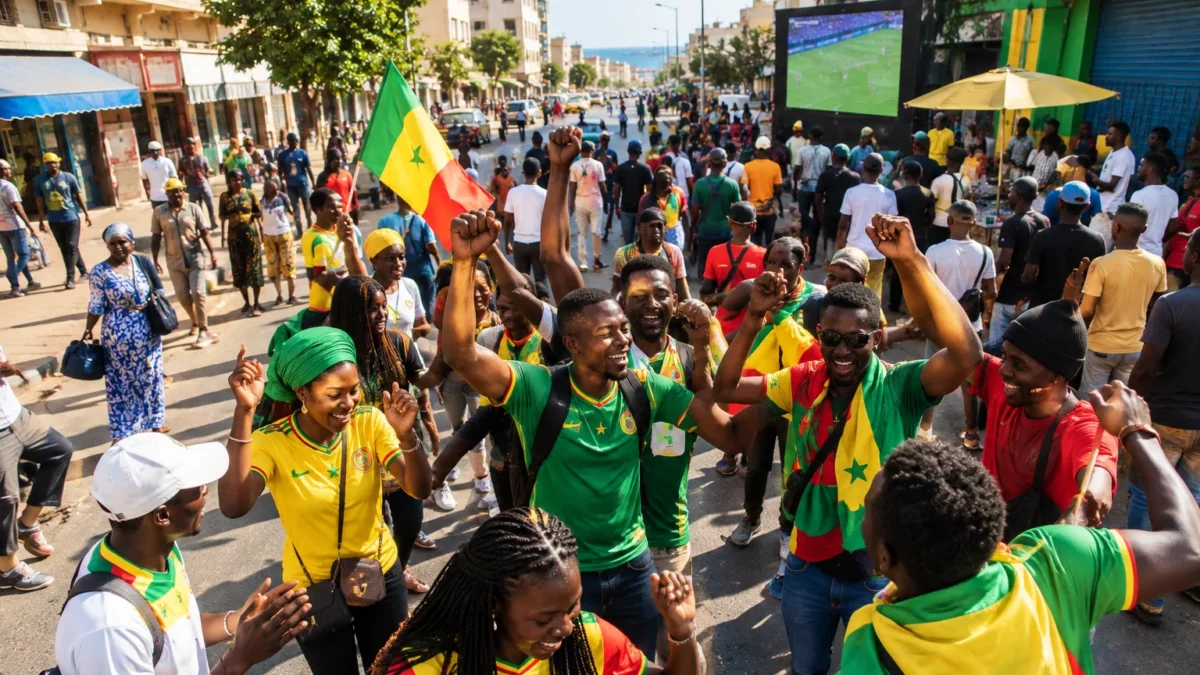
On 24 November, the Court of Arbitration for Sport (CAS), an independent tribunal based in Lausanne, overturned the Confederation of African Football (CAF) decision that had declared Senegal to have forfeited the 2025 Africa Cup of Nations final. The ruling reinstates the result achieved on the pitch against Morocco in the final played in Rabat on 18 January 2026. Algeria’s APS news agency also reported that Senegal had regained its title.
The ruling closes, at least in sporting terms, a case that had pitted the Senegalese Football Federation against CAF and the Royal Moroccan Football Federation. It also brings an institutional question back to the fore: how does a continental body apply its rules when a match is interrupted and then resumed? CAS has ruled on the appeal, but the consequences for CAF governance and supporters’ trust cannot be settled by a scoreline.
In Dakar, the title is a national victory. In Morocco, the federation has contested the decision and announced that it intends to pursue legal proceedings. Beyond these reactions, federations and organisers will need to clarify disciplinary procedures and the status of the result on the pitch. The Africa Cup of Nations is a continental competition: the robustness of its decisions matters as much as its popular appeal.
In Libya, an attack linked to the Russia-Ukraine war
On 22 November, a maritime drone attack targeted a Russian corvette moored at the naval base in Benghazi, in eastern Libya. Libyan military officials cited by the Associated Press reported that two Libyan officers had died of their injuries. Kyiv claimed responsibility for the operation, while authorities in eastern Libya denounced it as a violation of the country’s sovereignty.
Libya remains divided between rival authorities in the west and east, despite mediation and reunification initiatives backed by the African Union and the United Nations. This fragmentation makes military incidents harder to attribute and manage. The government based in Tripoli said it had not authorised any foreign military operation on Libyan territory or in its waters. The African Union called for an independent investigation and respect for Libyan sovereignty.
The attack highlights the risk that an external conflict could become entangled in local rivalries and threaten maritime security. It also exposes the limits of Libyan authorities’ control over the country as a whole. The information available is not, on its own, sufficient to publicly establish all the operational details or the legality of the operation. That assessment depends in particular on the vessel’s status and military role, and the precise circumstances of the attack.
From Cairo to Bamako, questions over security and freedoms
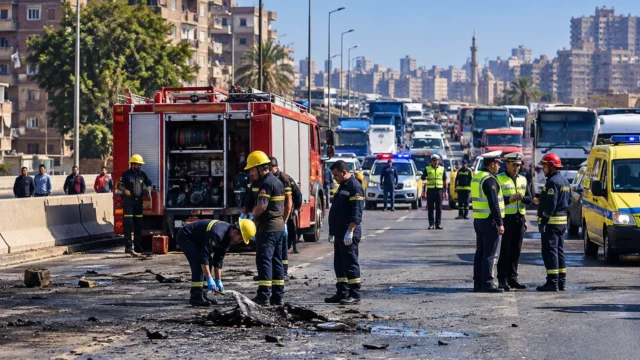
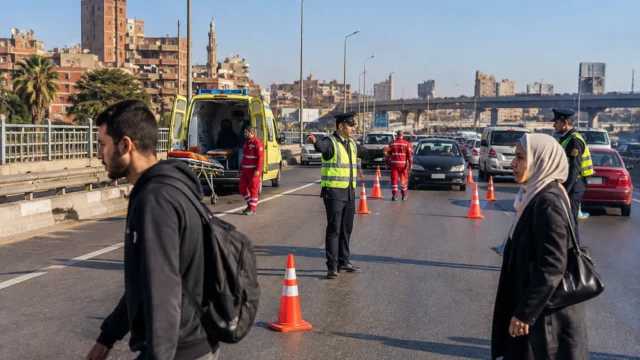
In Egypt, the public prosecutor’s office announced on 26 November the arrest of the driver suspected of causing a collision with a tanker truck the previous day on a motorway in Giza, in Greater Cairo. The death toll given by the authorities stands at 31. According to the prosecutor’s office, the driver is said to have admitted driving too fast and losing control of his vehicle. The investigation will need to establish responsibility, including the circumstances of the accident and traffic conditions on this busy road.
In Mali, Amnesty International has launched a campaign in support of Rokiatou Doumbia, an influencer known as Rose Vie Chère. Sentenced on 17 August 2026 to ten years in prison, including seven years without parole and three suspended, she is being prosecuted for “undermining state credit” and “criminal association”, according to the organisation. Amnesty believes her detention punishes her for speaking out about the cost of living. These charges and their application are part of legal proceedings contested by the organisation; they should not be conflated with an independent judgement on the merits of the case.
In northern Mali, the Group for the Support of Islam and Muslims (JNIM), affiliated with al-Qaeda, is said to have given residents of Tonka until 27 November to leave the town ahead of an announced blockade. The information in the raw material could not be corroborated here by a second independent source. It must therefore remain attributed. The presence of Malian forces and Russian partners in the area is presented as the context for this threat, but the consequences for residents and the situation’s development remain to be confirmed.
Climate, healthcare and departures: realities beyond the capitals
In Rwanda, the rise in malaria is linked in the report cited to higher temperatures and prolonged rainfall, which can create favourable breeding grounds for mosquitoes. One estimate suggests a possible 20% increase in risk in the Rift Valley by 2100. As no second source for this figure was consulted, it is an attributed projection, not a current tally. The issue highlights the impact of climate on health policies, particularly for people living far from major medical centres.
In the eastern Democratic Republic of the Congo, particularly in Ituri, fighting is also complicating the work of healthcare workers. The account mentions doctors who took refuge in a hospital for three days to escape the violence. In conflict zones, access to healthcare depends on more than staff and medicines: the safety of patients, teams and supply routes is crucial. The number of incidents and their chronology have not been independently verified here.
In South Africa, protests hostile to foreigners are described against a backdrop of unemployment and social tensions. Refugees are said to be driven from their homes and shops vandalised. These events call for precise attention to locations, perpetrators and the authorities’ response: describing them as a uniform rejection by the South African population would be misleading. Migrants, refugees and local communities do not experience these tensions in the same way.
Finally, young Gambians continue to take to the sea for the Canary Islands, often aboard pirogues setting off from their country’s coast. The Gambia, enclosed by Senegal except for its Atlantic coastline, is also a departure point for people of other nationalities. These journeys involve aspirations for work, family incomes and the risks of the crossing. They are a reminder that European migration policies and local economic prospects meet on maritime routes whose consequences are felt on both sides.
These issues are on different scales, but they have one thing in common: institutional decisions, conflicts and economic changes cross borders. In the coming days, developments in Benghazi and Tonka, the legal proceedings in Mali and the federations’ responses to the CAS ruling will show whether this week’s announcements bring tangible changes to the lives of those affected.