Algeria
 Libya
 Morocco
 Sudan
 Tunisia
 Benin
 Burkina Faso
 Cabo Verde
 Côte d'Ivoire
 Ghana
 Guinea
 Guinea-Bissau
 Liberia
 Mali
 Mauritania
 Niger
 Nigeria
 Senegal
 Sierra Leone
 The Gambia
 Togo
 Cameroon
 Central African Republic
 Chad
 DR Congo
 Equatorial Guinea
 Gabon
 Republic of the Congo
 São Tomé and Príncipe
 Burundi
 Comoros
 Djibouti
 Eritrea
 Ethiopia
 Kenya
 Madagascar
 Malawi
 Mauritius
 Mozambique
 Rwanda
 Seychelles
 Somalia
 South Sudan
 Tanzania
 Uganda
 Angola
 Botswana
 Eswatini
 Lesotho
 Namibia
 South Africa
 Zambia
 Zimbabwe
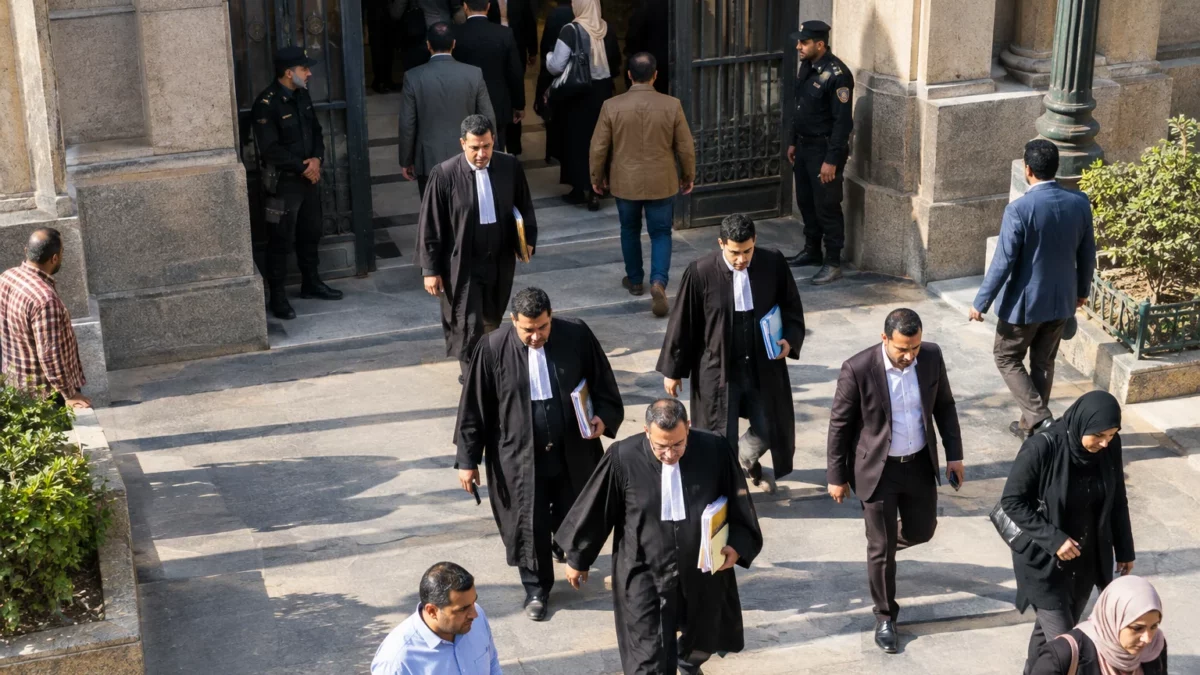
For an independent newsroom, the licensing process can become as consequential as the content it publishes. In Egypt, the latest postponement of Lina Attalah’s trial has brought judicial safeguards and the rules governing digital media back to the centre of debate.
Hearing suspended pending review of disqualification request
On 18 November 2026, a Cairo court suspended proceedings against Lina Attalah, editor-in-chief of Mada Masr, after her defence filed a request to disqualify Judge Mohamed Mubarak. The hearing on the request is scheduled for 26 November, according to reports by Egyptian outlet Al Manassa and Agence France-Presse.
The lawyers dispute the magistrate’s impartiality. They believe a ruling against their client in another case the previous month could affect the current trial. A disqualification request seeks to remove a judge when a party considers their impartiality open to question. The court will have to examine this argument before the case resumes.
This latest development extends a judicial process already marked by several postponements. On 11 November, the court adjourned the hearing until 18 November to allow the defence to set out the grounds for its request. The Egyptian Initiative for Personal Rights, an independent organisation based in Egypt, confirmed the postponement at the time.
Charges and the outlet’s licence at the heart of the case
Lina Attalah is being prosecuted for publishing false information and operating a website without authorisation. She denies the charges. Mada Masr says it has submitted several licence applications to the Supreme Council for Media Regulation without receiving a clear response. In the information consulted, the Egyptian authorities have not publicly set out their position on how these applications have been handled.
The case falls under Egypt’s 2018 law on the press and media. It requires news websites to obtain authorisation from the Supreme Council for Media Regulation. Human Rights Watch notes that the rule can lead to penalties against websites operating without a licence. An investigation by Al Manassa, meanwhile, describes the difficulties faced by several digital media outlets whose applications remain pending or are disputed.
The issue therefore extends beyond the case of one journalist. When an administrative application goes unanswered, uncertainty weighs on an entire newsroom: journalists risk prosecution, while readers may lose access to investigations and information that are not widely reported elsewhere. In October, a separate judicial case had already resulted in Lina Attalah’s conviction, a hefty fine and an order to shut down Mada Masr, according to Amnesty International. This separate case informs the defence’s arguments about the judge’s impartiality in the current proceedings.
Implications for newsrooms and their readers
For the authorities, enforcing authorisation rules is a matter of media regulation. For rights groups and journalists, their implementation raises questions about safeguards: are the criteria transparent, are applications dealt with within predictable timeframes, and are penalties proportionate? The disagreement is therefore about both the legal framework and how it is applied in practice.
The possible effects differ for each party. For Lina Attalah and her team, the proceedings consume time and resources and create professional uncertainty. For the outlet’s audience, a closure or restriction on access could reduce the supply of independent reporting. However, the case does not establish that all Egyptian newsrooms face the same procedures or that readers have already lost access to the website as a result of this particular hearing.
The defence also notes that a conviction in absentia — handed down when the person charged is not present — was issued in 2024, without the journalist’s knowledge, according to the reports cited. The retrial concerns a challenge to that decision. The details of the different proceedings must nevertheless be distinguished: the charges of publishing false information and operating without a licence, the earlier conviction, and the October ruling concerning the outlet are not one and the same judicial act.
26 November: a decisive step, but not a verdict
The next date concerns first and foremost the disqualification request. Its examination will not, by itself, decide the substance of the charges. It will determine whether Judge Mohamed Mubarak continues to hear the case and could therefore affect the timetable for what follows. At this stage, no date has been confirmed for the resumption of the trial on the merits.
The case resonates beyond Egypt. It raises questions about how states regulate online media and reconcile registration requirements with freedom of expression. For the African Union and rights organisations across the continent, fair-trial guarantees and press freedom are regional issues, but that does not make Egypt interchangeable with other African countries.
On 26 November, attention will therefore focus on the grounds accepted by the court and the timetable it sets next. Until then, the charges remain for the courts to examine, and the arguments of the various parties should be reported as such.