Algeria
 Libya
 Morocco
 Sudan
 Tunisia
 Benin
 Burkina Faso
 Cabo Verde
 Côte d'Ivoire
 Ghana
 Guinea
 Guinea-Bissau
 Liberia
 Mali
 Mauritania
 Niger
 Nigeria
 Senegal
 Sierra Leone
 The Gambia
 Togo
 Cameroon
 Central African Republic
 Chad
 DR Congo
 Equatorial Guinea
 Gabon
 Republic of the Congo
 São Tomé and Príncipe
 Burundi
 Comoros
 Djibouti
 Eritrea
 Ethiopia
 Kenya
 Madagascar
 Malawi
 Mauritius
 Mozambique
 Rwanda
 Seychelles
 Somalia
 South Sudan
 Tanzania
 Uganda
 Angola
 Botswana
 Eswatini
 Lesotho
 Namibia
 South Africa
 Zambia
 Zimbabwe
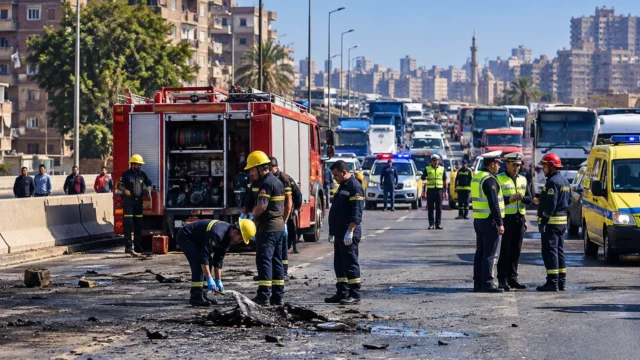
On Cairo’s ring road, a lorry carrying petroleum products caught fire amid heavy traffic. Within moments, the flames spread to several vehicles. The toll, which is still being updated, highlights the human cost of travel in a metropolis where the ring road links densely populated areas.
Emergency response in a busy area
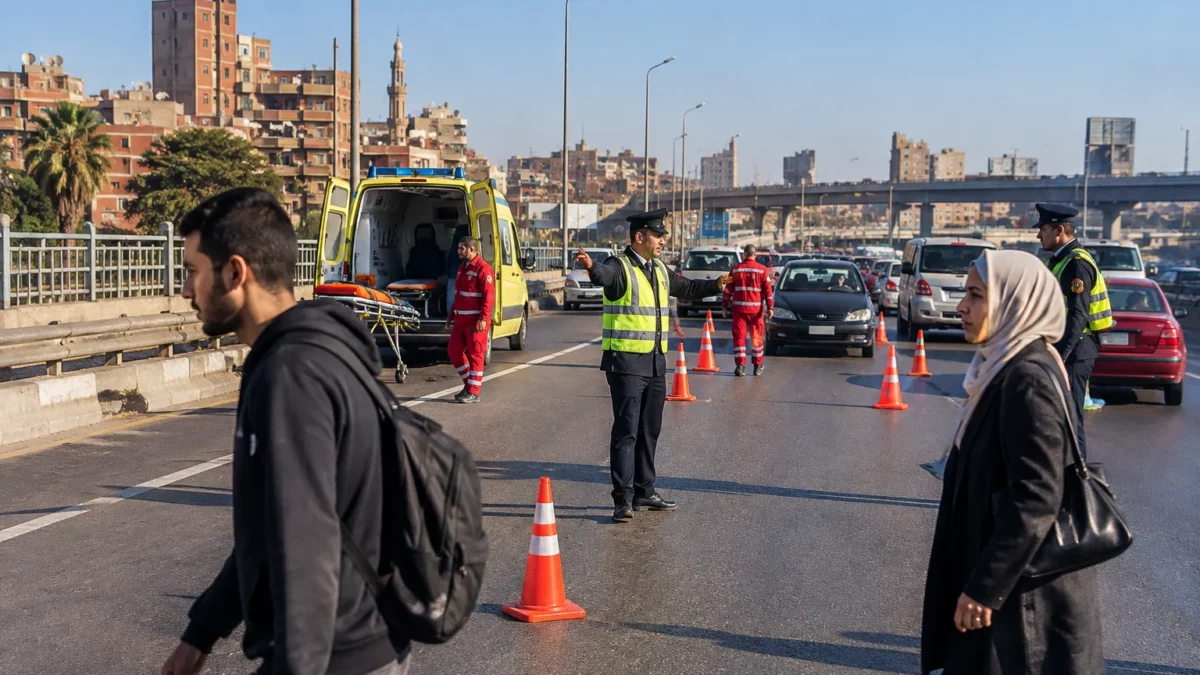
The fire broke out on Wednesday 25 November 2026, on Cairo’s ring road, above Tunnel 10, in the Warraq area of Imbaba, in Giza Governorate. The highway skirts the capital and serves several parts of the metropolitan area.
The first figures released by Egypt’s Ministry of Health put the toll at at least 30 dead and 15 injured. The toll later changed in available reports: the Associated Press reported at least 31 dead and said the number of injured had been revised to 21. These figures remain attributed to the authorities and to reports published in the hours after the fire.
Rescue services took the injured to nearby hospitals. The flames spread to cars and motorbikes. The public prosecutor’s office has opened an investigation and begun procedures to identify the victims. The precise circumstances of the collision and the fire must still be established by the investigation.
President Abdel Fattah al-Sisi sent his condolences to the families. Health Minister Khaled Abdel Ghaffar announced that ministerial teams would travel to the scene and that the care of the injured would be monitored. These announcements describe the state’s immediate response; they do not, by themselves, establish the causes of the disaster.
A vital ring road exposed to risks
The ring road is a major artery for daily journeys, freight transport and travel between Cairo and neighbouring governorates. Its heavy use makes collisions particularly dangerous: when a vehicle carrying flammable materials stops or catches fire, nearby motorists have little time to get away.
Traffic around the site of the accident was halted or severely disrupted during the emergency response. Beyond the victims and their relatives, the impact affects people stranded on the road, workers who depend on this link and businesses whose activity relies on urban mobility. Residents of the neighbourhoods along the route are also affected by diversions, delays and the risks posed by a fire of this scale.
Immediate causes — the condition of the vehicle, speed, a manoeuvre or traffic conditions — will need to be distinguished from broader factors, such as enforcement of safety rules and the monitoring of hazardous goods transport. At this stage, it would be premature to attribute the accident to a specific cause.
A national road safety challenge
Egyptian statistics show the scale of the challenge, but do not, by themselves, explain this accident. According to the national statistics agency CAPMAS, 5,260 people died in road accidents in 2024, compared with 5,861 in 2023. The number of injuries increased over the same period, from 71,016 to 76,362.
These national figures cover accidents of different types and severity. They therefore do not make it possible to conclude that the same factors are at play in every disaster. They do show, however, that an annual fall in deaths is not enough to erase the persistence of significant risks on Egypt’s roads.
An accident in January near Beni Suef, south of Cairo, also killed 21 people and injured 16, according to reports at the time. This previous incident underlines that the risk is not confined to the capital. Distances, road types and emergency response resources vary between major urban routes and roads linking the governorates.
Investigation findings awaited
For the authorities, the next steps are to identify the victims, establish a consolidated toll and determine responsibility. The investigation will in particular need to clarify how the collision unfolded and the conditions under which the cargo was being transported. Until these details are established, initial accounts should continue to be presented as provisional.
The disaster unfolded on a single road, but its significance extends beyond the Cairo metropolitan area. It highlights the need for prevention on major routes and coordination between emergency services, hospitals and transport authorities. In North Africa, where road corridors connect large urban and economic areas, user safety and the monitoring of hazardous cargoes are concrete mobility challenges.
For Egypt and its regional partners, the decisive issue will be what follows from the investigation’s findings: identifying any shortcomings, being transparent about the results and taking any resulting safety measures. For now, the human toll remains the first priority, while the precise cause of the fire has yet to be confirmed.