Algeria
 Libya
 Morocco
 Sudan
 Tunisia
 Benin
 Burkina Faso
 Cabo Verde
 Côte d'Ivoire
 Ghana
 Guinea
 Guinea-Bissau
 Liberia
 Mali
 Mauritania
 Niger
 Nigeria
 Senegal
 Sierra Leone
 The Gambia
 Togo
 Cameroon
 Central African Republic
 Chad
 DR Congo
 Equatorial Guinea
 Gabon
 Republic of the Congo
 São Tomé and Príncipe
 Burundi
 Comoros
 Djibouti
 Eritrea
 Ethiopia
 Kenya
 Madagascar
 Malawi
 Mauritius
 Mozambique
 Rwanda
 Seychelles
 Somalia
 South Sudan
 Tanzania
 Uganda
 Angola
 Botswana
 Eswatini
 Lesotho
 Namibia
 South Africa
 Zambia
 Zimbabwe
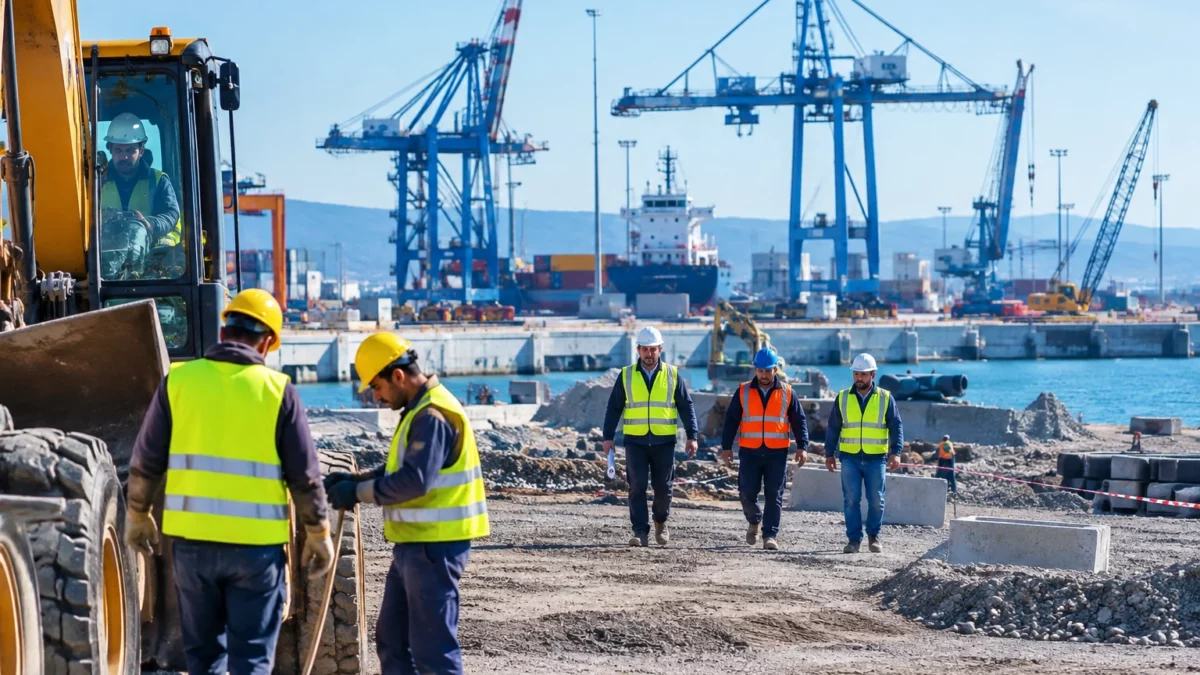
In Nador, in north-eastern Morocco, an industrial project is targeting demand that is now being set by regulatory obligations: European airlines will have to include more sustainable aviation fuel in their supplies. But several decisive steps remain between announced capacity and a plant in production.
Green Sky Capital has selected French group Axens to equip its renewable fuels project at Nador West Med. The facility, still in development, could connect an emerging Moroccan industry with air transport markets in Europe and the Mediterranean.
An industrial project rooted in north-eastern Morocco
Nador West Med is a port and industrial complex under development on Morocco’s Mediterranean coast. Its logistical role could facilitate the transport of raw materials and the export of products. The site in the Oriental region also gives the project a local dimension: jobs, training and collection activities could matter as much as export volumes, provided these benefits materialise.
The project forms part of a broader Moroccan ambition to develop industrial activities linked to the energy transition. At regional level, the relevant framework is the Arab Maghreb Union (AMU), which brings together Morocco, Algeria, Tunisia, Libya and Mauritania. The organisation exists, but economic cooperation across the Maghreb remains limited; Nador’s project therefore appears to be geared primarily towards Mediterranean and international markets.
On 24 November 2026, Axens announced that it had been selected to supply its Vegan technology, equipment and catalysts, as well as support and training services. The HEFA process converts fats and oils into renewable fuels. The target capacity is 200,000 tonnes a year. This is a design target, not production that is already available.
Funding, market and timetable still to be confirmed
The project already has two important elements for an undertaking of this scale: an announced buyer and potential financing. A long-term agreement with Shell covers the purchase of about 150,000 tonnes a year of sustainable aviation fuel, or an equivalent volume of renewable diesel. This commercial agreement does not mean that the plant’s entire capacity will necessarily be sold as aviation fuel.
The European Bank for Reconstruction and Development (EBRD) estimates the project’s total cost at $239 million and is considering a loan of up to $135 million. This support is not yet secured: as of 24 November, the EBRD’s project summary said the project had passed its final review but was still awaiting approval. A decision is scheduled for 2 December 2026. The proposed loan includes a committed tranche of $85 million and an additional, uncommitted tranche of $50 million.
The timetable announced envisages commissioning in October 2028. This deadline will depend in particular on the financing decision, construction and the availability of raw materials. The technology chosen addresses part of the industrial challenge; it guarantees neither completion of the plant nor a reliable supply.
Inputs are particularly important. Used oils, fats and vegetable oils have different supply challenges and environmental footprints. Traceability, collection and competition between uses will partly determine the fuel’s real climate value. For residents and businesses in the Oriental region, the question will also be whether local jobs, skills and suppliers become sustainably integrated into the value chain.
EU regulation creates a market, not a guarantee
The European market is crucial. The ReFuelEU Aviation regulation sets a minimum share of sustainable aviation fuels in the fuel supplied to EU airports: 2% from 2025, 6% from 2030 and 20% from 2035. This progression obliges the sector to seek new sources of supply, but it does not automatically reserve a share of the market for a Moroccan plant.
For Green Sky Capital, the announced purchase agreement with Shell reduces some of the commercial risk. For Morocco, the project could bring new industrial activity and strengthen Nador West Med’s role in energy trade. But the value created in the country will also depend on contracts, skilled jobs, traceability rules and the share of processing carried out locally.
A North African pathway still to be built
Green Sky Capital and Axens are also working together on a similar project in Egypt, which is targeted to come on stream by the end of 2027. The second announced facility has fuelled the idea of a North African platform for sustainable fuels. It does not, however, yet constitute an integrated regional network: both projects must pass their own stages of financing, construction and supply.
The next concrete milestone for the Moroccan project is therefore the EBRD decision expected on 2 December 2026. After that, progress on construction and securing raw materials will show whether the announced capacity turns into production. For Morocco, the stakes go beyond exports: the question is whether this international demand can support a local industrial sector, without confusing a decarbonisation promise with a result already achieved.