Algeria
 Libya
 Morocco
 Sudan
 Tunisia
 Benin
 Burkina Faso
 Cabo Verde
 Côte d'Ivoire
 Ghana
 Guinea
 Guinea-Bissau
 Liberia
 Mali
 Mauritania
 Niger
 Nigeria
 Senegal
 Sierra Leone
 The Gambia
 Togo
 Cameroon
 Central African Republic
 Chad
 DR Congo
 Equatorial Guinea
 Gabon
 Republic of the Congo
 São Tomé and Príncipe
 Burundi
 Comoros
 Djibouti
 Eritrea
 Ethiopia
 Kenya
 Madagascar
 Malawi
 Mauritius
 Mozambique
 Rwanda
 Seychelles
 Somalia
 South Sudan
 Tanzania
 Uganda
 Angola
 Botswana
 Eswatini
 Lesotho
 Namibia
 South Africa
 Zambia
 Zimbabwe
For Egypt, the staff-level agreement reached with the International Monetary Fund (IMF) marks an important step, but not yet the arrival of new funds. Disbursement still depends on approval by the Fund’s Executive Board. Beyond that decision, the question will be whether economic stabilisation translates into improvements in Egyptians’ daily lives.
A staff-level agreement ahead of the final decision
On 18 November 2026, IMF staff and the Egyptian authorities reached an agreement on the eighth and final review of the programme supported by the Extended Fund Facility (EFF), as well as the third review of the Resilience and Sustainability Facility (RSF). A Fund mission had been in Cairo from 25 October to 5 November.
The so-called “staff-level” agreement does not amount to final approval. The IMF Executive Board must still consider it. Subject to that decision, Egypt could receive about $2.3bn: $1.5bn under the EFF and $800m under the RSF. Cumulative disbursements under the two programmes would then reach nearly $9.6bn, according to reports published by Ahram Online and the African Press Agency (APA).
This final review concludes the $8bn extended financing programme approved in 2024, following an increase to an earlier agreement. The arrangement combines loans with economic policy commitments. The RSF, meanwhile, aims to support reforms, particularly those related to climate resilience. These funds are therefore neither unconditional aid nor ordinary budget revenue: they are part of a monitored programme subject to successive assessments.
Stronger growth, persistent vulnerabilities
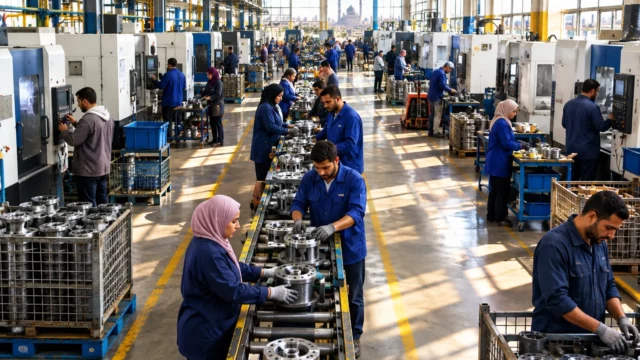
The IMF estimates that Egypt’s real gross domestic product grew by 5.1% during the 2025-2026 financial year, which ended on 30 June 2026. A rebound in activity linked to the Suez Canal and the oil sector contributed to this performance, alongside strength in manufacturing, tourism and telecommunications. Reuters also reported this figure and the main drivers of growth in its account of the agreement.
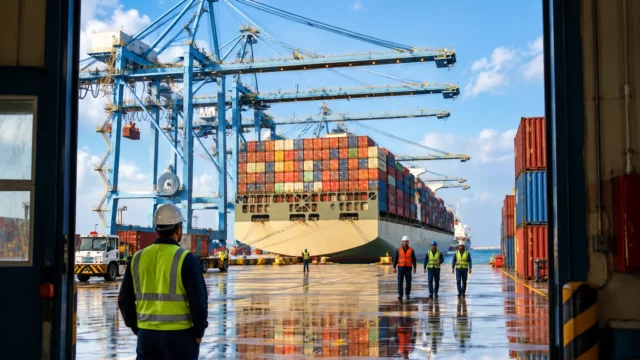
The Suez Canal remains a sensitive point for the country’s finances. The waterway links the Red Sea to the Mediterranean and is an important source of foreign-currency earnings. Disruptions to regional trade can therefore weigh on Egyptian economic activity, even when factories, services and tourism support growth. The Fund says inflation has evolved more favourably than expected, while remaining high.
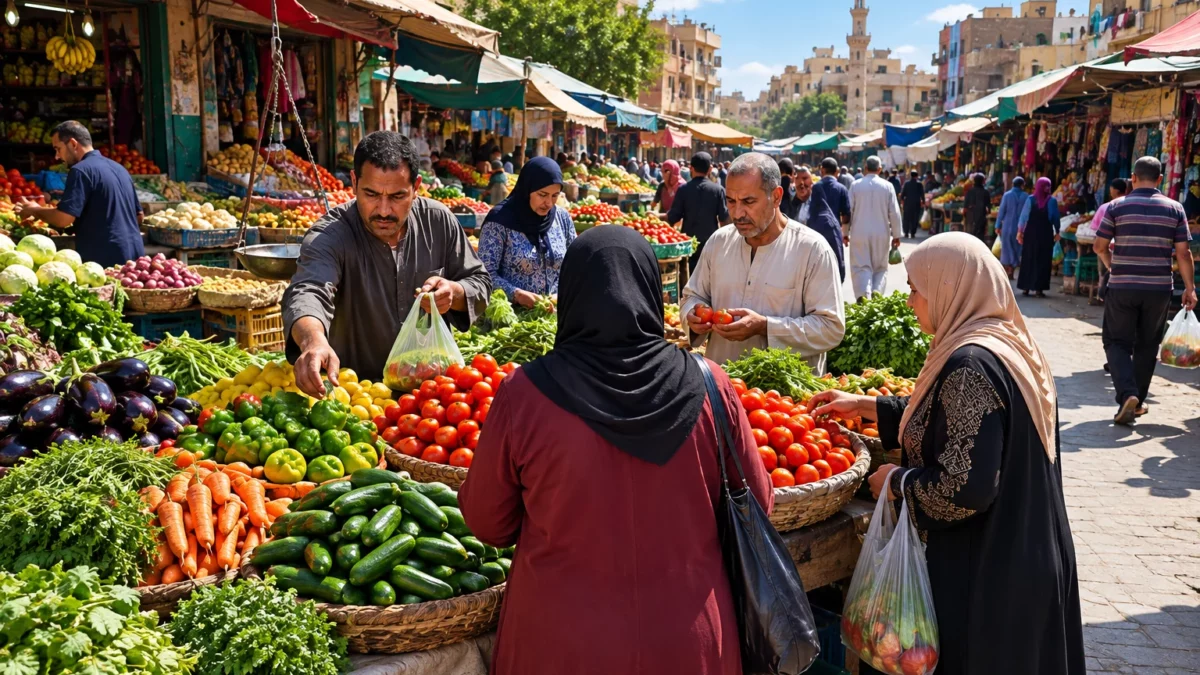
The picture remains mixed. Improvements in macroeconomic indicators — those that describe the economy as a whole — do not automatically mean an equivalent rise in purchasing power. Households, particularly those whose incomes adjust slowly, feel the cost of goods and services directly. For businesses, access to finance and the ability to invest remain crucial to turning a sectoral recovery into lasting jobs.
The question of the state’s role and the private sector
Among the priorities highlighted by the IMF is opening the economy further to the private sector. The Fund is calling for stronger competition and investment, and for fewer obstacles that can hold back private businesses. This approach forms part of reforms pursued in recent years, at a time when the state and state-owned enterprises have a significant presence in several sectors of the Egyptian economy.
Implementation matters as much as the announcement. More balanced competition can encourage investment and job creation, but its effects depend on the rules applied and the sectors concerned. Large companies, small businesses and workers will not necessarily benefit at the same pace. The IMF also stresses that macroeconomic stability still needs to translate into better economic prospects and an improving standard of living for Egyptians.
The authorities must also contend with the burden of debt and substantial financing needs. In this context, repayments and the cost of credit leave less room for other public spending. A tightening of global financial conditions could deepen these constraints. Likewise, a further escalation of regional conflicts could disrupt trade and investment.
Implications beyond Egypt’s borders
Egypt’s economic outlook is closely linked to trade between the Mediterranean, the Red Sea and the Middle East. A sustained recovery in traffic through the Suez Canal could support its revenues and facilitate trade between Asia, Europe and Africa. Conversely, prolonged regional tensions could affect trade routes, investment and tourism. The IMF also points to a more favourable scenario if tensions ease and reforms proceed more quickly.
In North Africa, Egypt is a member of the Arab Maghreb Union (AMU), a regional organisation that also brings together Algeria, Libya, Mauritania and Tunisia. Its economic influence and role in maritime routes nevertheless give the issue a reach beyond this institutional framework. For the African Union, the matter concerns the resilience of economies to external shocks, states’ ability to fund their priorities and the conditions needed for job-creating growth.
The next milestone is the decision by the IMF Executive Board. It will determine whether the roughly $2.3bn earmarked for Egypt can be released. But the end of the programme will not end the questions that have accompanied it: debt levels, the role of state-owned enterprises, private investment and the protection of purchasing power. Success will also be measured by how far the gains from stability reach households and businesses, in Cairo and across the regions.