Algeria
 Egypt
 Libya
 Sudan
 Tunisia
 Benin
 Burkina Faso
 Cabo Verde
 Côte d'Ivoire
 Ghana
 Guinea
 Guinea-Bissau
 Liberia
 Mali
 Mauritania
 Niger
 Nigeria
 Senegal
 Sierra Leone
 The Gambia
 Togo
 Cameroon
 Central African Republic
 Chad
 DR Congo
 Equatorial Guinea
 Gabon
 Republic of the Congo
 São Tomé and Príncipe
 Burundi
 Comoros
 Djibouti
 Eritrea
 Ethiopia
 Kenya
 Madagascar
 Malawi
 Mauritius
 Mozambique
 Rwanda
 Seychelles
 Somalia
 South Sudan
 Tanzania
 Uganda
 Angola
 Botswana
 Eswatini
 Lesotho
 Namibia
 South Africa
 Zambia
 Zimbabwe
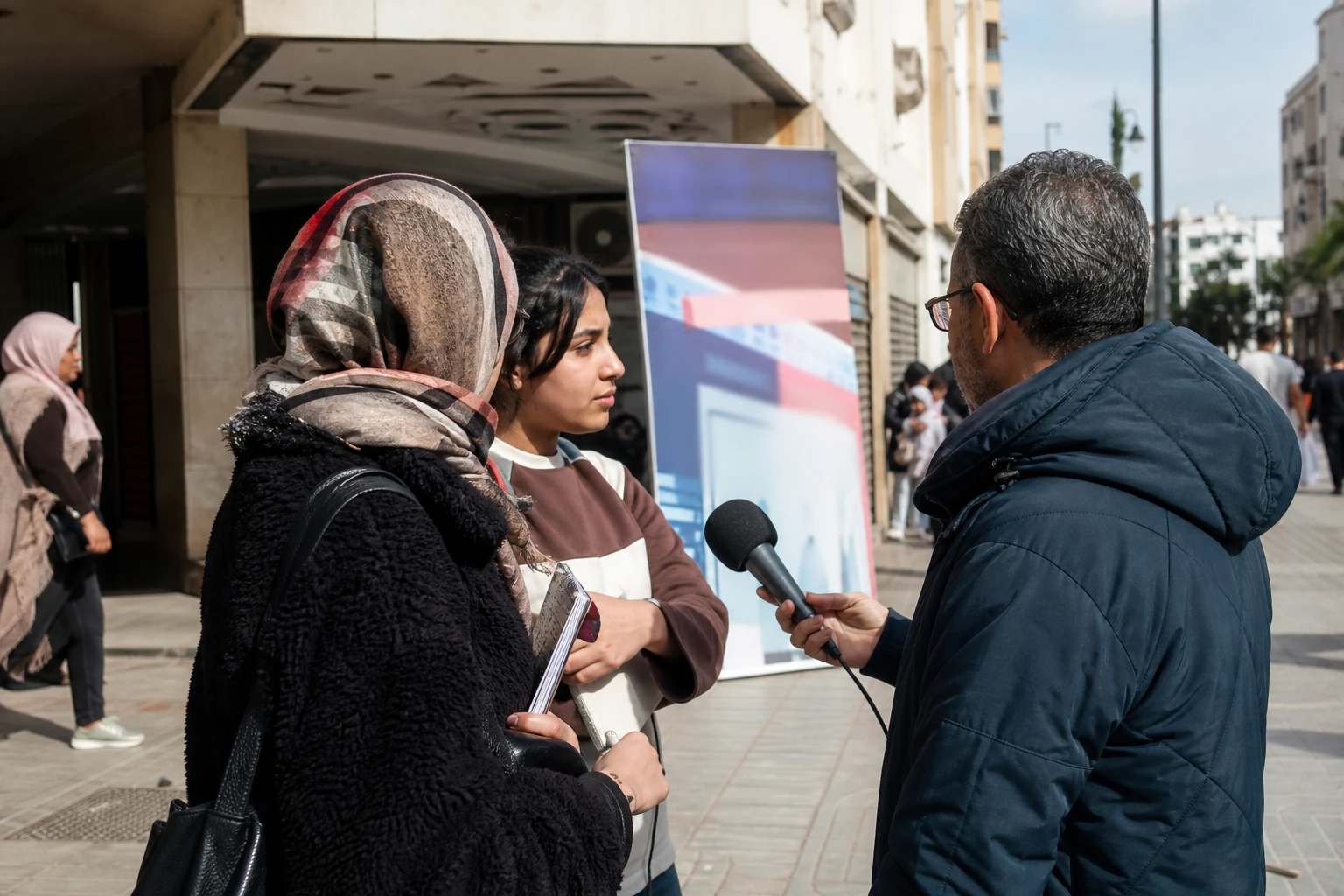
In Salé, cinema does more than tell women’s stories. It also examines the place they occupy behind the camera, in writing, production and distribution networks. For more than two decades, the Salé International Women’s Film Festival has made this a central theme in Moroccan and African film debate.
The 19th edition of the event is scheduled to run from 28 September to 3 October 2026. Held in the city of Salé, next to Rabat, the festival continues its editorial focus on women’s filmmaking and representations of women on screen. Its programme combines a competition, tributes, industry meetings and screenings for young audiences. The official website of the Salé festival also features works from Morocco, the African continent and other parts of the world.
A Moroccan festival that has become a space for dialogue
The choice of Salé is no accident. The city forms part of the same urban area as Rabat, Morocco’s capital, while retaining its own cultural identity. The festival thus helps decentralise film life, which is often concentrated around major events in Casablanca, Marrakech or Rabat.
Over the years, the event has championed an approach that goes beyond the mere presence of actresses on the red carpet. Discussions also address access to funding, working conditions, the roles offered to actresses and recognition for women directors. This shift matters. Visibility is not enough if women remain a minority in the positions that determine content, budgets and the circulation of films.
Moroccan actress Bouchra Ahrich sums up this approach by noting that the festival supports women both through the films it screens and the place it gives to women professionals during the event. Her point relates to a practical issue: showing female characters does not guarantee that women have real creative power in the industry.
The programme therefore aims to bring generations and professions closer together. Exchanges between women and men directors, screenwriters, actresses and producers enable them to compare experiences. They also give young women professionals direct access to people who can support a project after its first presentation.
Making films accessible to Moroccan audiences
One of the changes highlighted is the Arabic subtitling of films shown at the festival. This directly affects the relationship between works and audiences. At an international festival, language can become a barrier. Removing it allows more viewers to follow the dialogue, social nuances and directorial choices.
This issue is particularly important in Morocco, where Arabic, Amazigh, French and other languages of creative expression are spoken. Arabic subtitles do not replace this diversity. Rather, they broaden access to films, especially for viewers who do not speak the languages used in some foreign productions.
The measure also forms part of a wider debate on democratising culture. A festival is not just for industry professionals and guests. It should be able to reach local residents, students, families and audiences who are far from the usual circuits of film culture. In Salé, welcoming audiences is part of the event’s identity, with a strong turnout at screenings and ceremonies.
Tributes that connect memory and renewal
The festival combines the discovery of new talent with recognition for established careers. This dual approach avoids setting heritage against renewal. It recalls that Moroccan cinema has been built up in successive layers, thanks to filmmakers, technicians and performers who have worked for several decades.
Moroccan director Mohammed Abderrahman Tazi is among the professionals honoured. His career, spanning more than 60 years, illustrates the continuity of a national industry capable of producing its own stories and bringing different perspectives to the fore. The fact that a man is honoured at a festival devoted to women can be seen as a choice in favour of dialogue, not a departure from its purpose.
Mohammed Abderrahman Tazi has urged filmmakers to show the situation of women in Morocco, noting that they make up half of society. The statement underlines cinema’s responsibility in shaping perceptions. It does not mean that men should speak on women’s behalf. Rather, it is a reminder that equality concerns the entire industry and society.
The presence of women directors and screenwriters from other African countries strengthens this discussion. Burkinabè filmmaker Orokiatou Baro, associated with the film Burnikabe in the programme presented, embodies the exchange of experiences between the continent’s film industries. Such exchanges make it possible to compare production conditions, themes and strategies for bringing a work to audiences.
From Salé to Ouagadougou, talent on the move
A festival also acts as an informal marketplace for ideas. Industry professionals discover films, scripts and individuals who could join other programmes. For young filmmakers, a screening can therefore open the door to a conversation with a producer, programmer or festival executive.
The link with the Pan-African Film and Television Festival of Ouagadougou, FESPACO, illustrates this dynamic. Held in Burkina Faso, it is one of the leading platforms for the distribution of African cinema. Connections between Salé and Ouagadougou could help films produced in Morocco, Burkina Faso and other African countries reach wider audiences.
This circulation nevertheless depends on several factors: funding, subtitling, distribution, screening rights and access to cinemas. Selection for a festival raises a film’s profile, but does not guarantee a commercial release or an enduring connection with audiences. That is why debates on funding and professional opportunities are central in Salé.
At regional level, the festival is part of a North African and African landscape in which film industries are seeking to strengthen their networks. Morocco has long-standing experience in festivals and production. Other countries are also developing film schools, workshops and creative platforms. The shared challenge now is to better connect these initiatives without relying solely on European or North American circuits.
The next edition should therefore be viewed through two lenses. The first is artistic: what stories, forms and perspectives will women directors offer? The second is professional: which meetings will lead to co-productions, funding or distribution in other African countries? In Salé, the question of representation thus becomes a question of power, work and the circulation of images.