Algeria
 Egypt
 Libya
 Sudan
 Tunisia
 Benin
 Burkina Faso
 Cabo Verde
 Côte d'Ivoire
 Ghana
 Guinea
 Guinea-Bissau
 Liberia
 Mali
 Mauritania
 Niger
 Nigeria
 Senegal
 Sierra Leone
 The Gambia
 Togo
 Cameroon
 Central African Republic
 Chad
 DR Congo
 Equatorial Guinea
 Gabon
 Republic of the Congo
 São Tomé and Príncipe
 Burundi
 Comoros
 Djibouti
 Eritrea
 Ethiopia
 Kenya
 Madagascar
 Malawi
 Mauritius
 Mozambique
 Rwanda
 Seychelles
 Somalia
 South Sudan
 Tanzania
 Uganda
 Angola
 Botswana
 Eswatini
 Lesotho
 Namibia
 South Africa
 Zambia
 Zimbabwe
An Atlantic corridor that goes beyond energy
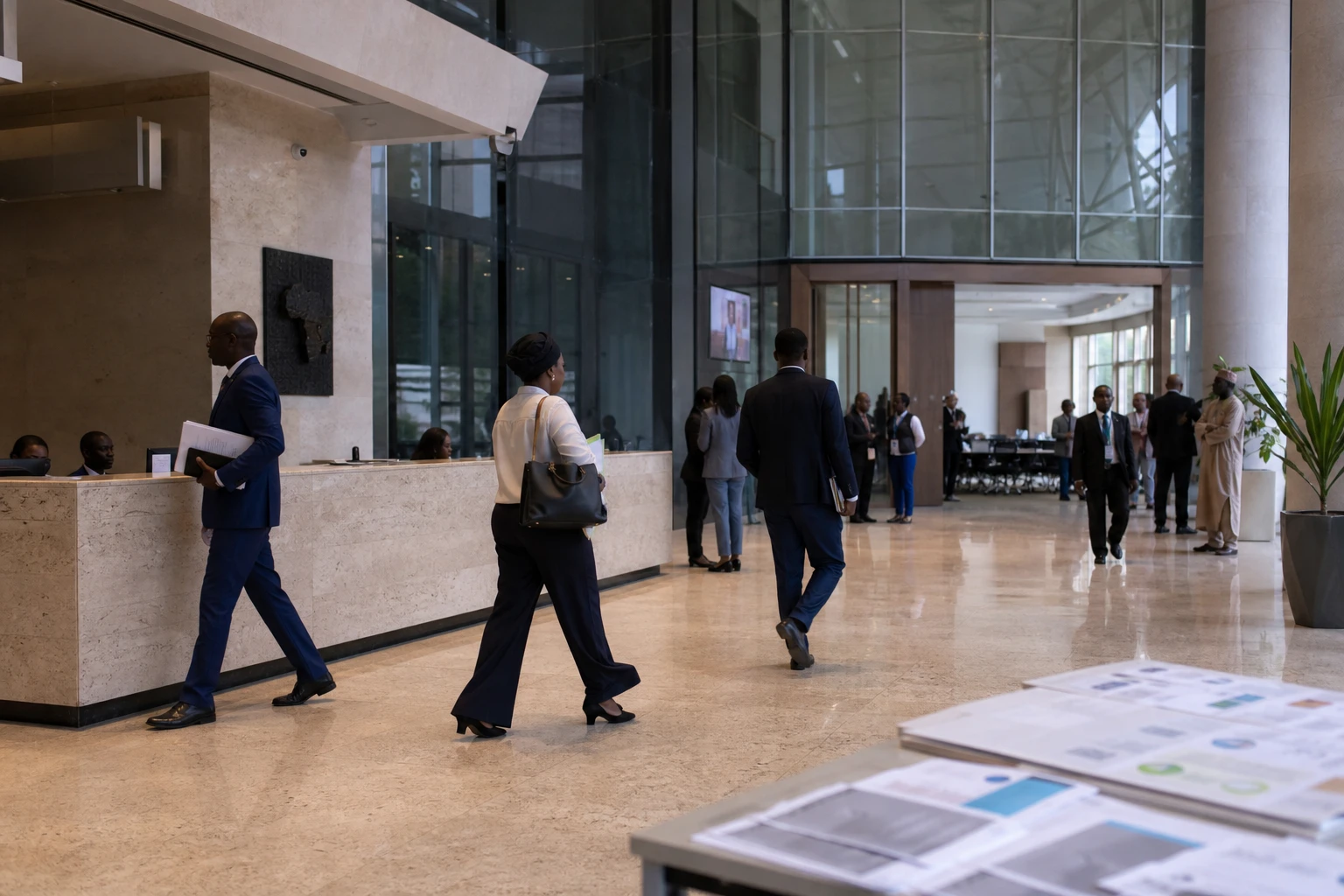
For Rabat, the Nigeria–Morocco gas pipeline is no longer just an engineers’ idea. It has become an instrument of diplomacy, financing and regional positioning. The project is moving slowly, but continues to bring together states, institutions and very different interests around a shared promise: better connections between the Gulf of Guinea, West Africa and Europe through energy infrastructure on a vast scale.
This phase is unfolding in a West African region already shaped by other major projects, including the West African Gas Pipeline and regional electricity schemes. ECOWAS, the Economic Community of West African States, sees the pipeline as a tool for integration and energy security. Morocco, meanwhile, is seeking to strengthen its position as a corridor between Africa’s Atlantic coast and the European market. Nigeria, which holds Africa’s largest proven gas reserves, sees it as an additional outlet for a strategic resource that remains underused nationally and regionally.
Institutional progress, then the decisive question of money
On 1 November 2024 in Abuja, energy and hydrocarbons ministers from ECOWAS member states, joined by Morocco and Mauritania, adopted a revised version of the intergovernmental agreement and the host government agreement for the project. The scheme was also given its official name: the African Atlantic Gas Pipeline, or AAGP. The meeting confirmed that the FEED, the detailed engineering work carried out before construction, was well advanced.
In 2025, Rabat said that feasibility studies and preliminary design had been completed, with an optimised route now agreed. The Moroccan government also spoke of setting up a dedicated company with Abuja to prepare for the final investment decision. The project’s cost remained in the range of $25 billion, with announced capacity of around 30 billion cubic metres a year.
The latest phase, made public in July 2026, concerns financing. Morocco is in talks with the Export-Import Bank of the United States, the US export credit agency, and the World Bank. Morocco’s ambassador to Washington, Youssef Amrani, confirmed that the discussions were under way, without giving details of the sums or instruments under consideration. At the same time, initial signals from US and multilateral institutions remain cautious, and no firm commitment has been announced so far.
What the project could change, country by country
The gas pipeline’s potential is not limited to Nigeria and Morocco. The plan approved by ECOWAS предусматривает passage through 13 West African countries, with very different effects for each territory along the route. For coastal countries, the infrastructure could provide more reliable access to gas for electricity generation, industry and household uses such as clean cooking. For landlocked countries, it could strengthen security of supply, provided interconnections and tariffs are in place.
Morocco, for its part, is banking on a role as a hub. The future network is due to connect to the Maghreb-Europe gas pipeline, which links to Spain, opening the way for some of the volumes to reach the European market. Moroccan authorities present this link as an industrial, digital and logistics lever. But dependence on financing remains total until the final investment decision is signed.
Mauritania also has an important place in the scheme. Its geographical position between the Sahel and the Atlantic makes it a transit country and an anticipated technical partner. One of the next steps announced by the project’s promoters is a specific agreement with Nouakchott, to be signed at a later date, possibly in the presence of Nigeria’s president. The timetable will nevertheless depend on political decisions, financial guarantees and social and environmental impact studies that are still under way.
Beyond governments, the project touches on very concrete realities. Better gas availability could help stabilise urban electricity grids, support coastal industrial zones and reduce pressure on fuel imports. But it could also raise high expectations in rural areas along the route, where access to local benefits, land compensation and construction jobs is becoming a central issue.
A strategic infrastructure project, still exposed to the usual megaproject risks
The project remains vulnerable on three fronts. First, the cost. Even at $25 billion or $26 billion, according to recent estimates, it requires a complex financial structure combining equity, export credit, guarantees and multilateral lenders. Second, governance. The division of responsibilities between states, operators and project companies still needs to be finalised. Finally, the timetable. The promoters sometimes envisage construction starting in 2028 and first deliveries around 2031, but those dates still depend on the signing of financial and regulatory agreements.
The project is also part of a wider energy competition across the continent. It intersects with Algerian, Nigerian, Moroccan and European ambitions around gas routes. It is unfolding, moreover, as several international institutions have revised their priorities: energy security, industrialisation, a gradual transition and the financing of regional infrastructure. In this equation, the Nigeria–Morocco gas pipeline is less an immediate promise than a test of Africa’s ability to turn a cross-border idea into a functioning project through cooperation.
The next steps will therefore depend on the signatures to come. If the agreement with Mauritania is indeed finalised and a credible financing package is put together, the project could move from diplomatic rhetoric to the operational phase. Without financing, however, the corridor will remain a grand strategic plan, politically useful but still far from becoming a reality on the ground.