Algeria
 Egypt
 Libya
 Morocco
 Sudan
 Tunisia
 Benin
 Burkina Faso
 Cabo Verde
 Côte d'Ivoire
 Ghana
 Guinea
 Guinea-Bissau
 Liberia
 Mali
 Mauritania
 Nigeria
 Senegal
 Sierra Leone
 The Gambia
 Togo
 Cameroon
 Central African Republic
 Chad
 DR Congo
 Equatorial Guinea
 Gabon
 Republic of the Congo
 São Tomé and Príncipe
 Burundi
 Comoros
 Djibouti
 Eritrea
 Ethiopia
 Kenya
 Madagascar
 Malawi
 Mauritius
 Mozambique
 Rwanda
 Seychelles
 Somalia
 South Sudan
 Tanzania
 Uganda
 Angola
 Botswana
 Eswatini
 Lesotho
 Namibia
 South Africa
 Zambia
 Zimbabwe
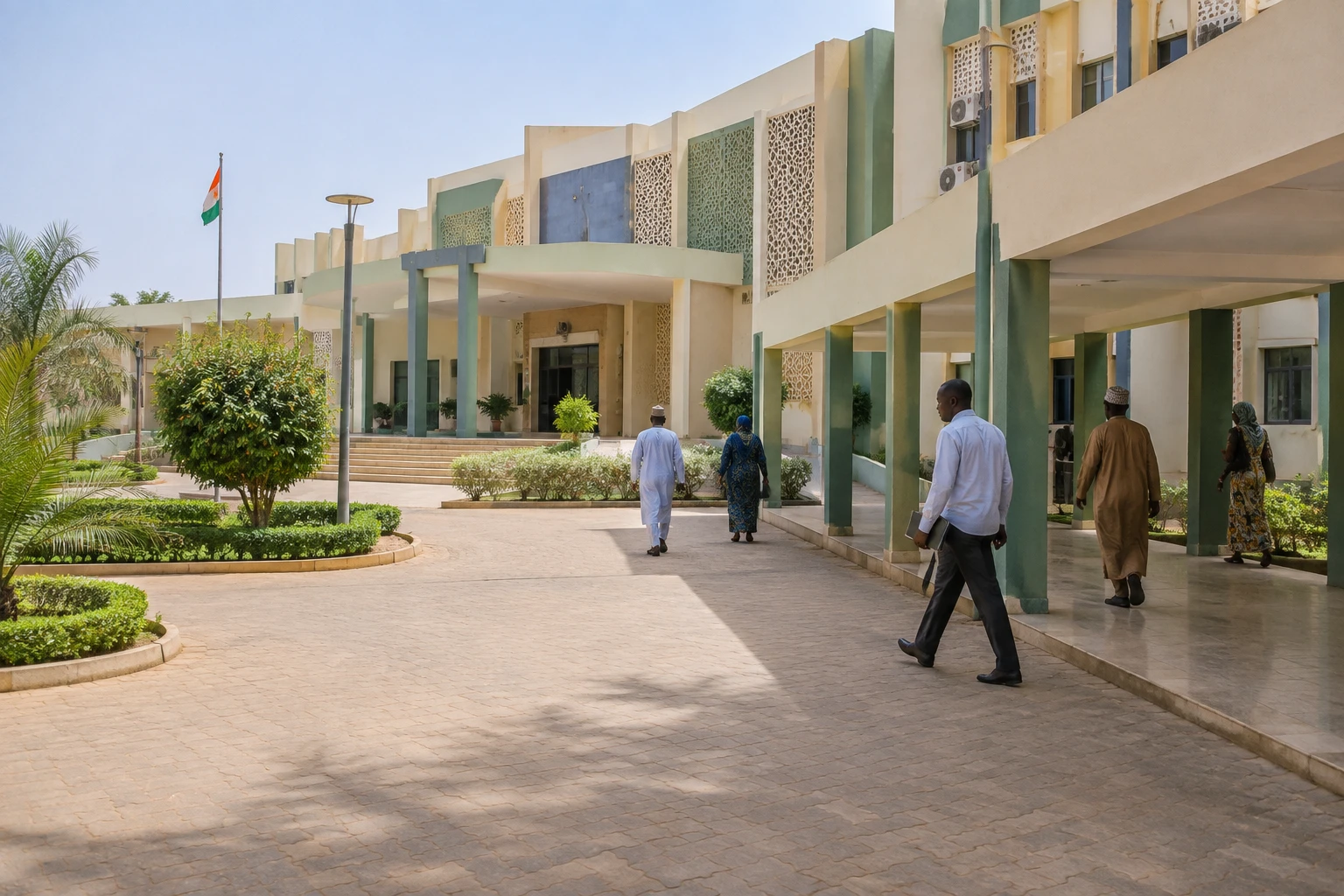
In Niamey, uncertainty over Moussa Kaka’s fate has changed in nature. Nigerien authorities now acknowledge that they are holding the director of Radio Télévision Saraounia, but have not made public where he is being held or the precise allegations against him.
Proof of life, but no details about his detention
Niger’s Minister of Justice and Human Rights, Alio Daouda, confirmed on 25 September 2026, before the United Nations Human Rights Council in Geneva, that the journalist was being held. He said that Kaka had allegedly committed an offence and would have to answer to the courts. On 6 October, he also confirmed to Reporters Without Borders (RSF) that Moussa Kaka was alive.
This confirmation ends several weeks without public information about his fate. However, it does not specify the legal basis for his detention or where he is being held. RSF says the journalist is unable to contact either his relatives or a lawyer, and describes the situation as an enforced disappearance and arbitrary detention. These are the organisation’s characterisations; the authorities have not provided a detailed response on these points. RSF reports the minister’s statements and its demands concerning the detention.
Moussa Kaka has not been heard from since 31 August, after leaving his media organisation’s offices in Niamey to go home. His vehicle was also missing, according to information provided by the World Organisation Against Torture and the International Federation for Human Rights. The minister has therefore provided essential information about Kaka’s fate, but not the details that would allow his family and lawyers to verify the conditions of his detention. The urgent appeal by the OMCT and FIDH recounts his disappearance in Niamey.
A case unfolding amid heightened tensions
The disappearance occurred two days after military events were reported in Niamey, on 29 August. However, no public evidence establishes a link between these events and Moussa Kaka’s detention. The proximity of the dates sheds light on the climate of uncertainty, but is not enough to explain the grounds for the case.
The case concerns an experienced journalist, director of a Nigerien media outlet and former correspondent for Radio France Internationale and RSF. He had already been arrested alongside five other journalists in Niamey in October 2025, after an invitation to a press conference circulated on social media. The six were prosecuted under the cybercrime law and released on bail, according to the OMCT and FIDH. Human rights organisations documented the prosecutions at the time.
This previous case does not prove that his current detention is linked to his work. It nevertheless serves as a reminder of the risks journalists may face when content published or shared online leads to prosecutions. In 2007, under President Mamadou Tandja, Moussa Kaka also spent about a year in detention before being released in 2008. This history lends particular weight to the concerns being voiced today, without prejudging the outcome of the case.
For his relatives, the immediate issues are practical: to know where he is, to be able to communicate with him and to obtain legal assistance. For journalists and newsrooms, the detention of a media director may also encourage caution in covering sensitive information. Its effects therefore extend beyond one person: they affect the conditions under which the Nigerien public can access information and competing viewpoints.
Calls on Nigerien authorities
RSF is calling for Moussa Kaka’s immediate release and says the authorities must safeguard his physical and psychological integrity. The NGO cites in particular the International Convention for the Protection of All Persons from Enforced Disappearance, which Niger has ratified. It considers that detention by state agents, accompanied by the concealment of a person’s fate or whereabouts, falls within the definition of enforced disappearance.
The case has also been brought before international mechanisms. RSF has appealed to the United Nations Working Group on Enforced or Involuntary Disappearances. The Committee on Enforced Disappearances has asked Niger to clarify the journalist’s fate and place of detention. The African Commission on Human and Peoples’ Rights has also been approached over freedom of expression and access to information. These steps do not replace domestic proceedings, but they increase the case’s institutional visibility.
An issue extending beyond Niger
The situation is unfolding amid regional realignment. Since 29 January 2025, Niger, Mali and Burkina Faso have no longer been members of the Economic Community of West African States (ECOWAS), the regional organisation tasked, among other things, with promoting co-operation among its member states. This political change does not alter Niger’s international human rights obligations, but it changes the regional frameworks for dialogue and monitoring. ECOWAS confirmed the date on which the three countries’ withdrawal took effect.
The next decisive step remains a national one: the authorities can specify the charges, disclose the place of detention, allow access to a lawyer and bring the journalist before a competent court. Until this information is provided, official recognition of his detention amounts to proof of life, but does not resolve the central questions about the legality and conditions of his confinement.