Algeria
 Egypt
 Libya
 Morocco
 Sudan
 Tunisia
 Benin
 Burkina Faso
 Cabo Verde
 Côte d'Ivoire
 Ghana
 Guinea
 Guinea-Bissau
 Liberia
 Mali
 Mauritania
 Nigeria
 Senegal
 Sierra Leone
 The Gambia
 Togo
 Cameroon
 Central African Republic
 Chad
 DR Congo
 Equatorial Guinea
 Gabon
 Republic of the Congo
 São Tomé and Príncipe
 Burundi
 Comoros
 Djibouti
 Eritrea
 Ethiopia
 Kenya
 Madagascar
 Malawi
 Mauritius
 Mozambique
 Rwanda
 Seychelles
 Somalia
 South Sudan
 Tanzania
 Uganda
 Angola
 Botswana
 Eswatini
 Lesotho
 Namibia
 South Africa
 Zambia
 Zimbabwe

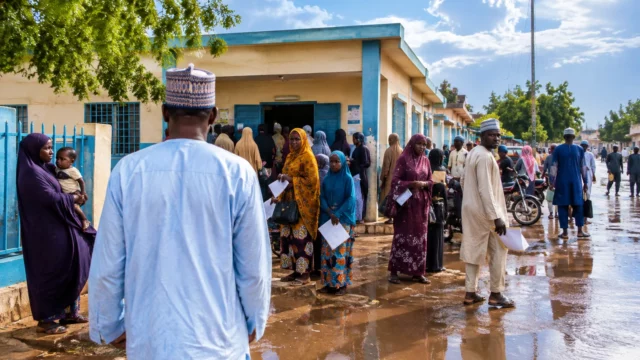
For residents of Tillim, travelling to the weekly fair in Téra is an ordinary journey. On Thursday 12 November, that trip in western Niger is said to have turned into a deadly trap. The toll reported by local sources is high, but had not been confirmed in an official statement at the time the first information became available.
A transport route made vulnerable
Tillim and Téra are in the Tillabéri region of western Niger, near the borders with Burkina Faso and Mali. Distances, travel between villages and access to markets shape daily life in this area. Journeys to a fair are therefore not just commercial: they connect residents to trade, services and local networks.
But these roads cross a border area where several armed groups are active. National borders do not always stop their movements. For the authorities, the challenge is to secure the routes without disrupting the activities on which people depend. For residents, an escort can provide protection, but it can also make a convoy more visible and expose it to attack.
The situation comes as Niger, Mali and Burkina Faso have left the Economic Community of West African States (ECOWAS), a regional organisation for integration and political cooperation. The three countries have established the Alliance of Sahel States (AES), which notably promotes security cooperation among its members. This change in the diplomatic framework does not, however, eliminate cross-border threats or the need to protect civilians.
What is known — and what remains to be established
According to information gathered from local sources and carried in the first reports of the incident, residents of Tillim were travelling to the weekly fair in Téra on Thursday morning when they were reportedly caught in an ambush between the two localities. They were travelling under escort by members of a local self-defence group. The attackers are described as unidentified armed men.
The figure cited by these sources is at least 37 dead. They reportedly include 11 members of the self-defence group, as well as women and children. The wounded are said to have been taken to Téra hospital. In the absence of official confirmation and accessible independent corroboration of the toll, these details must remain attributed. The number of victims, their identities and the precise circumstances of the attack may change as the authorities and families establish the facts.
The initial reports also do not make it possible to attribute the attack with certainty to a specific organisation. A report published on 13 November links it to Islamic State in the Sahel, but the available evidence is not sufficient to establish that attribution independently. A possible claim of responsibility, a local source’s hypothesis and responsibility confirmed by an investigation must be distinguished.
This caution does not minimise the gravity of the report. It helps prevent information that is still partial from being turned into certainty, especially when it concerns a human toll and the identity of those responsible. Nigerien authorities had not issued a toll at the time of the first reports.
Past attacks weigh on communities
Téra and its surroundings have already seen deadly attacks. In March 2025, an attack on civilians in Fambita, in the Téra department, was the subject of reports describing numerous victims. In November 2025, media also reported the deaths of gendarmes in an attack on a post in the region. These incidents do not prove who was responsible for the ambush of 12 November 2026. They nevertheless show the continuing pressure of armed violence in western Niger.
The consequences go beyond the immediate toll. When a route to a market becomes dangerous, traders may cut back on travel, producers may sell further away or at lower prices, and families may forgo certain services. Small formal and informal businesses are affected. Women and young people, who are often heavily involved in trade and local travel, may be particularly affected.
Self-defence groups are part of this complex reality. They can accompany residents where the presence of public forces is limited. But their role, chain of command and level of training raise questions about protection and accountability. A local escort is no substitute for a lasting public presence or investigations capable of establishing the facts after an attack.
The response will also depend on the long term
In Niamey, the immediate priority is to verify the toll, identify the victims, treat the wounded and secure travel around Téra. What follows will also depend on the authorities’ ability to share verifiable information with communities. In times of uncertainty, official silence leaves more room for rumours and premature attributions.
At regional level, the reported attack is a reminder that a response confined to one country faces the mobility of armed groups along borders. Cooperation between neighbouring countries, intelligence-sharing and civilian protection remain shared challenges for Niger, Burkina Faso and Mali. The AES is now a framework claimed by the three states, while their withdrawal from ECOWAS is changing the channels for regional cooperation. The practical effectiveness of these arrangements will have to be measured by their ability to protect routes and populations.
For residents of Tillim, the immediate question is simpler: will they be able to take the road to Téra again without risking another ambush? The answer will not depend only on occasional patrols. It will also rest on a sustained public presence, access to markets and trust between communities and the authorities. At this stage, the reported toll remains to be officially confirmed and the attackers’ identities have not been independently established.