Algeria
 Egypt
 Libya
 Morocco
 Sudan
 Tunisia
 Benin
 Burkina Faso
 Cabo Verde
 Côte d'Ivoire
 Ghana
 Guinea
 Guinea-Bissau
 Liberia
 Mali
 Mauritania
 Nigeria
 Senegal
 Sierra Leone
 The Gambia
 Togo
 Cameroon
 Central African Republic
 Chad
 DR Congo
 Equatorial Guinea
 Gabon
 Republic of the Congo
 São Tomé and Príncipe
 Burundi
 Comoros
 Djibouti
 Eritrea
 Ethiopia
 Kenya
 Madagascar
 Malawi
 Mauritius
 Mozambique
 Rwanda
 Seychelles
 Somalia
 South Sudan
 Tanzania
 Uganda
 Angola
 Botswana
 Eswatini
 Lesotho
 Namibia
 South Africa
 Zambia
 Zimbabwe
A larger budget, but still constrained
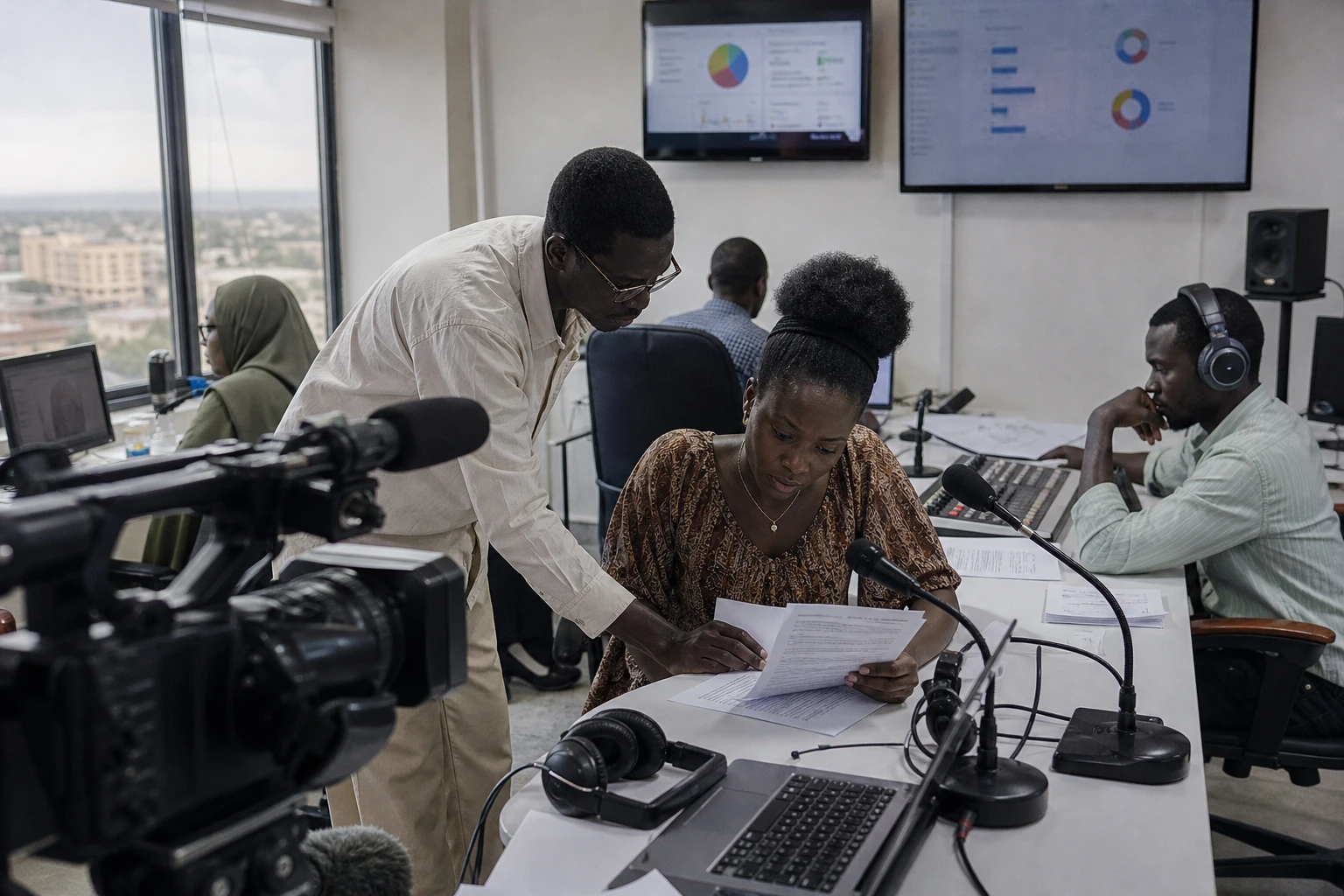
In Niamey, Niger’s budget equation remains the same: fund the state, secure the territory and support an economy kept afloat by its resources, without allowing imbalances to widen too quickly. The first revision of the 2026 Finance Act reflects this tension. It raises the general budget to CFAF 2,980.54 billion, from CFAF 2,922.22 billion initially, an increase of 2 %. This change may seem modest. Yet it says a great deal about the priorities of the moment.
Niger is operating in a regional environment that has become more closed and uncertain. Since 29 January 2025, the country has no longer been part of ECOWAS, the Economic Community of West African States, although transitional arrangements continue to govern some trade and the movement of people. At the same time, the state is relying more heavily on its own revenues, oil, uranium and gold to cushion external shocks and fund its policy choices.
What the revision adopted in Niamey changes
The Council of Ministers adopted this first revision on 21 August 2026. According to the authorities, the measure takes account of the new government structure, changes in the security situation and the need to provide additional funding for the Defence and Security Forces. It is a clear political signal: in Niger today, public spending remains first and foremost an instrument of internal stability.
The revision is not based solely on security. It also factors in the impact of the crisis in the Middle East on international oil prices, as well as the reorganisation of some public bodies. The government says that services attached to the presidency, the prime minister’s office and the general secretariat of the government are being abolished, with their responsibilities transferred to certain ministries. In other words, the revision does more than add money: it also reshapes the administrative machinery.
This approach follows a pattern already visible when the 2026 budget was first adopted. At the end of December 2025, the executive said the Finance Act would rely on agricultural dynamism, the continuation of major projects, an expected rise in oil production, increased uranium production as SOMIDA ramps up operations, and the development of special economic zones in Niamey and Maradi. The August revision does not change course. It adjusts it to the realities of the year.
Extractive industries as a driver, but not the only solution
Niger’s economic wager remains clear: to turn its underground resources into visible revenues more quickly. The government points to estimated growth of 6.9 % in 2025, while the IMF forecasts 6.7 % for 2026. This trajectory is underpinned by oil, uranium, agriculture and, increasingly, gold. The country wants these sectors to provide a stronger budgetary base. But dependence on commodities also makes the balance more fragile.
On gold, the authorities say that just over 1.7 tonnes were declared in 2025, worth more than CFAF 109 billion. The figure was cited by the Ministry of Mines and then reported by several sources, including the Nigerien Press Agency and the African Press Agency. The message is significant: Niger wants to capture more of the value of a sector long dispersed among artisanal mining, declared exports and tax losses.
The government also says it wants to simplify the tax system to revive economic activity and support the gold sector. The logic is straightforward: less complexity for operators, greater clarity for the administration and, it is hoped, more sustainable revenues for the state. In a country where the informal economy accounts for a large share of activity, tax reform is shaped as much in Niamey’s offices as in the actual channels through which goods, services and artisanal gold circulate.
Security, public finances and regional power dynamics
The increase in security funding is not a minor accounting detail. It reflects a political reality: the Nigerien state is devoting a growing share of its room for manoeuvre to protecting the territory, economic corridors and production zones. In a Sahelian context marked by attacks by armed groups and pressure on borders, the budget also becomes a document of national strategy. Military and security spending weighs on the resources available for schools, healthcare and civilian investment.
Leaving ECOWAS has also changed the economic parameters. Niger remains linked to West African markets, but it no longer has the same institutional framework for harmonising free movement, trade and budgetary cooperation. The transitional period opened by ECOWAS still allows for the processing of community passports and goods from the three countries concerned, but the regional integration architecture has changed. For Niamey, this means greater emphasis on declared sovereignty, but also fewer automatic institutional supports.
Niger is therefore seeking a balance: funding the state without stifling activity, strengthening security without suffocating the budget, and developing extractive resources without becoming dependent on ore or oil. The 2026 revision reflects precisely this trade-off. It shows a country relying on its domestic revenues, reorganising its administrative apparatus and trying to lock in its priorities at a time when external shocks remain numerous.
Across the continent, Niger’s case will remain closely watched. First, because it illustrates how several Sahelian states are trying to rebuild their budgetary sovereignty in a tense security environment. Second, because the performance of oil, uranium and gold will directly affect the country’s financial credibility within the WAEMU, its ability to raise funds and the actual pace of its recovery. The next test will not only be the size of the budget. It will be its execution, line by line, in a country where the promise of growth has yet to translate into tangible improvements in Nigeriens’ lives.