Algeria
 Egypt
 Libya
 Morocco
 Sudan
 Tunisia
 Benin
 Burkina Faso
 Cabo Verde
 Côte d'Ivoire
 Ghana
 Guinea
 Guinea-Bissau
 Liberia
 Mali
 Mauritania
 Nigeria
 Senegal
 Sierra Leone
 The Gambia
 Togo
 Cameroon
 Central African Republic
 Chad
 DR Congo
 Equatorial Guinea
 Gabon
 Republic of the Congo
 São Tomé and Príncipe
 Burundi
 Comoros
 Djibouti
 Eritrea
 Ethiopia
 Kenya
 Madagascar
 Malawi
 Mauritius
 Mozambique
 Rwanda
 Seychelles
 Somalia
 South Sudan
 Tanzania
 Uganda
 Angola
 Botswana
 Eswatini
 Lesotho
 Namibia
 South Africa
 Zambia
 Zimbabwe
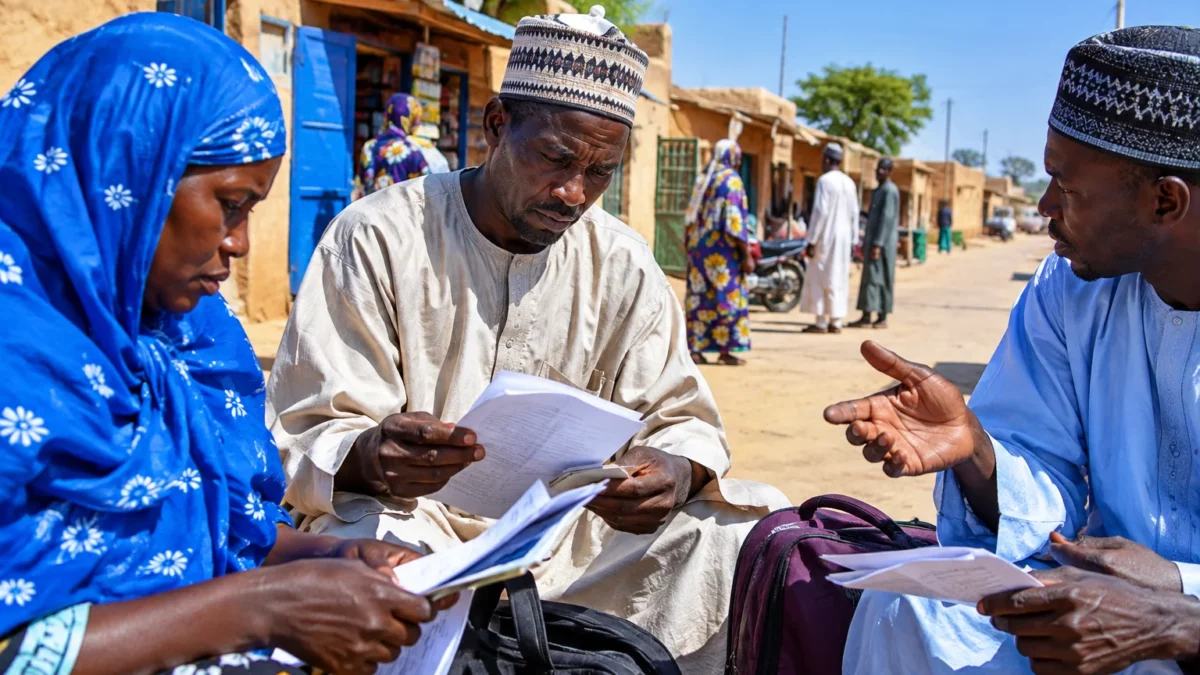
For families who have lived in Diffa for decades, a decision taken in Niamey can become an immediate question: where to live, and under which nationality? Chad, presented as their country of origin, refuses to admit them automatically. N’Djamena wants each case to be examined individually.
An ultimatum in a region under security pressure
Niger has ordered members of the Mahamid Arab community to leave its territory. In Chetimari, in the Diffa region, the prefect conveyed the instruction to community representatives on 14 November 2026 and reiterated a two-month deadline, according to the Nigerien Press Agency (ANP). An AFP dispatch published on 15 November, meanwhile, reports that the deadline communicated to the representatives is 31 December 2026. The two dates do not align exactly: Nigerien authorities have not yet publicly clarified the discrepancy between the deadline announced in Chetimari and the date reported by AFP. The ANP dispatch on the Chetimari meeting and AFP’s report on the 31 December date give these different indications.
Diffa lies in south-eastern Niger, near the Lake Chad Basin. The area has faced attacks by Boko Haram and the Islamic State West Africa Province, also known as ISWAP, for more than a decade. In August 2026, the Regional Security Council referred to alleged arms trafficking and logistical support involving certain individuals. Nigerien authorities nevertheless stressed that these suspicions should not be generalised to the entire community. On their own, they do not constitute proof of collective guilt. The ANP report on the allegations and the regional authorities’ clarifications distinguishes between the information presented by the services and individual responsibility.
Nationality cannot be inferred from origin
In a response reported on the basis of a statement from Chad’s foreign ministry, N’Djamena says that only Chadian nationals whose nationality is confirmed will be allowed to return. Other cases would be examined individually. The ministry stresses that belonging to an Arab community with links to Chad is not enough to establish Chadian citizenship. This position has been reported in published material, but the existence of an official text that can be accessed directly could not be confirmed by an independent source consulted.
The ministry also says that people suspected of offences should answer for their actions before Nigerien courts. Since criminal responsibility is individual, an accusation against some members does not justify, according to this position, the displacement of an entire group. The issue goes beyond the management of a border: it concerns proof of nationality, civil-status documents and the risk that some people may have no country willing to recognise them.
The Mahamid community lives mainly in the Diffa region. Its members have historic ties to Chad and Sudan, but several generations have grown up in Niger. Estimates of their number vary between sources; a single figure for those affected by the order to leave should therefore not be presented as established. Length of residence in a country, birth on its territory or family ties do not automatically settle a question of citizenship: this depends on national laws and the examination of individual cases.
A precedent weighing on the decision
The case recalls a crisis in 2006. Niger had then announced the expulsion of Mahamid to Chad, before suspending the operation following protests and regional interventions. The precedent shows that the issue is not new and that decisions taken in the name of security can quickly become a protection crisis and a source of tension between neighbours. The United Nations High Commissioner for Refugees had then called for details of the plan and its possible consequences.
Once again, Nigerien authorities cite administrative and security concerns. According to the official report from Diffa, they addressed documentation, access to nationality and alleged incidents involving certain individuals. In a region where pastoral movements and access to grazing land and water points shape economic activity, implementing a collective departure could also affect families and livelihoods beyond those directly suspected.
A test for relations between neighbours
For Chad, automatically accepting thousands of people would mean assuming a nationality that, according to N’Djamena, must be verified. For Niger, the challenge is to address its security concerns without conflating an entire community with alleged acts by certain individuals. For Diffa residents, the uncertainty now concerns documents, where they may live and whether they can remain with their relatives.
The two states share borders and security concerns in the Lake Chad Basin. They also belong to different regional frameworks: Chad is a member of the Central African Economic and Monetary Community (CEMAC), while Niger is a member of the Alliance of Sahel States and left the Economic Community of West African States (ECOWAS) in 2025. These memberships do not remove the need for bilateral co-ordination on population movements, border controls and nationality procedures.
The next steps will be decisive: clarification of the deadline, publication of transparent identification criteria and access to individual case reviews. It will also be necessary to establish whether Niamey will launch judicial proceedings over the alleged offences and whether N’Djamena will specify how return applications will be verified. Without these safeguards, a measure presented as administrative risks leaving families caught between two states, without a clear answer about their status.