Algeria
 Egypt
 Libya
 Sudan
 Tunisia
 Benin
 Burkina Faso
 Cabo Verde
 Côte d'Ivoire
 Ghana
 Guinea
 Guinea-Bissau
 Liberia
 Mali
 Mauritania
 Niger
 Nigeria
 Senegal
 Sierra Leone
 The Gambia
 Togo
 Cameroon
 Central African Republic
 Chad
 DR Congo
 Equatorial Guinea
 Gabon
 Republic of the Congo
 São Tomé and Príncipe
 Burundi
 Comoros
 Djibouti
 Eritrea
 Ethiopia
 Kenya
 Madagascar
 Malawi
 Mauritius
 Mozambique
 Rwanda
 Seychelles
 Somalia
 South Sudan
 Tanzania
 Uganda
 Angola
 Botswana
 Eswatini
 Lesotho
 Namibia
 South Africa
 Zambia
 Zimbabwe
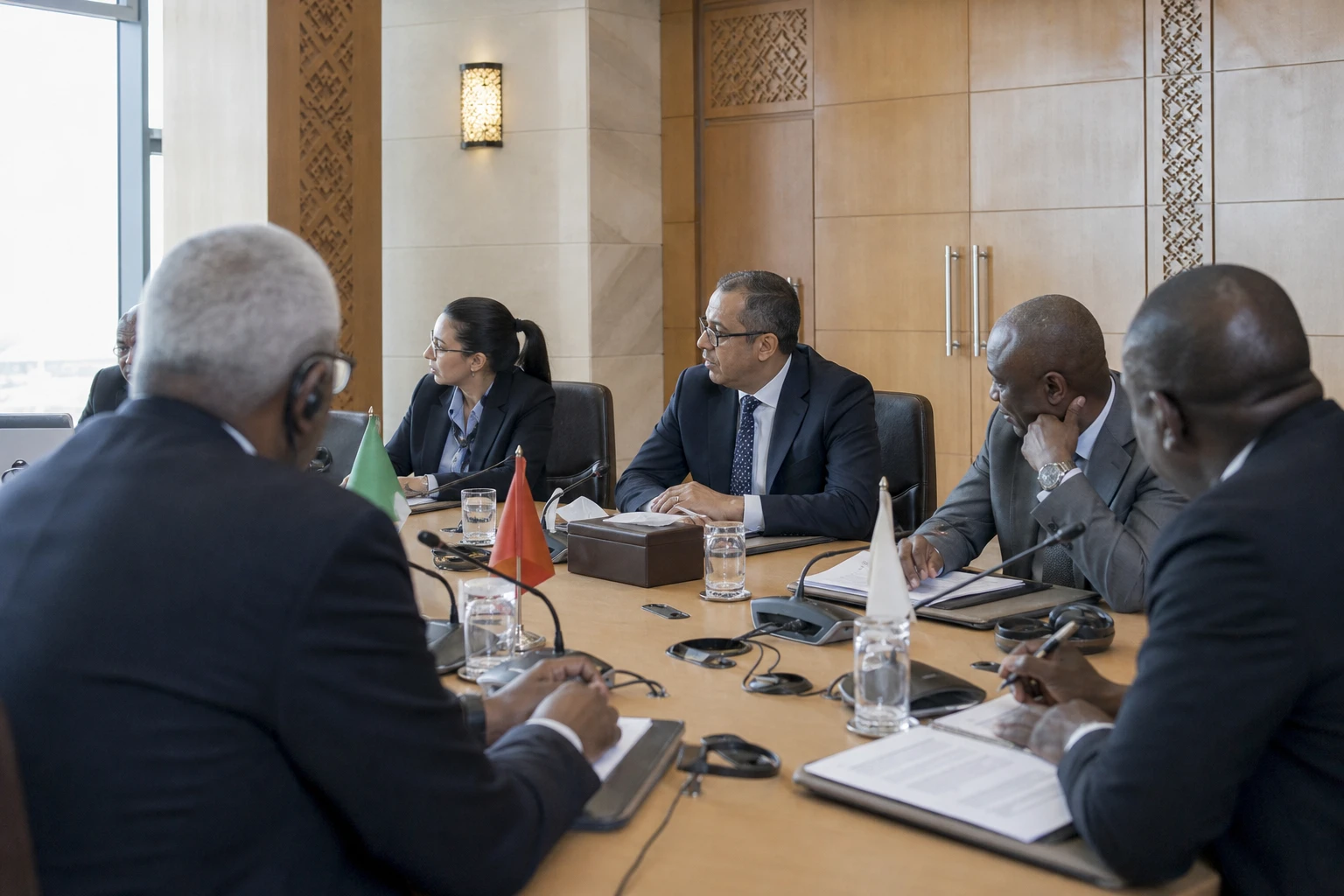
In Rabat, the appointment of Fatima Ezzahra El Mansouri opens an unprecedented political chapter. For the first time since independence, Morocco is entrusting a woman with leading the government. But this symbolic break brings an immediate challenge: turning a relative electoral victory into a solid parliamentary majority.
King Mohammed VI appointed Fatima Ezzahra El Mansouri head of government on Tuesday 29 September 2026. He also tasked her with forming the next government, in accordance with Article 47 of the Moroccan Constitution. The announcement was made after an audience at the Royal Palace in Rabat, according to the statement carried by SNRT.
Electoral victory without an absolute majority
The appointment comes five days after the general election on 23 September. The Authenticity and Modernity Party, better known by its acronym PAM, came first with 97 of the 395 seats in the House of Representatives. Provisional results announced by Morocco’s interior ministry put the National Rally of Independents next with 66 seats, followed by Istiqlal with 65.
The PAM therefore cannot govern alone. It must negotiate with several parties to reach the threshold needed to pass legislation and win a vote of confidence. The Constitution provides that the head of government is chosen from the party that came first, but does not guarantee an automatic majority.
Turnout in the election was 38.08%, according to provisional figures published on the official Maroc.ma portal. This level of participation gives the future government a particular responsibility: to meet voters’ expectations while reconnecting with citizens who stayed away from the polls.
The PAM faces a twofold challenge. The party must preserve its internal cohesion and build a coalition capable of lasting. It will also have to persuade partners whose priorities may differ on purchasing power, employment, public services and economic policy.
From Marrakech to the head of government
Fatima Ezzahra El Mansouri was born in Marrakech in 1976. A lawyer by training, she studied law at the University of Montpellier before working in the private sector, particularly in commercial and real estate matters. She later entered politics under the PAM banner.
In June 2009, she became the first woman elected mayor of Marrakech. This local experience raised her national profile. After a break, she returned as president of the municipal council in 2021, following the local elections.
That same year, she joined the government as minister of national land-use planning, urban planning, housing and urban policy. The role put her at the heart of practical issues: urban development, housing, city expansion and reducing disparities between regions.
Her career has also advanced within the PAM. Since 2024, she has been part of the party’s collective leadership. This position has established her among the party’s leading figures in a political system where government experience, local roots and negotiating skills matter as much as electoral visibility.
A symbol that must deliver results
The appointment of a woman as head of government marks an institutional turning point for Morocco. It also places the country among the still small number of Arab states to have entrusted a woman with this responsibility. In Tunisia, Najla Bouden led the government between 2021 and 2023.
This advance does not, by itself, remove the obstacles Moroccan women face in accessing positions of responsibility. Political representation, employment, income disparities and social protection will remain major issues for the new government.
After her meeting with the king, Fatima Ezzahra El Mansouri described her appointment as a “historic moment”. She also said she wanted to work with all sections of society and seek “real and realistic solutions” to the difficulties faced by Moroccans. These remarks, reported by SNRT, citing the official statement, must now be translated into clear government priorities.
The first consultations are expected to begin within the PAM before widening to other parliamentary groups. The choice of partners will offer an initial indication of the next government’s direction. A broad coalition would favour stability but could slow decision-making. A narrower alliance would offer greater coherence, at the risk of being vulnerable to the slightest rupture.
The next government’s major challenges
The new government will first inherit a challenging social climate. The rising cost of living, job creation and access to public services are among the most immediate concerns. They vary across regions: major cities face pressure on housing and transport, while rural areas continue to struggle more with access to healthcare, water and economic opportunities.
The government will also have to continue investment linked to the 2030 FIFA World Cup, which Morocco, Spain and Portugal will host. Sports infrastructure will be only one part of the preparations. Transport, accommodation, urban renewal and tourist capacity will also weigh on public finances and local economies.
This project offers opportunities for Moroccan businesses and employment, but will require investment to be distributed evenly. The question will be whether the benefits remain concentrated in the main urban centres or also reach medium-sized cities and regions less connected to major economic flows.
An appointment watched beyond Morocco’s borders
The political developments will be watched across the Maghreb and within the African Union. Morocco is not part of an active regional economic community comparable to ECOWAS or SADC. Efforts to build Maghreb co-operation remain limited, even as issues of mobility, security, energy and trade extend far beyond national borders.
The new head of government will therefore have to operate within a dual reality. She will need to meet domestic expectations while strengthening Morocco’s position in African trade, particularly through investment, infrastructure, finance and economic partnerships.
The first deadline will be forming the coalition. The next will be its ability to act quickly on social issues without undermining budgetary balances. For Fatima Ezzahra El Mansouri, history will remember her appointment on 29 September 2026. Moroccans will judge above all the decisions taken after that date.