Algeria
 Egypt
 Libya
 Sudan
 Tunisia
 Benin
 Burkina Faso
 Cabo Verde
 Côte d'Ivoire
 Ghana
 Guinea
 Guinea-Bissau
 Liberia
 Mali
 Mauritania
 Niger
 Nigeria
 Senegal
 Sierra Leone
 The Gambia
 Togo
 Cameroon
 Central African Republic
 Chad
 DR Congo
 Equatorial Guinea
 Gabon
 Republic of the Congo
 São Tomé and Príncipe
 Burundi
 Comoros
 Djibouti
 Eritrea
 Ethiopia
 Kenya
 Madagascar
 Malawi
 Mauritius
 Mozambique
 Rwanda
 Seychelles
 Somalia
 South Sudan
 Tanzania
 Uganda
 Angola
 Botswana
 Eswatini
 Lesotho
 Namibia
 South Africa
 Zambia
 Zimbabwe
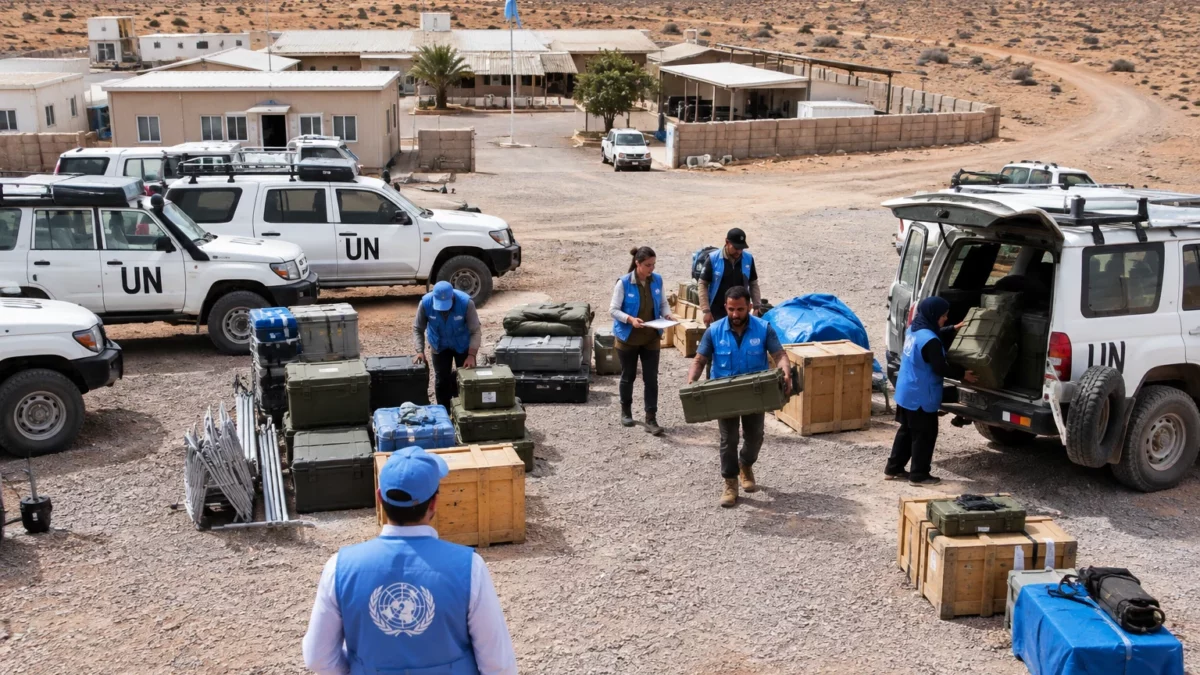
In Rabat, discussion of Western Sahara has shifted ground. On 17 November, US envoy Mike Waltz called on Morocco and the Polisario Front to preserve the ceasefire, as the UN mission that monitored it ceased operations for lack of a renewed mandate.
A mission without a mandate, a dispute still unresolved
Established in 1991, the United Nations Mission for the Referendum in Western Sahara (MINURSO) was tasked, among other things, with supporting a self-determination process and monitoring the ceasefire. The planned referendum has never taken place. The territory’s status remains disputed: Morocco administers most of it and advocates autonomy under its sovereignty, while the Polisario Front claims independence.
The Security Council failed to agree on extending the mission before its mandate expired on 31 October 2026. According to the UN, a draft backed by Washington received 11 votes, but Russia vetoed it. China, Pakistan and another member abstained. A Russian proposal to extend the mandate also failed to secure the necessary support. The mission therefore entered a liquidation phase on 1 November, rather than undergoing a withdrawal authorised by a renewed mandate.
The deadlock reflects a fundamental divergence. The US text made Morocco’s autonomy plan a basis for negotiations. Moscow considered that approach unbalanced and wanted to maintain the mandate unchanged. The two approaches clashed, leaving UN teams without authorisation to continue their usual work.
In Rabat, Washington stresses de-escalation
During a visit to Morocco on Tuesday 17 November, Mike Waltz met Foreign Minister Nasser Bourita. He urged the Polisario Front to respect the ceasefire and welcomed the Moroccan government’s stated commitment to preserving it. The US position forms part of broader support for Rabat’s autonomy plan.
That support does not, however, resolve the question of the territory’s status. The UN continues to regard Western Sahara as a non-self-governing territory whose final status remains to be determined. The Polisario argues that the Sahrawi people must be able to choose independence. Morocco, for its part, presents autonomy under Moroccan sovereignty as a realistic political outcome. These positions are not the same, and describing them as an agreed solution would erase the central disagreement.
Bourita criticised the positions he considers responsible for maintaining the status quo. He also linked the conflict to prospects for stability and development in North Africa. This Moroccan reading highlights the regional cost of the impasse, but it does not in itself reflect the expectations of the Sahrawi people or the arguments of the Polisario and Algeria, which supports the movement.
What the observers’ departure changes
The end of the mandate calls into question a United Nations mechanism for maintaining a presence and reporting. It does not, by itself, mean that the ceasefire has been officially revoked. But without an operational mission, international monitoring on the ground and the regular transmission of information become more uncertain. The UN secretary-general’s spokesperson recalled that MINURSO’s closure did not remove the right to self-determination of the people of Western Sahara.
According to several Moroccan media outlets, the head of the mission, Alexander Ivanko, referred to a phased withdrawal that could continue until 31 January 2027. That date concerns the departure of personnel and equipment; it is not a new end date for the mandate. The distinction matters: the Security Council has yet to establish an alternative arrangement to monitor the situation.
The effects may vary between actors and locations. For Rabat, the mission’s absence may reduce international scrutiny of an issue in which Morocco exercises control over a large part of the territory. For the Polisario and Sahrawis who support independence, it may mean less visibility and fewer monitoring guarantees. People living in the areas concerned, on both sides of the dividing lines, are directly exposed to the consequences of any deterioration in security.
A concern for the African Union and the Maghreb
The dispute also weighs on relations between Morocco and Algeria, two major players in a Maghreb where regional cooperation remains limited. It complicates the African Union’s efforts to maintain dialogue between its members and fuels a diplomatic rivalry that extends beyond the Western Sahara issue alone.
The next concrete step is now diplomatic. The Security Council will have to consider how to address the deadlock and preserve monitoring of the ceasefire. Until then, Washington’s calls for restraint are no substitute for either a field mission or a political agreement accepted by the parties. The question will be whether talks can resume without setting aside the principle of self-determination or prejudging their outcome.