
 Egypt
 Libya
 Morocco
 Sudan
 Tunisia
 Benin
 Burkina Faso
 Cabo Verde
 Côte d'Ivoire
 Ghana
 Guinea
 Guinea-Bissau
 Liberia
 Mali
 Mauritania
 Niger
 Nigeria
 Senegal
 Sierra Leone
 The Gambia
 Togo
 Cameroon
 Central African Republic
 Chad
 DR Congo
 Equatorial Guinea
 Gabon
 Republic of the Congo
 São Tomé and Príncipe
 Burundi
 Comoros
 Djibouti
 Eritrea
 Ethiopia
 Kenya
 Madagascar
 Malawi
 Mauritius
 Mozambique
 Rwanda
 Seychelles
 Somalia
 South Sudan
 Tanzania
 Uganda
 Angola
 Botswana
 Eswatini
 Lesotho
 Namibia
 South Africa
 Zambia
 Zimbabwe
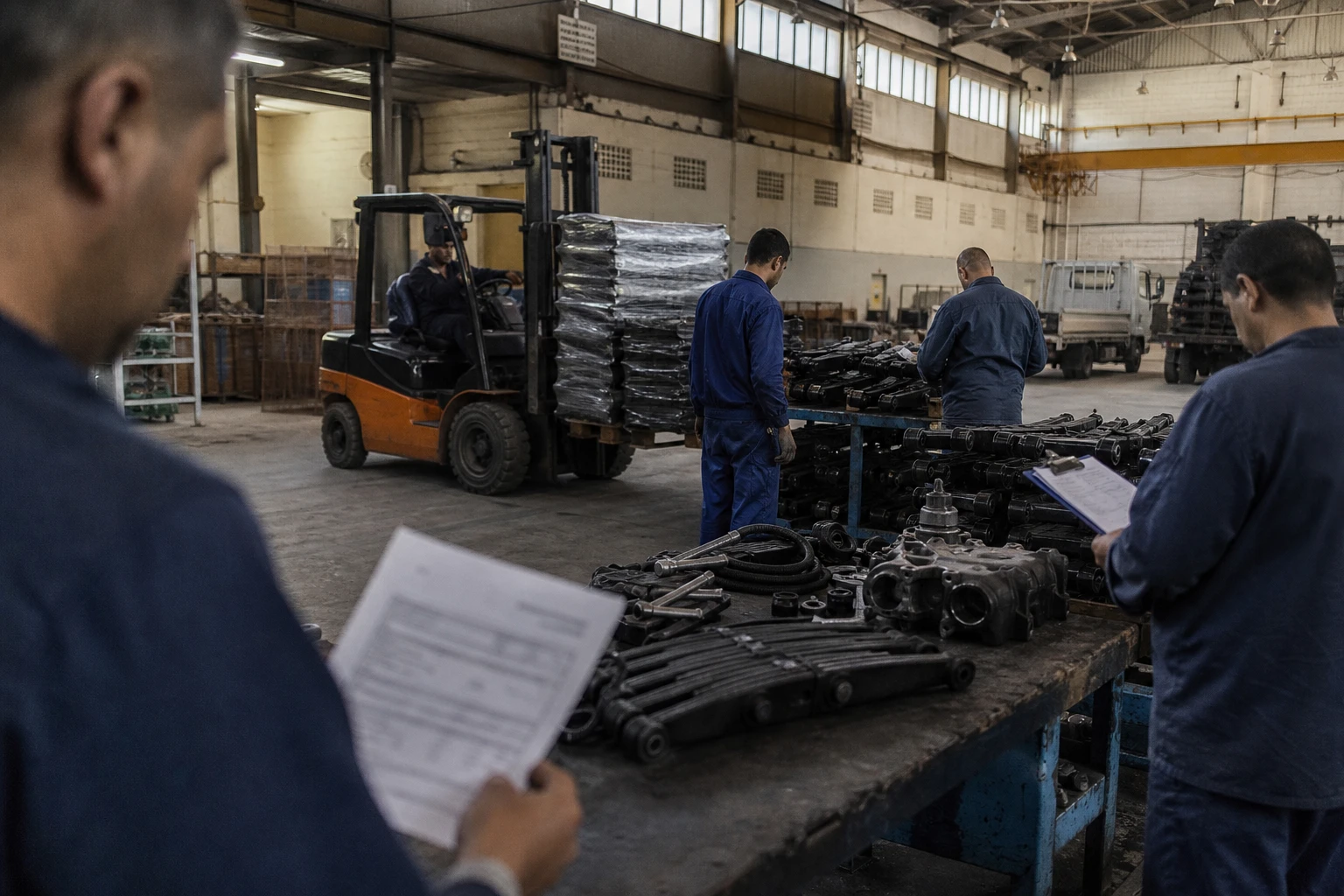
In Blida, an industrial return that says something about the Algerian market
In Algeria, the industrial sector cannot be understood solely through factory announcements. It is also measured by the ability to keep a site running over time, retain trained teams and meet real demand. The restart of truck assembly in Blida follows this logic, as the country seeks to strengthen a more local mechanical engineering sector that is less dependent on imports.
The project goes beyond a single manufacturer. It touches logistics, construction, mining and major infrastructure projects, and therefore activities that shape Algeria’s economy and some of North Africa’s trade. In this region, transport networks and infrastructure have become a key driver of productive transformation.
What MAN plans, and why the Blida site matters
German manufacturer MAN Truck & Bus announced on 22 July 2026 that it would resume CKD production—that is, the local assembly of vehicles delivered in parts—with its Algerian partner Maghreb Truck Company. The site is in Blida, about 50 kilometres south-west of Algiers. MAN says the operation is restarting with a partner that has been present in Algeria since 2003.
Production will initially focus on the MAN TGS series in 4×2, 6×4 and 8×4 configurations, mainly for long-distance transport. The site has a stated capacity of up to eight vehicles a day, with two parallel assembly lines. The medium-term target is around 1,500 vehicles a year for the Algerian market.
MAN adds that, depending on demand, the site could also produce truck and bus chassis. The group describes the restart as an investment in its infrastructure, processes and team training. MTC employs around 250 people in Algeria, 50 of whom are assigned to CKD production in Blida.
A restart in line with Algeria’s industrial strategy
The announcement comes as Algiers seeks to reorganise the automotive industry around clearer local-content requirements. In February 2026, the prime minister set up a working group tasked with drawing up a national integration framework for cars, buses and motorcycles. The idea is straightforward: set clearer rules for subcontractors, manufacturers and the administration.
The signal matters for local suppliers. A truck plant does not operate solely on imported kits. It also generates demand for maintenance, tyres, parts, bodywork, onboard electrical systems and local logistics. The industry ministry, for its part, stresses the need to move up the value chain in local production and avoid token assembly operations.
For transport operators, the stakes are even more practical. A locally assembled vehicle could, in theory, bring after-sales service closer, speed up supply times and better meet local operating conditions. This is particularly relevant in a country as large as Algeria, where needs differ between Algiers, the high plateaux, the south and major industrial routes.
What the restart means beyond Algeria
MAN does not treat Algeria as a simple sales market. The group counts it among its regional CKD production bases, alongside other sites in Africa, Asia and the Middle East. The manufacturer also notes that North Africa is one of the most dynamic regions for commercial vehicles, particularly because of needs linked to infrastructure, construction and logistics.
This view aligns with regional trends documented by development institutions. The African Development Bank notes that North Africa has industrial and infrastructure assets, but that these have yet to translate quickly enough into sustainable growth and jobs. The OECD, meanwhile, says the region needs better co-ordination to benefit from trade and value chains.
From this perspective, Blida is not an isolated outpost. The site forms part of a wider network of corridors, ports, road projects and trans-Maghreb flows. If the restart is sustained, it could strengthen a subcontracting ecosystem and give Algeria’s mechanical engineering sector greater depth. If it runs into obstacles over integration rules, access to parts or actual demand, it will remain another episode in an industry still being rebuilt.
The issue to watch now is not just whether the workshop resumes operations. It is whether the Algerian market can absorb the announced volumes, develop local suppliers and turn commercial vehicle assembly into a genuine driver of industrial sovereignty.



