Algeria
 Egypt
 Libya
 Morocco
 Sudan
 Tunisia
 Benin
 Burkina Faso
 Cabo Verde
 Côte d'Ivoire
 Ghana
 Guinea
 Guinea-Bissau
 Liberia
 Mali
 Mauritania
 Niger
 Nigeria
 Senegal
 Sierra Leone
 The Gambia
 Togo
 Cameroon
 Central African Republic
 Chad
 Equatorial Guinea
 Gabon
 Republic of the Congo
 São Tomé and Príncipe
 Burundi
 Comoros
 Djibouti
 Eritrea
 Ethiopia
 Kenya
 Madagascar
 Malawi
 Mauritius
 Mozambique
 Rwanda
 Seychelles
 Somalia
 South Sudan
 Tanzania
 Uganda
 Angola
 Botswana
 Eswatini
 Lesotho
 Namibia
 South Africa
 Zambia
 Zimbabwe
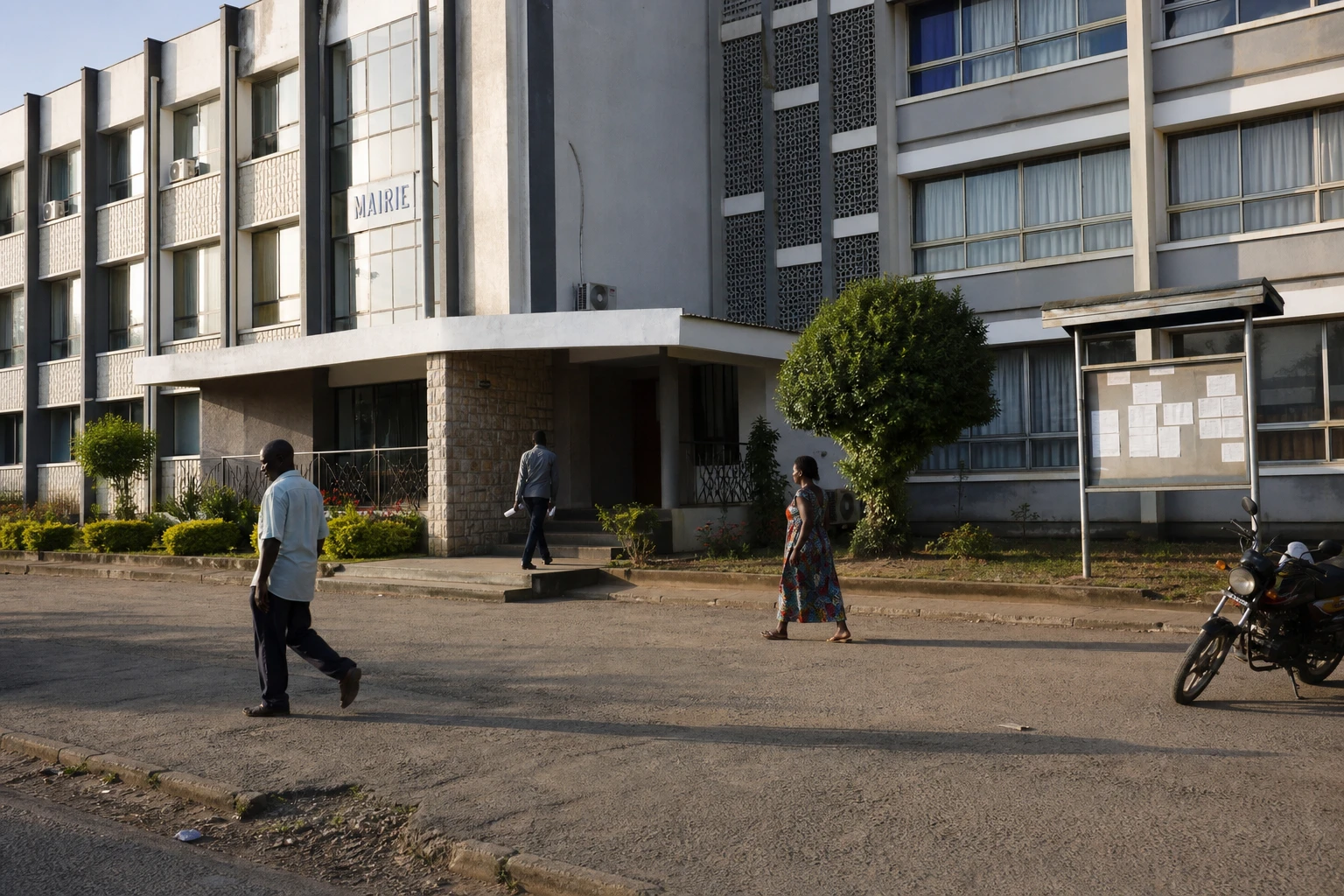
When villages fall silent, it is often a sign that fear has already taken hold.
In Babila Babombi chiefdom, south of Mambasa territory in Ituri, residents have chosen to close shops, workshops and markets for two days. This kind of shutdown is never insignificant: it reflects both a population’s exhaustion and its loss of confidence in the state’s ability to protect civilians. In this area of the eastern Democratic Republic of the Congo, daily life has for months been shaped by forced displacement, deteriorating roads, fragile tax collection and the continuing presence of armed groups.
A Congolese territory under security and humanitarian pressure
Mambasa is in Ituri province, where armed violence compounds a protracted humanitarian crisis. In June, the UN reported that attacks on civilians were intensifying in Ituri and North Kivu, despite pressure from Operation Shujaa, the joint pursuit of the ADF by the Congolese armed forces and the Ugandan army. The ADF is an armed group originating in Uganda that has long been established in eastern Congo. Mambasa territory is also linked to the regional dynamics of the Great Lakes, where the Congolese-Ugandan border remains porous for both trade and the movement of armed groups.
This reality does not affect everyone in the same way. In trading centres, the suspension of activity immediately cuts off daily income. In villages, it blocks access to fields, local markets and small services. For local authorities, it is a political test. For families, it is above all a matter of survival. UNICEF also points out that Ituri remains a province where violence severely disrupts education, basic services and child protection.
Two days without activity, followed by a threat to refuse to pay certain taxes
The movement announced in Babila Babombi envisages a suspension of activities on Monday 3 and Tuesday 4 August, before a possible escalation to tax disobedience—that is, refusing to pay local taxes as usual. This strategy is not new in Mambasa territory. In 2022, local organisations had already used days of city-wide shutdowns and tax blockades to denounce insecurity, the deterioration of National Roads 4 and 44, and residents’ sense of abandonment.
The central grievance remains the same: security. The organisers believe military operations are not enough to prevent attacks attributed to the ADF. They also cite logistical resources they consider inadequate and an army response perceived as slow. On the ground, figures reported by civil society are high. In late July, a local organisation said more than 190 civilians had been killed since January 2026 in Babila Babombi chiefdom alone. In the spring, other tallies reported about 39 deaths in one week, followed by waves of deadly attacks in Biakato, Makumo, Alima and Babesua. These figures come from local civil society or Congolese media; above all, they illustrate the repeated violence, even though they have not all been consolidated by a single body.
What this protest says about Ituri and Kinshasa
In Mambasa, the protest is not aimed solely at insecurity. It also expresses a breakdown in relations between residents and the institutions meant to protect them. When a population stops working and then threatens to suspend tax payments, it is sending a clear political message: it believes it is contributing to public efforts without receiving even basic security in return. For Kinshasa, the signal is significant. The capital has been overseeing the state of siege in Ituri and North Kivu since 2021, an exceptional measure that gives the army and police greater powers. But on the ground, some residents still consider the results inadequate.
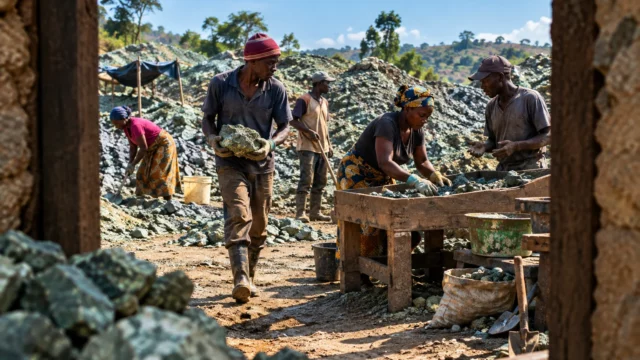
The stakes extend beyond Mambasa. In the eastern provinces, local economies depend on a precarious balance between agriculture, cross-border trade, small-scale transport and artisanal resource extraction. As soon as roads close or markets stop operating, the entire chain breaks down. The town suffers, but villages often pay the heaviest price because they have fewer options for travelling, getting medical care or protecting themselves. This divide between centre and periphery feeds a sense of abandonment that is echoed across several territories in eastern Congo.
A local alert, but also a regional warning
The developments in Babila Babombi are a reminder that the crisis in eastern DRC is regional in nature. The ADF are monitored as a cross-border threat, and the military response brings Kinshasa and Kampala together through Operation Shujaa. At the same time, UN agencies report that attacks on civilians continue despite this co-operation. For Central Africa and the Great Lakes region, the issue therefore remains a test of security co-ordination, but also of local governance: without lasting protection for civilians, strikes, mass departures and tax tensions will return.
The next developments to watch are straightforward: how long the shutdown in Babila Babombi actually lasts, how the provincial authorities in Bunia respond, and how the government in Kinshasa reacts. If the attacks continue at the same pace, the issue will no longer be only military. It will also become social, economic and political, in a province where every road or market closure reveals a little more of the fragility of public authority.