Algeria
 Egypt
 Libya
 Morocco
 Sudan
 Tunisia
 Benin
 Burkina Faso
 Cabo Verde
 Côte d'Ivoire
 Ghana
 Guinea
 Guinea-Bissau
 Liberia
 Mali
 Mauritania
 Niger
 Nigeria
 Senegal
 Sierra Leone
 The Gambia
 Togo
 Cameroon
 Central African Republic
 Chad
 DR Congo
 Equatorial Guinea
 Gabon
 Republic of the Congo
 São Tomé and Príncipe
 Burundi
 Comoros
 Djibouti
 Eritrea
 Ethiopia
 Kenya
 Madagascar
 Malawi
 Mauritius
 Mozambique
 Rwanda
 Seychelles
 Somalia
 South Sudan
 Tanzania
 Uganda
 Botswana
 Eswatini
 Lesotho
 Namibia
 South Africa
 Zambia
 Zimbabwe
In Maquela do Zombo, in Angola’s Uíge province, copper is no longer just a geological promise. The Tetelo mine began operating in October 2025. But for this first industrial operation to give rise to a genuine sector, Angola will have to turn exploration announcements into sustainable production, local jobs and value added at home.
Tetelo, a first milestone for a sector still taking shape
The resumption of modern copper extraction marks a turning point for Angola. The country has a long mining history, but copper production was halted after independence. The Mavoio region, in Uíge, had already seen mining activity between 1937 and 1961, according to Angola’s Ministry of Mineral Resources, Petroleum and Gas.
Operated by Shining Star Icarus, Tetelo was initially expected to produce about 25,000 tonnes of copper concentrate a year during its first two years. This unit of measurement refers to ore enriched through processing, not refined copper ready for industrial use.
The start-up encountered difficulties in the first half of 2026. However, the ministry and Angola’s National Mineral Resources Agency announced on 1 September that operations had stabilised and a new phase of expansion was under way. The company plans to increase production gradually and install new processing units. It has also mentioned a future copper sheet plant, which would allow more of the ore to be processed in the country.
These announcements remain industrial targets, not results already achieved. Figures released by the authorities and the operator refer to intended capacity and must be distinguished from the volumes actually produced and sold. In February 2026, Angolan trade publications reported a first export of about 147 tonnes from Tetelo, indicating that the project had begun selling copper, but not establishing its annual production rate.
Large permits, but exploration takes time
The next stage will also depend on discoveries made elsewhere. Ivanhoe Mines holds exploration permits covering about 22,000 sq km in Angola, particularly in the east of the country. Geophysical work began in 2024, followed by a drilling programme launched at the end of 2025.
Progress has been slower than expected. In information published in 2026, the company said that the programme, initially designed for 12 drill holes, was halted after a single hole because of the rainy season and difficulties with the contractor. Ivanhoe plans to resume work after mobilising a new contractor, at the end of the 2027 wet season. At this stage, the permits do not amount to a new mine: they mark the start of a search whose outcome remains uncertain.
Rio Tinto is also conducting work in Moxico province. Its mining investment contract, signed with the Angolan state in January 2024, covers a concession of nearly 10,000 sq km to explore for several base metals, including copper. The size of the permit indicates the extent of the area to be explored, not the size of a confirmed deposit.
This distinction matters to people in the regions concerned. Exploration can bring contracts and temporary jobs, but lasting benefits depend on the discovery of exploitable resources, infrastructure, training and agreements with local communities. Benefits are not automatically shared between mining sites, towns and the rest of the country.
The Lobito Corridor, an outlet and a regional test
Angola is seeking to diversify an economy long dependent on oil and diamonds. Copper is part of that strategy, but it also places the country in a regional landscape already shaped by the Democratic Republic of the Congo and Zambia, two of the continent’s major producers.
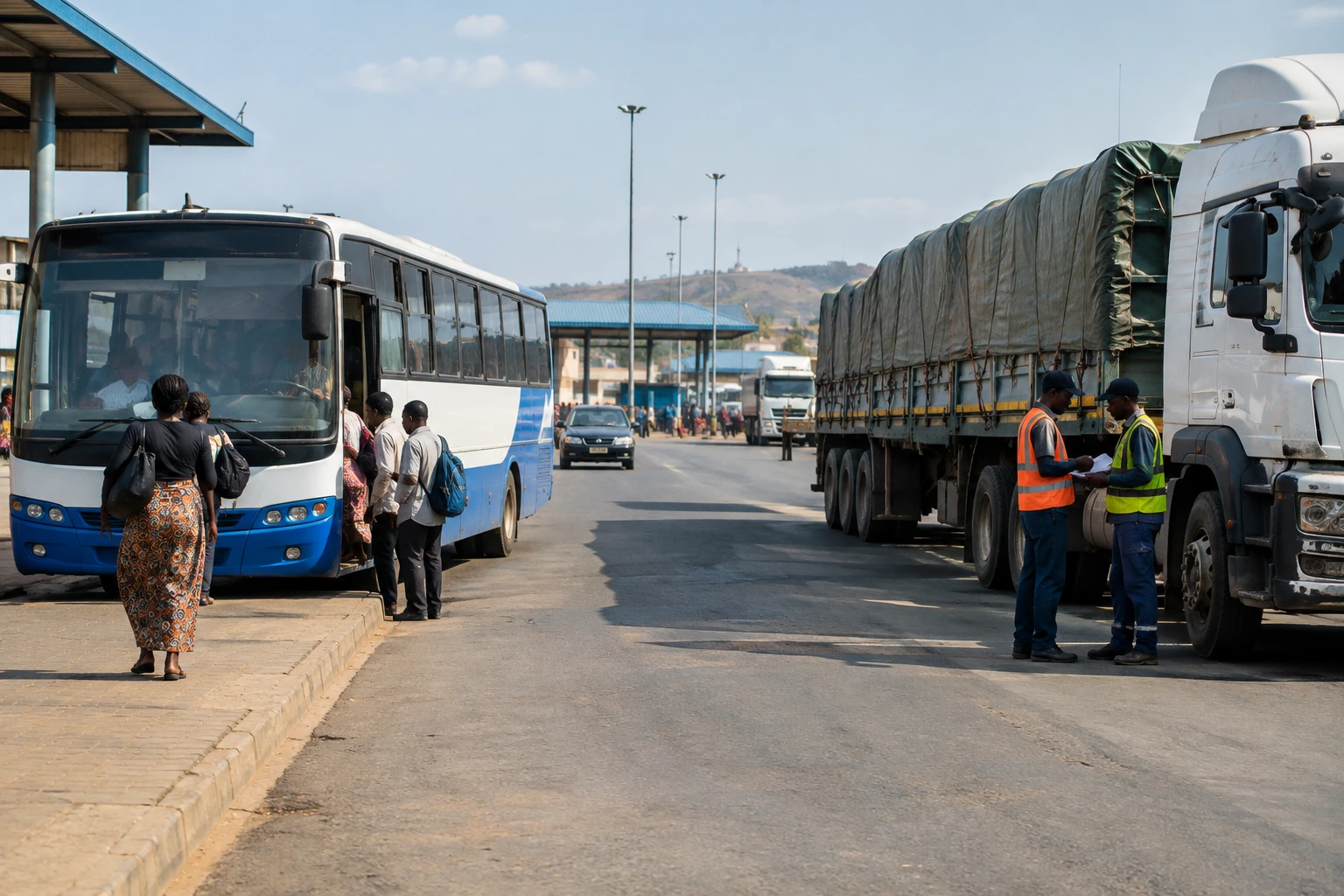
As a member of the Southern African Development Community (SADC), which brings countries in the region together around economic cooperation, Angola can draw on cross-border trade and shared infrastructure. The Lobito Corridor links the Angolan port to mining areas in the DRC and, in time, Zambia. It can facilitate exports, as well as the transport of goods and inputs between the three countries.
However, this route guarantees neither local copper processing nor an equitable distribution of revenue. If the corridor serves mainly to transport raw minerals to overseas markets, the industrial benefits will remain limited. Luanda’s challenge is therefore to link logistics with processing capacity, skilled jobs and Angolan suppliers.
Tetelo’s emergence gives Angola its first practical experience of industrial copper production. To build a sector from it, the mine’s ramp-up will need to be verified, exploration results monitored and processing plans clarified. At SADC level, the issue also raises a broader question: can producer countries coordinate their infrastructure and capture more value on the continent, beyond simply transporting minerals?