Algeria
 Egypt
 Morocco
 Sudan
 Tunisia
 Benin
 Burkina Faso
 Cabo Verde
 Côte d'Ivoire
 Ghana
 Guinea
 Guinea-Bissau
 Liberia
 Mali
 Mauritania
 Niger
 Nigeria
 Senegal
 Sierra Leone
 The Gambia
 Togo
 Cameroon
 Central African Republic
 Chad
 DR Congo
 Equatorial Guinea
 Gabon
 Republic of the Congo
 São Tomé and Príncipe
 Burundi
 Comoros
 Djibouti
 Eritrea
 Ethiopia
 Kenya
 Madagascar
 Malawi
 Mauritius
 Mozambique
 Rwanda
 Seychelles
 Somalia
 South Sudan
 Tanzania
 Uganda
 Angola
 Botswana
 Eswatini
 Lesotho
 Namibia
 South Africa
 Zambia
 Zimbabwe
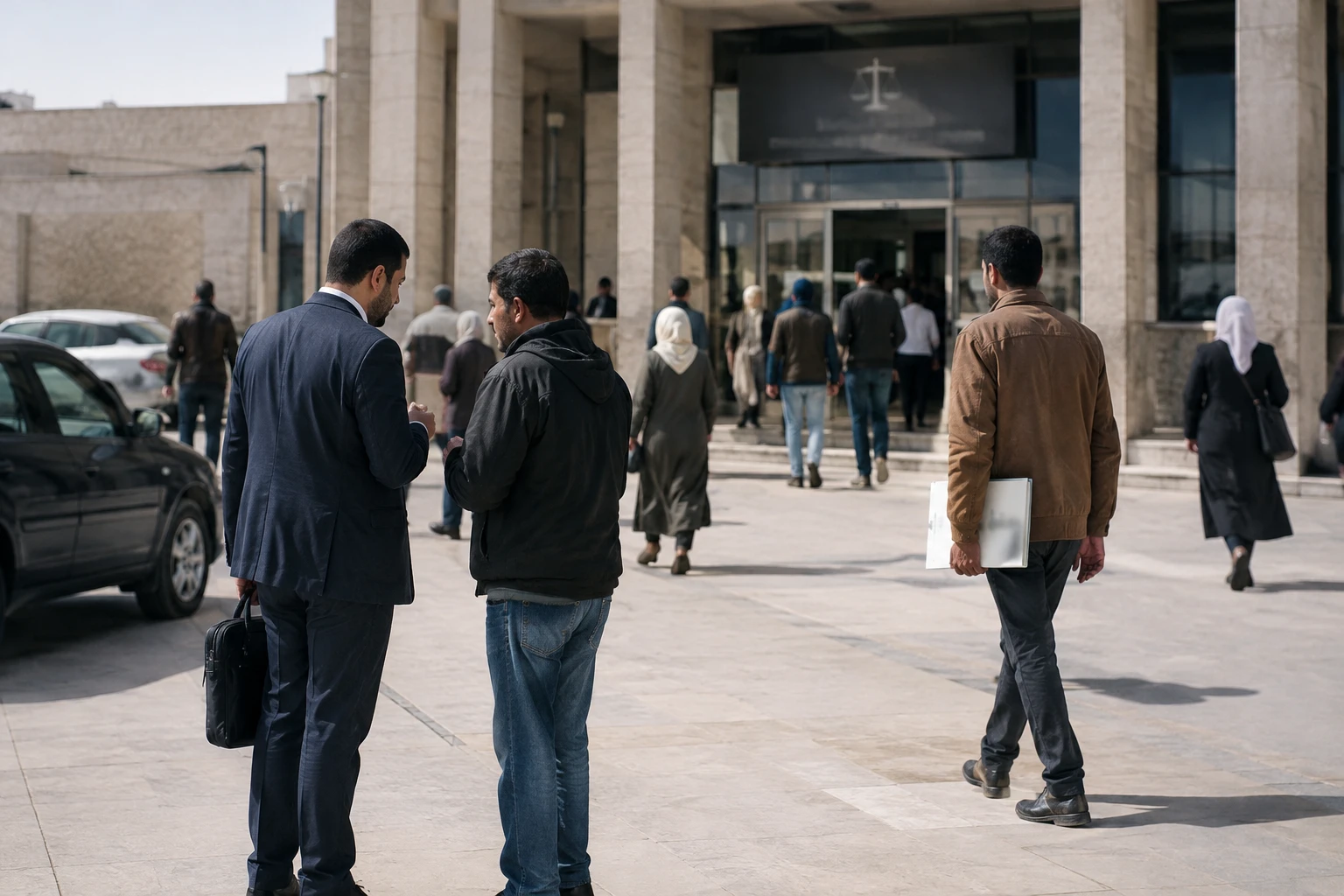
A death sentence is not the only decision that tests a justice system: the accused must also have been able to defend themselves, know the evidence and be heard by their lawyer. In Libya, the resumption of executions in the east of the country has brought this question to the fore, as judicial institutions remain divided between rival authorities.
Justice caught up in the country’s division
Since the fall of Muammar Gaddafi in 2011, Libya has not regained unified rule. The Government of National Unity, based in Tripoli and recognised by the United Nations, administers the west. In the east and parts of the south, the Libyan Arab Armed Forces (LAAF), led by Khalifa Haftar, exercise control alongside authorities and groups linked to them.
This political separation is reflected in the security and justice systems. Military courts in the east operate in a region where Haftar’s army holds de facto power. At the regional level, Libya belongs to the Arab Maghreb Union, but this North African organisation, which brings together five countries, does not currently provide an active framework for political integration comparable to other continental blocs.
The reported executions come after more than 15 years without a known execution in the country. They therefore raise questions both about the fate of those sentenced and about the real authority of civilian institutions in relation to military bodies.
At least 31 executions recorded
On 23 August 2026, the LAAF military prosecution announced that 10 people convicted of murder and terrorism-related offences had been executed by firing squad. Human rights groups subsequently recorded at least 31 executions by 10 September, according to figures made public by Human Rights Watch (HRW) on 14 October. Amnesty International had separately reported at least 30 executions by 16 September.
These figures are not presented as a complete official record: they are based on monitoring by the organisations. HRW also says that at least 50 men held in Gernada military prison are at imminent risk of execution. This figure describes a risk reported by the organisation, not confirmation of further killings.
Several of those sentenced had been arrested in Derna and Benghazi during or after clashes between Haftar’s forces and armed groups from 2014 to 2018. Military courts in the east sentenced hundreds of civilians between 2018 and 2021. At least 22 death sentences were handed down during this period, according to HRW.
Secret trials, families kept at a distance
Libyan human rights groups and Amnesty describe closed-door trials, with families given no prior information. Several defendants reportedly could not choose their lawyer or speak with them in private. Rights advocates also allege that some confessions were obtained under torture. These allegations have not been established here by an independent judicial investigation; they are reported by the organisations that documented the cases.
HRW says that relatives were not notified before the executions and that the bodies were not handed over to the families, who were reportedly unable to arrange funerals. For families, the lack of notification and a final contact adds to the pain of loss. For detainees who remain under sentence, the uncertainty concerns the possibility of an appeal and whether judicial safeguards will be respected.
A ruling by the Constitutional Chamber of the Supreme Court, issued in November 2025, declared Law No. 4/2017 unconstitutional insofar as it authorised military courts to try civilians for terrorism and crimes against the state. The reported executions took place despite this decision. The gap between a judicial rule and its application highlights the difficulty of enforcing national decisions in a fragmented system.
An issue extending beyond the eastern authorities
The United Nations has called for executions to be suspended and for fair-trial guarantees to be respected. The Government of National Unity has also condemned them, while Libyan organisations are calling for independent investigations. These statements do not, however, resolve the prisoners’ situation or the question of which authority can enforce a decision across the entire country.
Responsibility is not limited to the military courts in the east. The division of institutions and the control of detention facilities by armed forces undermine access to justice in several regions. However, the current case concerns executions attributed to the LAAF; it does not justify conflating the practices of the two rival authorities or drawing general conclusions about all Libyan trials.
For residents, the immediate issue is concrete: whether those still detained will be able to challenge their convictions before an independent court, and whether the authorities will respect the Supreme Court’s decision. For institutions, the question is also whether military courts will be restricted to offences committed by military personnel, as rights advocates are demanding.
The resumption of executions is thus testing the Libyan state’s ability to guarantee common rules beyond the lines of control. The next indicator will be the fate of the roughly 50 men reported to be held in Gernada, as well as any concrete move to suspend or review their cases. At the North African and continental levels, the case is a reminder that political reunification and the protection of rights also depend on the day-to-day functioning of courts and prisons.