Algeria
 Libya
 Morocco
 Sudan
 Tunisia
 Benin
 Burkina Faso
 Cabo Verde
 Côte d'Ivoire
 Ghana
 Guinea
 Guinea-Bissau
 Liberia
 Mali
 Mauritania
 Niger
 Nigeria
 Senegal
 Sierra Leone
 The Gambia
 Togo
 Cameroon
 Central African Republic
 Chad
 DR Congo
 Equatorial Guinea
 Gabon
 Republic of the Congo
 São Tomé and Príncipe
 Burundi
 Comoros
 Djibouti
 Eritrea
 Ethiopia
 Kenya
 Madagascar
 Malawi
 Mauritius
 Mozambique
 Rwanda
 Seychelles
 Somalia
 South Sudan
 Tanzania
 Uganda
 Angola
 Botswana
 Eswatini
 Lesotho
 Namibia
 South Africa
 Zambia
 Zimbabwe
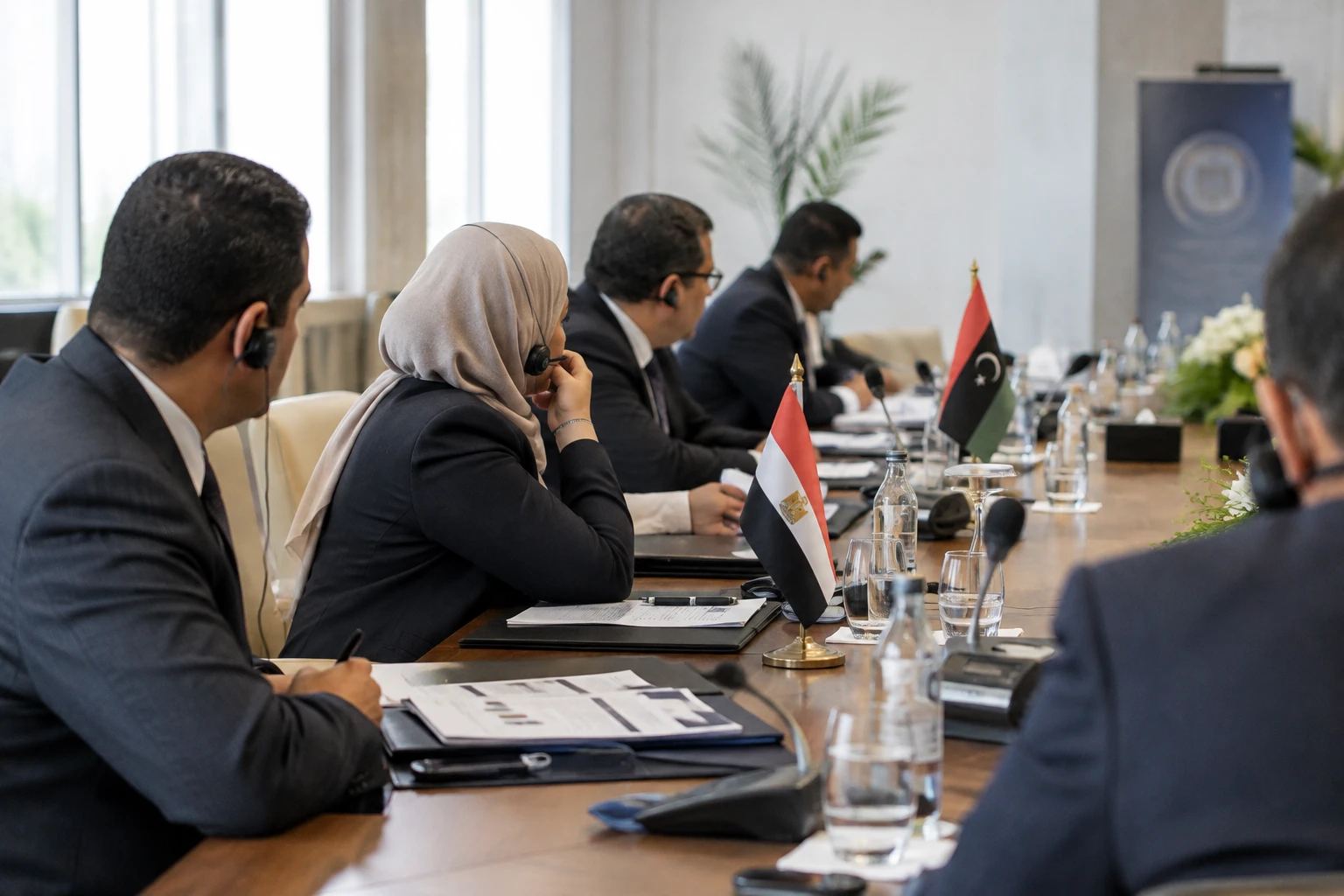
For Egyptians, Libya is more than a western neighbour. It is also a trading partner, a country where many Egyptian nationals work and a place whose instability directly affects the security of their border. The resumption of a permanent diplomatic presence in Tripoli therefore gives Cairo a more direct channel in a country that remains divided.
A strategic neighbourhood despite Libya’s divisions
Since the fall of Muammar Gaddafi in 2011, Libya’s institutions have remained fragmented. The Government of National Unity, led by Abdulhamid Dbeibah, is based in Tripoli. In the east, the House of Representatives and the authorities associated with Khalifa Haftar challenge its power. This rivalry complicates national negotiations and leaves agreements reached with one side open to challenge by the other.
Egypt is a member of the African Union, as is Libya, but it is not part of the Arab Maghreb Union. A continental framework therefore exists, but no regional economic organisation bringing the two countries together provides a common mechanism comparable to those in other African regions. The Libyan issue also plays out in relations with neighbouring countries and Mediterranean actors.
Cairo has long supported the camp based in eastern Libya, particularly Khalifa Haftar. Turkey, meanwhile, backed the Tripoli authorities during the 2019-2020 fighting. This history explains why a diplomatic opening towards the west is attracting attention, without being enough to show that Egypt is abandoning its relations with the east.
Embassy reopens after twelve years
On Saturday 7 November 2026, Egypt’s foreign minister, Badr Abdelatty, inaugurated his country’s historic embassy building in Tripoli. The mission had been closed since 2014, when the deteriorating security situation led Cairo to suspend its activities there. Several media outlets reported the reopening, including the Egyptian daily Ahram Online and the Libyan outlet The Libya Observer.
The Tripoli authorities presented the resumption as a sign of progress in bilateral relations. The presence of an Egyptian minister in the capital gives the move political weight. It also makes it possible to address consular issues and cooperation projects more directly. However, opening an embassy resolves neither the rivalry between Libya’s power centres nor regional disagreements.
The visit comes amid tensions in the eastern Mediterranean. On 20 October, the House of Representatives based in the east approved the maritime memorandum signed in 2019 between Turkey and the Tripoli authorities of the time. The text demarcates maritime jurisdiction zones claimed by Ankara and Tripoli. Egypt, Greece and Cyprus contest the agreement. The vote reignited the dispute, but does not mean that all its legal or practical consequences have already been established.
The chronology matters: the embassy reopened after this controversial vote. The timing may prompt political interpretations, but the available information does not prove that Egypt’s decision was a direct response to the agreement. Cairo is seeking to maintain relations with the various Libyan parties while defending its maritime and security interests.
From gas to trade: projects still to be defined
At the ceremony, Badr Abdelatty referred to cooperation projects, including a gas pipeline between Libya and Egypt. He described Egypt’s natural gas liquefaction capacity as a potential asset for making the most of Libyan production. At this stage, this is an ambition announced by the minister, not evidence that a project has been funded, planned or begun.
For both countries, such a link could create opportunities for transporting and processing gas. But its construction would depend on technical and commercial decisions, investment and security guarantees. Libya’s political division adds another difficulty: a project on this scale requires lasting agreements and counterparts able to implement them on the ground.
Cooperation is not limited to hydrocarbons. Cross-border trade, consular services and the movement of workers are also affected by relations between the two neighbours. An active embassy can facilitate procedures and official exchanges. However, it cannot by itself show what the practical effects will be for businesses or families: these will depend on which services are actually restored and on the security situation.
The diplomatic signal and its limits
The reopening marks a more visible Egyptian presence in Tripoli, but not necessarily a complete realignment. Cairo has to contend with several realities: its historic ties with the eastern authorities, the political weight of the government based in the capital and security concerns on its western border. For leaders, the embassy broadens channels for dialogue. For citizens, its usefulness will be judged above all by access to services and the regularity of day-to-day relations.
The issue also goes beyond the Egyptian-Libyan relationship. The maritime question involves Turkey, Greece and Cyprus, while both countries remain members of the African Union. The eastern parliament’s approval of the memorandum and the reactions of the countries concerned show how Libya’s fragmentation can turn a national decision into a Mediterranean issue.
The next steps will therefore be decisive: it will be necessary to watch whether diplomatic exchanges continue with the various Libyan authorities, whether energy projects move from announcement to concrete studies and how the maritime dispute develops. For now, the embassy’s reopening restores a tool for dialogue. It is neither a resolution of the Libyan crisis nor a guarantee of lasting rapprochement between all its parties.