Egypt
 Libya
 Morocco
 Sudan
 Tunisia
 Benin
 Burkina Faso
 Cabo Verde
 Côte d'Ivoire
 Ghana
 Guinea
 Guinea-Bissau
 Liberia
 Mali
 Mauritania
 Niger
 Nigeria
 Senegal
 Sierra Leone
 The Gambia
 Togo
 Cameroon
 Central African Republic
 Chad
 DR Congo
 Equatorial Guinea
 Gabon
 Republic of the Congo
 São Tomé and Príncipe
 Burundi
 Comoros
 Djibouti
 Eritrea
 Ethiopia
 Kenya
 Madagascar
 Malawi
 Mauritius
 Mozambique
 Rwanda
 Seychelles
 Somalia
 South Sudan
 Tanzania
 Uganda
 Angola
 Botswana
 Eswatini
 Lesotho
 Namibia
 South Africa
 Zambia
 Zimbabwe
In Algiers, an institutional symbol more than a simple change of face
In Algeria, the presidency of the People’s National Assembly is not a ceremonial post. It places its holder at the heart of the institutional balance in a country where the executive, Parliament and oversight bodies often move to the rhythm of political reforms and decisions taken at the top of the state. Khalida Boufedeche’s election to head the APN therefore gives this moment particular significance. It concerns representation, but also the way in which the authorities want to demonstrate the openness of their institutions.
Algeria’s current context is one of parliamentary life reshaped after the 2 July 2026 legislative elections. The vote confirmed the dominant position of the National Liberation Front, the historic party of independence, while turnout remained very low, at 21.24% inside the country and 10.75% among the national community living abroad, according to the Constitutional Court. Against this backdrop, the APN’s tenth legislature began its work on 28 July in Algiers, the country’s political and administrative capital.
A historic first in the lower house
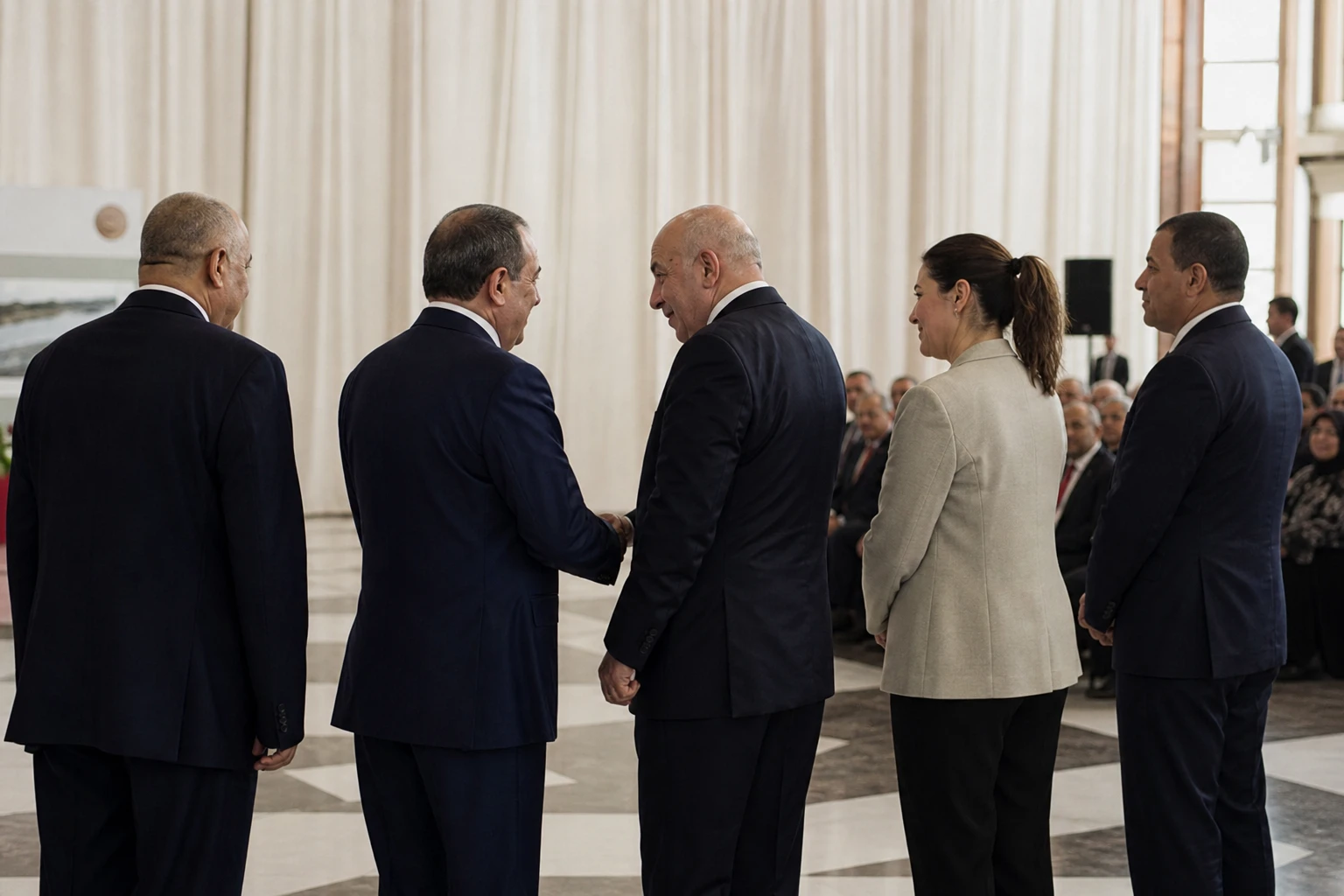
On Tuesday 28 July 2026, MPs elected Khalida Boufedeche president of the People’s National Assembly. She thus becomes the first woman to lead the lower house of the Algerian Parliament. The opening session of the tenth legislature was followed by the installation of the new internal bodies, following the final results published after electoral appeals had been examined.
Medically trained, Khalida Boufedeche is an allergist. She has also built her career in local and national politics, first in Bordj El Bahri, then in the Algiers Provincial People’s Assembly, before entering the APN in 2026. She was elected under the banner of the National Liberation Front, the party that came first in the legislative elections. The FLN remains a structuring force in Algeria’s political system, even as its electoral legitimacy has been weakened by abstention.
The new president was chosen from among three candidates. The Movement of Society for Peace, the main Islamic party represented in the APN, and the Rally for Culture and Democracy, a secular opposition party, had also put forward candidates. The final choice presents an image of controlled political balance, but it also confirms the hold of parties closest to the authorities over the Parliament’s key posts.
A symbolic step forward in a Parliament still short of women
The signal is powerful, but it does not erase the rest of the picture. Women remain very poorly represented in this legislature. Figures published after the vote put the number of women elected at between 23 and 25 of the APN’s 407 seats, or around 6%. This proportion is far below the levels seen in previous legislatures, when quota mechanisms gave women a greater presence.
The decline is clear. In 2017, the APN had 118 women elected under the quota system. In 2021, there were 38. The legislature resulting from the 2 July 2026 vote therefore marks a further fall, even though women make up nearly half of Algeria’s population. The debate is not merely about numbers. It also concerns women’s real place in parties and local candidate lists, and their access to positions of responsibility.
This contrast says much about the current moment. On the one hand, Algeria has put a woman at the head of its lower house. On the other, women’s presence in the chamber is declining. This tension between symbol and structure matters. It shows that progress at the top is not enough to transform representation at its base. For parties, the question is one of renewing the political elite. For voters, it goes to the credibility of a Parliament capable of reflecting Algerian society in all its diversity.
What this moment says about Algeria and the region
Algeria sits at the crossroads of several balances. Domestically, the APN must advance legislation that translates the executive’s policy direction. Politically, low turnout is a reminder that trust between citizens and institutions remains incomplete. Socially, the election of a woman to the speaker’s chair may fuel broader expectations about Algerian women’s access to public responsibility, at both local and national levels.
This institutional gesture also matters across North Africa. It comes in a region where parliaments are often dominated by party machinery, executives and the logic of stability. Algeria, which belongs to neither ECOWAS nor SADC but plays its own role in the Maghreb and the African Union, is sending a signal of image and institutional continuity. It will be important to follow how the tenth legislature handles the major issues ahead, in Algiers and across the wilayas, and whether this female presidency remains an isolated symbol or marks the beginning of a genuine broadening of representation.