Algeria
 Egypt
 Libya
 Morocco
 Sudan
 Tunisia
 Benin
 Burkina Faso
 Cabo Verde
 Côte d'Ivoire
 Ghana
 Guinea
 Guinea-Bissau
 Liberia
 Mali
 Mauritania
 Niger
 Nigeria
 Senegal
 Sierra Leone
 The Gambia
 Togo
 Cameroon
 Chad
 DR Congo
 Equatorial Guinea
 Gabon
 Republic of the Congo
 São Tomé and Príncipe
 Burundi
 Comoros
 Djibouti
 Eritrea
 Ethiopia
 Kenya
 Madagascar
 Malawi
 Mauritius
 Mozambique
 Rwanda
 Seychelles
 Somalia
 South Sudan
 Tanzania
 Uganda
 Angola
 Botswana
 Eswatini
 Lesotho
 Namibia
 South Africa
 Zambia
 Zimbabwe
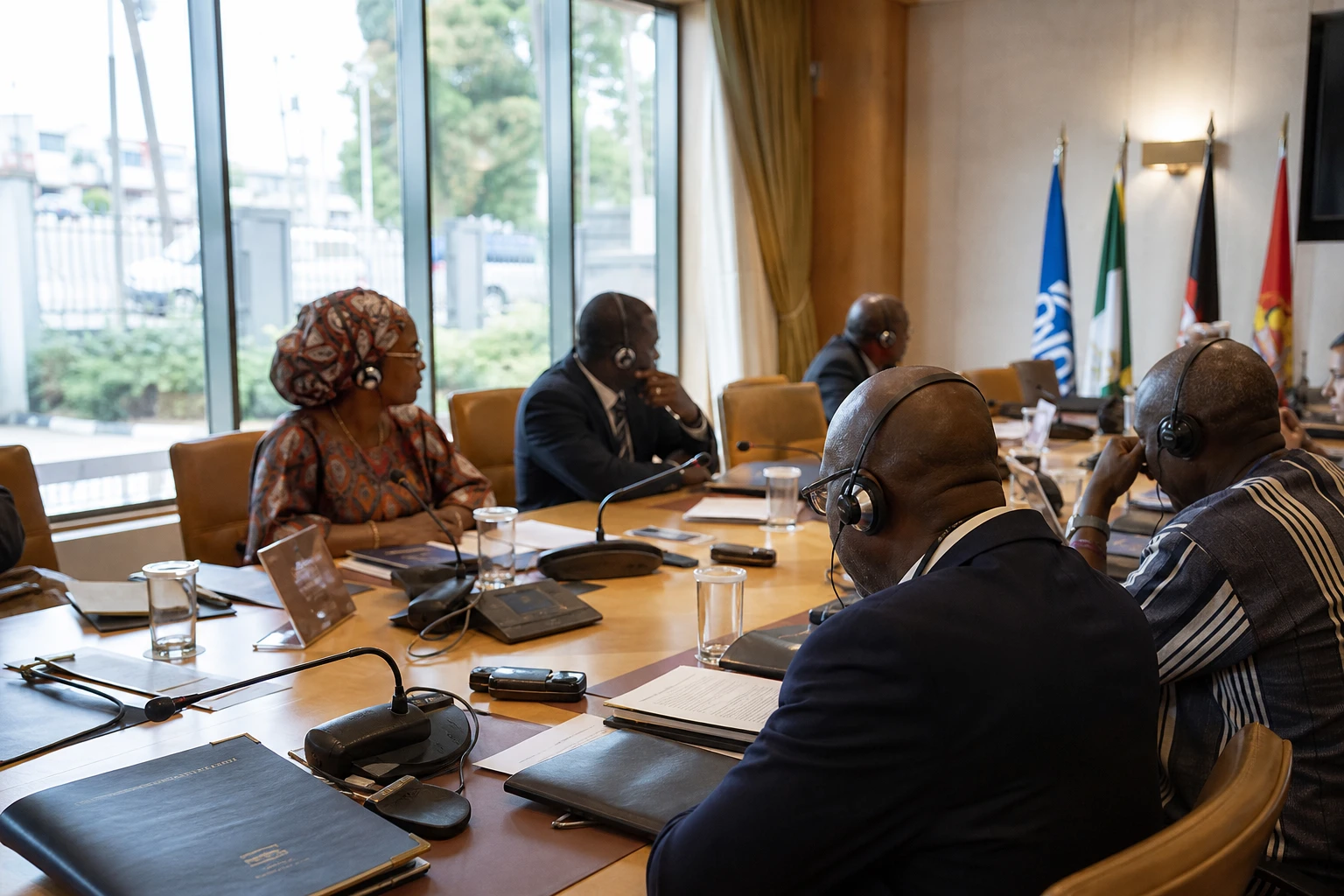
The judicial consequences of the violence in Bangui in 2013 continue to unfold, 13 years after the events. On 23 September 2026, the International Criminal Court (ICC) found Mahamat Saïd Abdel Kani guilty of crimes against humanity for acts committed at a detention centre in the Central African capital.
A verdict focused on detentions in Bangui
Trial Chamber VI of the ICC found the former Séléka coalition official criminally responsible for the imprisonment or severe deprivation of liberty of at least 39 people. The decision concerns several incidents at the Office central de répression du banditisme, known by the acronym OCRB.
Chamber President Judge Miatta Maria Samba also announced Mahamat Saïd Abdel Kani’s acquittal in relation to 19 other people named in the charges. The verdict therefore distinguishes between the acts the judges consider proven and those that did not meet the standard of proof required by the ICC.
The Court also considered charges of torture, persecution and other inhumane acts. It upheld certain charges of crimes against humanity, while not all the charges and incidents prosecuted automatically resulted in a finding of guilt. The ICC’s official case page notes that the alleged acts took place in Bangui between 12 April and 30 August 2013.
A return to a major turning point in Central African history
In 2013, the Central African Republic was facing a profound political and military crisis. The Séléka takeover of Bangui, followed by the response of anti-balaka groups, led to clashes, displacement and serious abuses against civilians and detainees.
Prosecutors presented Mahamat Saïd Abdel Kani as a Séléka official active in the capital. His trial did not concern all the violence committed in the Central African Republic. It focused mainly on acts attributed to the accused in and around the OCRB, a detention site at the heart of the case.
The ICC confirmed some of the charges on 9 December 2021. The trial opened on 26 September 2022, after the accused was transferred to The Hague, Netherlands, on 24 January 2021. Hearings then enabled the judges to examine testimony, documents and evidence presented by the prosecution, defence and victims’ representatives.
According to the ICC case overview, the case concerns both crimes against humanity and alleged war crimes. The distinction matters: crimes against humanity form part of a widespread or systematic attack against a civilian population, while war crimes are linked to an armed conflict and violations of international humanitarian law.
Conviction, but no sentence yet
The verdict delivered on 23 September 2026 does not bring the proceedings to a full close. The ICC must still determine the sentence. The judges will consider, among other things, the gravity of the crimes established, the accused’s role, individual circumstances and the consequences for victims.
This stage will also clarify reparation measures. At the ICC, victims may participate in proceedings under the conditions set out in the Rome Statute. They may also benefit from reparation mechanisms when the legal requirements are met.
The conviction does not mean that all victims of the 2013 crisis have obtained justice. Nor does it cover the possible responsibility of other actors. It establishes only the facts and criminal responsibility found by this Chamber in the case against Mahamat Saïd Abdel Kani.
The accused pleaded not guilty at the start of his trial. Under the Court’s rules, the defence retains the possibility of challenging certain elements of the decision through the appeal procedures provided for in the Rome Statute.
A case that extends beyond the courtroom
For Central Africans, the judgment comes amid a national effort to balance justice, security and institutional reconstruction. Bangui has seen several dialogue and reconciliation processes, but victims and their families continue to demand truth and accountability.
Central African justice institutions and the ICC operate in complementary settings. The Special Criminal Court of the Central African Republic, established to try serious crimes committed since 2003, is also handling cases linked to violence in the country. Their coexistence raises a central challenge: avoiding duplication, protecting witnesses and ensuring that both national and international proceedings deliver outcomes that victims can understand.
The case also highlights the role of international criminal justice in Central Africa. The Central African Republic is a member of the Central African Economic and Monetary Community (CEMAC), which brings together several states around common economic and monetary policies. However, CEMAC is not a regional criminal court. Investigations and trials linked to international crimes therefore rely primarily on national mechanisms, the ICC and co-operation between states.
The ICC is regularly criticised for the length of some proceedings and for the perception that international justice is applied unevenly. Yet in this case, the judgment also shows that acts committed at a detention centre in Bangui can be documented, examined through adversarial proceedings and brought before a court years later.
What the next steps will reveal
The next decision expected is the one on sentencing. It will indicate how the Chamber assesses the gravity of the violence established and the accused’s personal role.
Any appeal proceedings will also need to be followed. Finally, the judgment’s practical impact will depend on whether judicial institutions can remain in contact with victims, explain the decision and place the case within the broader history of the Central African crisis.
The verdict alone cannot heal the wounds of 2013. It does, however, set a clear legal limit: holding a position in an armed chain of command does not exempt those who occupy it from answering for their actions when the evidence gathered meets the threshold set by international justice.