Algeria
 Egypt
 Libya
 Morocco
 Sudan
 Tunisia
 Benin
 Burkina Faso
 Cabo Verde
 Côte d'Ivoire
 Ghana
 Guinea-Bissau
 Liberia
 Mali
 Mauritania
 Niger
 Nigeria
 Senegal
 Sierra Leone
 The Gambia
 Togo
 Cameroon
 Central African Republic
 Chad
 DR Congo
 Equatorial Guinea
 Gabon
 Republic of the Congo
 São Tomé and Príncipe
 Burundi
 Comoros
 Djibouti
 Eritrea
 Ethiopia
 Kenya
 Madagascar
 Malawi
 Mauritius
 Mozambique
 Rwanda
 Seychelles
 Somalia
 South Sudan
 Tanzania
 Uganda
 Angola
 Botswana
 Eswatini
 Lesotho
 Namibia
 South Africa
 Zambia
 Zimbabwe
A manuscript, a memory and a question of cultural sovereignty
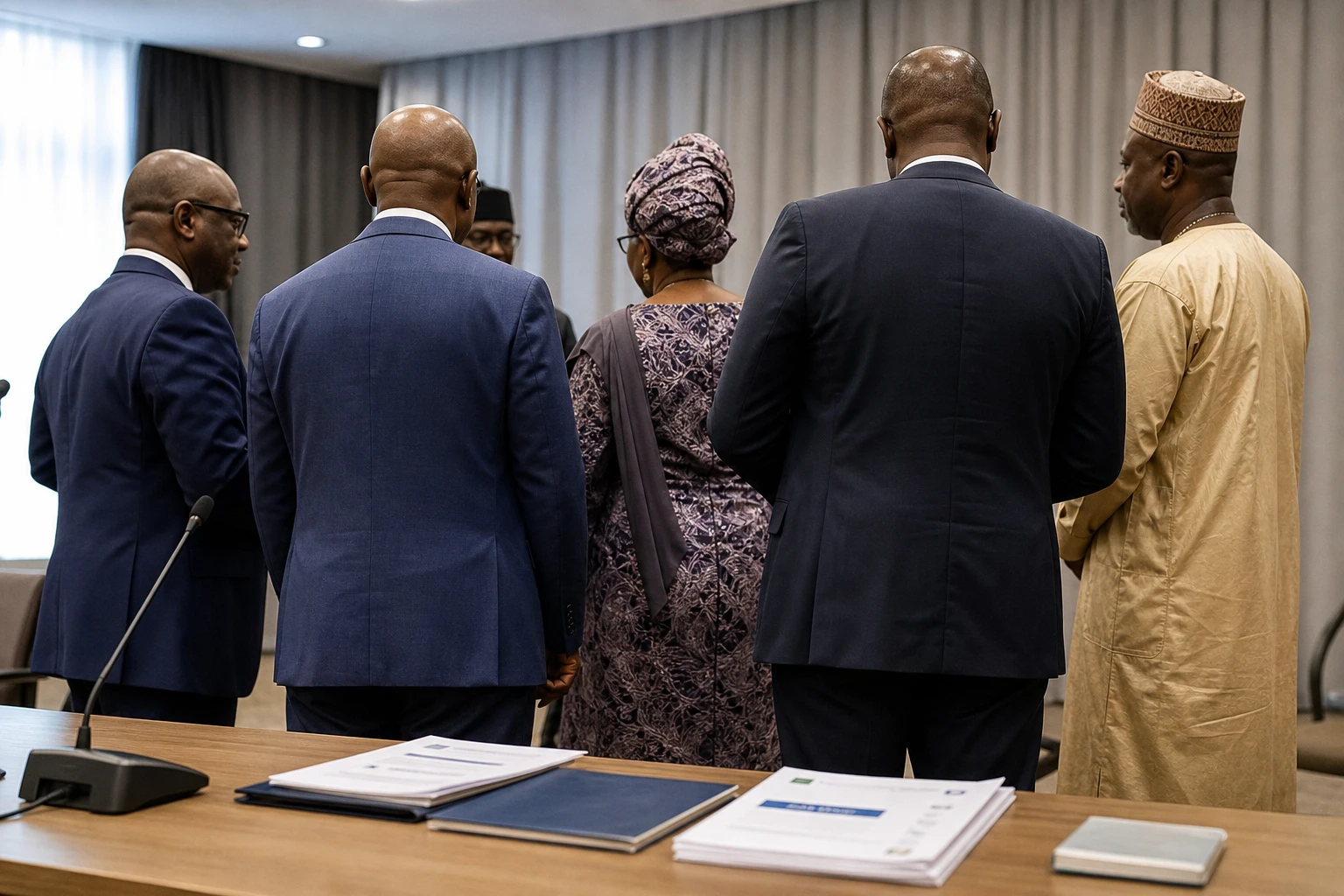
In Conakry, the request is about more than an ancient object. It touches on what Guineans retain of their history when archives, weapons and stories have been scattered far from home. The case of Samory Touré’s Quran, like that of other manuscripts linked to the colonial period, brings a simple question back to the fore: who owns a people’s memory when it has been taken out of the country?
The timing is also significant. In May 2026, France adopted a framework law that now allows requests to return cultural property from foreign states to be handled more flexibly, without the need to pass a specific law for each case. For requesting countries, this changes the legal balance of power; for French museums, it opens a new era of heritage negotiations.
From Samory Touré to heritage diplomacy
The name Samory Touré remains central to Guinean and West African memory. Founder of the Wassoulou Empire, he embodies resistance to French colonial conquest in the late 19th century. The Quran and other objects associated with him have a significance that goes beyond museum collections: they are linked to a political, religious and historical trajectory that remains alive in present-day Guinea, Côte d’Ivoire and Mali.
The current request is not an isolated impulse. In 1968, on the 10th anniversary of independence, Sékou Touré had already asked France to return Samory Touré’s Quran, sabre and boubou. That earlier request takes on new significance today, as Guinea has a more structured cultural framework and France has established a clearer legal mechanism for restitutions.
At the same time, heritage has become a public policy issue in Guinea. Conakry was named a UNESCO Creative City in the field of literature, and the programme was declared to be in the public interest for one year, from 23 April 2026 to 23 April 2027. The renovation and expansion of the National Museum, backed by €16 million in funding from AFD, show that the Guinean state is also seeking to strengthen its capacity to preserve heritage before, during and after any restitution.
What exactly Conakry is asking Paris to return
According to information made public, Guinea launched an official request in mid-June to the French Ministry of Culture for the return of its written heritage. The discussions concern manuscripts and, more broadly, Guinean cultural property taken out of the country in the colonial context. A Guinean delegation even visited the Army Museum in Paris to examine one of the documents concerned.
France’s framework is changing rapidly. The framework law on restitutions, finally adopted in spring 2026, supplements earlier legislation that had already enabled targeted returns, notably to Benin, Senegal and Côte d’Ivoire. It establishes a procedure that can now apply to other requests from states, based on a scientific committee and the opinion of the national commission for the restitution of cultural property.
For Guinea, the stakes are twofold. First, there is the symbolic dimension: restoring to the national public sphere objects that tell a story of resistance and knowledge. Then there is the institutional dimension: showing that the country can document, receive and preserve this heritage under better conditions. This is one reason why the modernisation of the National Museum and initiatives around books matter so much to the case.
Tangible effects for Guineans, beyond the diplomatic gesture
For the state, a successful restitution would be a strong political signal. It would confirm that Conakry can manage a heritage case from beginning to end, from the claim to preservation. It would also strengthen Guinea’s place in cultural exchanges with France, without erasing the colonial past that underpins the request.
For scholars’ families, historians, teachers and people working in publishing, the benefits would be more concrete still. A returned document is not just something to display. It can support research, publishing, school curricula and exhibitions. In Guinea, where books and reading are gaining institutional visibility, the return could fuel a local chain of knowledge rather than merely serve as a ceremonial event.
For society, the significance is regional too. Samory Touré does not belong to Guinea alone. His story crosses the present-day borders of West Africa, as do the movements of manuscripts, scholars and learned traditions. In this sense, restitution is not only about redress; it is about the circulation of knowledge between West African countries, within the ECOWAS region, where precolonial and colonial heritage remains an underused area for cooperation.
What this case says about West Africa today
Guinea’s request comes as several African capitals seek to take back control of their archives, objects and narratives. The return of emblematic items to Benin, Senegal and Côte d’Ivoire has shown that restitution is no longer an isolated gesture. It is now part of heritage diplomacy, in which African states want to engage with European institutions on an equal footing.
In Guinea, the developments will be closely followed at the Ministry of Culture, in academic circles and in diplomatic circles. The real test will come next: turning political will into a precise timetable, shared expertise and credible preservation conditions in Conakry. That is where the next stage of the case will be decided, well beyond the announcement itself.