Algeria
 Egypt
 Libya
 Morocco
 Sudan
 Tunisia
 Benin
 Burkina Faso
 Cabo Verde
 Côte d'Ivoire
 Ghana
 Guinea-Bissau
 Liberia
 Mali
 Mauritania
 Niger
 Nigeria
 Senegal
 Sierra Leone
 The Gambia
 Togo
 Cameroon
 Central African Republic
 Chad
 DR Congo
 Equatorial Guinea
 Gabon
 Republic of the Congo
 São Tomé and Príncipe
 Burundi
 Comoros
 Djibouti
 Eritrea
 Ethiopia
 Kenya
 Madagascar
 Malawi
 Mauritius
 Mozambique
 Rwanda
 Seychelles
 Somalia
 South Sudan
 Tanzania
 Uganda
 Angola
 Botswana
 Eswatini
 Lesotho
 Namibia
 South Africa
 Zambia
 Zimbabwe
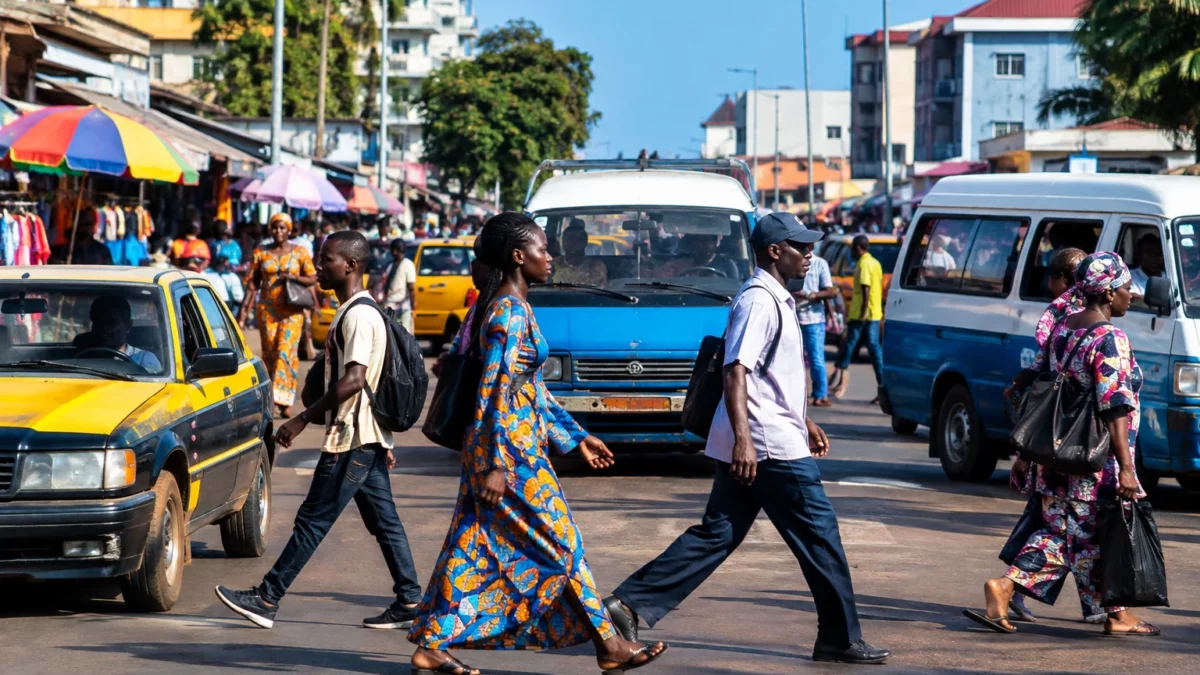
For Guinea, the stakes of Simandou go beyond extracting iron ore. The challenge is to turn a major mining project into roads, energy, jobs and activities that can endure beyond the commodities boom. In Conakry, a business summit put this ambition to the test in discussions with investors.
A mining summit at the heart of a national gamble
The first Simandou Mining Summit was held from 11 to 13 November 2026, with site visits announced for 14 November. The opening ceremony took place on Kassa Island, before discussions moved to Conakry. According to the organisers, 2,240 people from 41 countries took part, alongside 101 sponsors, exhibitors and partners. Guinean media outlet VisionGuinee also reported these figures.
Executives from mining and industrial groups present included representatives of Alcoa, Glencore, Winning International Group and Rio Tinto. This turnout reflects the commercial interest generated by Guinea’s resources. It does not, by itself, prove that the projects presented have secured financing or that investments are already under way.
The summit is part of the Simandou 2040 programme, a 15-year public roadmap structured around projects and reforms across several sectors. Guinea’s presidency estimates its investment volume at more than $200bn by 2040. This figure is an ambition for financing, not a sum already raised.
Projects presented, not yet secured investments
At the centre of the business meetings were four priority projects, together valued at $3.8bn. They comprise two transport projects in Greater Conakry — a bus rapid transit network, or BRT, and a regional train, or HRT — the South Coastal Road, and solar power plants with batteries planned for Dabola and Faranah.
The organisers said that banks, funds and companies had taken part in the discussions. The organisations cited included the World Bank, its private-sector arm, the IFC, as well as the Africa Finance Corporation and Bpifrance. Discussions are expected to continue as the projects progress. In the absence of any announcement of signed contracts or secured financing, the $3.8bn therefore represents the estimated value of the projects presented, not firm commitments.
The choice of sectors is revealing. Solar power with storage could help stabilise electricity supply, while the transport projects target a Conakry urban area facing growing mobility needs. But implementation will depend on studies, financing, public procurement procedures and the ability to maintain the infrastructure. Announcements will need to translate into timetables, contracts and accessible services.
Local processing: a promise and a practical test
The Simandou 2040 programme aims to move beyond exporting raw materials. Discussions at the summit covered processing bauxite into alumina, iron ore and gold markets, as well as agribusiness, water, electricity and digital infrastructure. For Guinea, the challenge is to develop local activities around its resources rather than depend solely on extracting them and selling them abroad.
On 12 November, Djiba Diakité, chairman of the Simandou Strategic Committee, highlighted three commitments to investors: honouring agreements, making priorities and timetables clear, and training Guinean professionals, notably through the Simandou Academy. He also stressed jobs, local content and technology transfer.
These objectives affect different actors in the country in different ways. Large mining companies are looking for reliable infrastructure and predictable rules. Guinean SMEs, meanwhile, need financing, skills and genuine access to subcontracting markets. The National Mining Subcontracting Forum and the stage devoted to “National Champions” were specifically intended to bring local businesses closer to major clients. Their impact will depend on the contracts actually made available to Guinean suppliers.
Impact will be measured beyond the mining sites
The economic gamble is not simply about output or the sums announced. It will also be measured in public revenue, skilled jobs, training, access to electricity and benefits for the regions. Benefits may be concentrated around mining corridors or the capital if public policies do not link investment to the needs of other areas and small businesses.
Guinea’s 2026 voluntary national review, published with support from the United Nations system, stresses that mining-driven growth alone does not guarantee an improvement in living conditions. It notes disparities in access to services and calls for mining prospects to be linked to social investment. This warning gives the challenge a concrete measure: turning revenue and infrastructure into sustained and fairly distributed benefits.
The Guinean summit also comes amid regional competition to attract capital, industry and infrastructure. The Simandou 2040 roadmap sets out regional integration as an objective for its 2035–2040 phase. For West Africa, transport links, energy and processing chains can extend beyond national borders, provided projects are coordinated and feasible.
The summit therefore opened discussions, but its outcome will not be judged by participant numbers alone. The next steps will be confirmed financing, published contracts, progress on infrastructure and the role secured by Guinean businesses. This is the scale at which the promise of an “equal partnership” and diversification driven by Simandou will be put to the test.