Algeria
 Egypt
 Libya
 Morocco
 Sudan
 Tunisia
 Benin
 Burkina Faso
 Cabo Verde
 Côte d'Ivoire
 Ghana
 Guinea-Bissau
 Liberia
 Mali
 Mauritania
 Niger
 Nigeria
 Senegal
 Sierra Leone
 The Gambia
 Togo
 Cameroon
 Central African Republic
 Chad
 DR Congo
 Equatorial Guinea
 Gabon
 Republic of the Congo
 São Tomé and Príncipe
 Burundi
 Comoros
 Djibouti
 Eritrea
 Ethiopia
 Kenya
 Madagascar
 Malawi
 Mauritius
 Mozambique
 Rwanda
 Seychelles
 Somalia
 South Sudan
 Tanzania
 Uganda
 Angola
 Botswana
 Eswatini
 Lesotho
 Namibia
 South Africa
 Zambia
 Zimbabwe
In Siguiri, in north-eastern Guinea, the fight against clandestine gold mining raises a question that goes beyond controlling mines: how can land and waterways be protected without abruptly displacing the livelihoods of thousands of people? The authorities’ response combines security operations with judicial penalties. It has already had consequences across the border in Mali.
An established sector, difficult to control
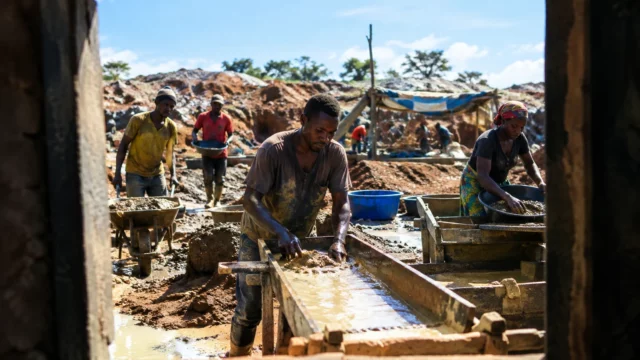
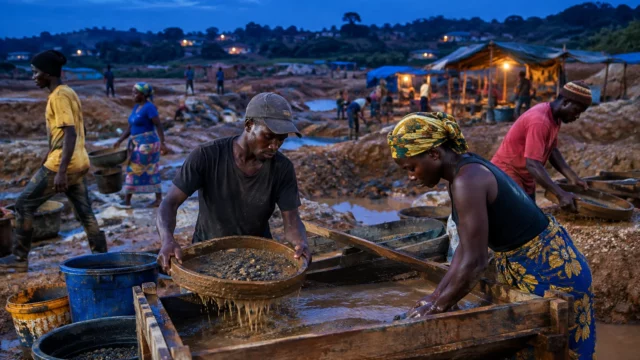
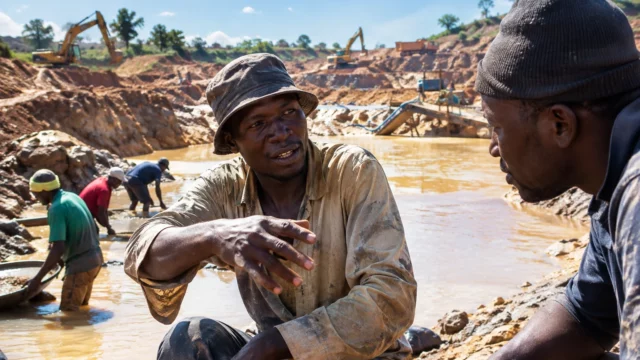
Siguiri is one of Guinea’s main gold-producing areas. Artisanal gold mining provides a livelihood for local residents, but also attracts workers from other West African countries. The activity often takes place without permits or oversight. It is therefore partly beyond the state’s tax and environmental controls.
The risks are tangible. Extraction can degrade farmland and disrupt waterways. The use of chemicals to separate gold from sediment exposes ecosystems and people to pollution. Yet a ban alone does not resolve questions of income, site regularisation or soil restoration.
On 2 November 2026, the Guinean authorities banned illegal gold mining in the area and stepped up controls. The operation is taking place in a country where the exploitation of mineral resources is a major economic and political issue. At regional level, Guinea and Mali share a long border and the movement of workers and goods. A decision taken in Siguiri can therefore quickly have effects on the other side.
Convictions following arrests
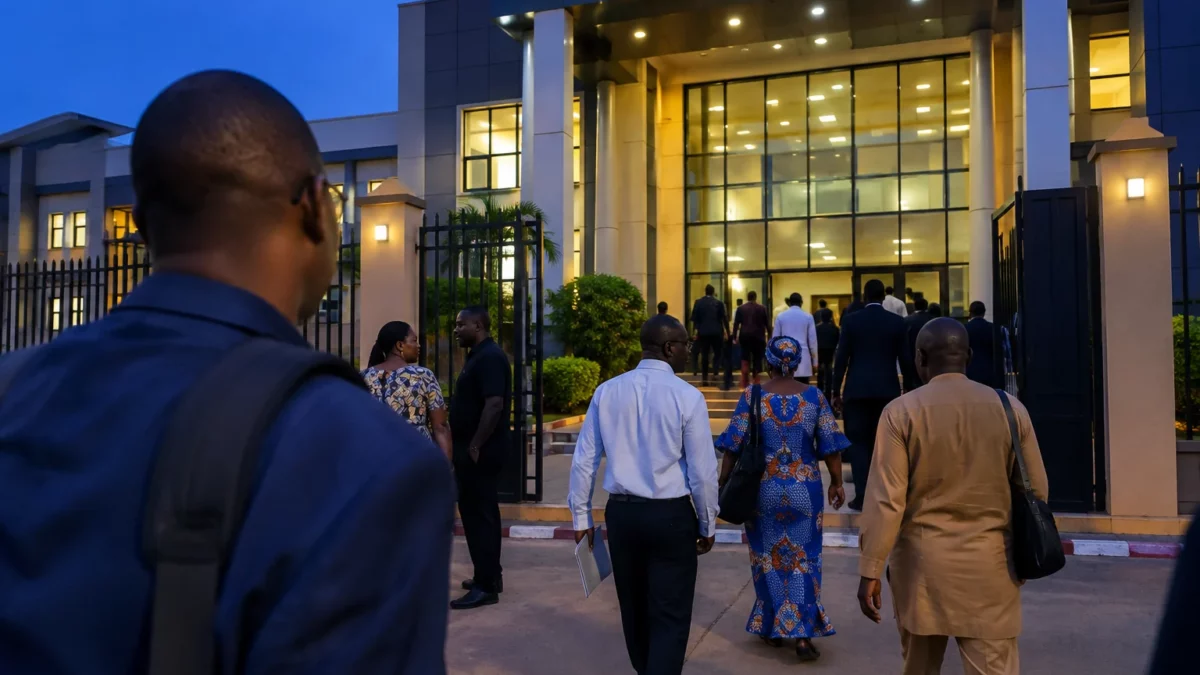
On 16 November, the Court for the Repression of Economic and Financial Offences (CRIEF), based in Conakry, convicted 22 former local officials and 202 people prosecuted in the case. According to court reports, the officials received two-year prison sentences and individual fines of 10 million Guinean francs. The 202 defendants were sentenced to three years in prison and a collective fine of 10 billion Guinean francs for illegal mining and environmental damage.
The distinction matters: the French word “mineurs” can refer to people who work in mines, but also to people under the age of 18. Guinean media reported that 12 or 13 minors were among the defendants, depending on the hearing. The 202 people convicted were therefore not all children. The proceedings also raised questions about the application of rules specific to juvenile justice.
The convicted people were among those arrested during the operation in Siguiri. More than 1,200 arrests have been reported. The conviction of the former officials also gives the case an administrative accountability dimension: the judicial action targets not only workers at the sites, but also public officials accused of complicity in environmental degradation and pollution. The charges and sentences were reported by the Guinean Press Agency and Guinean media.
Deaths and departures for Mali
The campaign was also marked by violence. On 11 November, clashes took place in the Sètiquiyah area of Balato, in Kintinian prefecture. The Guinean government reported ten deaths and 13 injuries. This toll is attributed to the authorities, who said the events took place during a patrol tasked with enforcing the ban. The Associated Press also reported the toll. The detailed circumstances of the clashes should be distinguished from the facts established by these announcements.
At the same time, workers and their families have left Guinea for Mali. The Malian authorities reported the arrival of people from several West African countries, including Burkina Faso. The International Organization for Migration estimated that about 100,000 people had crossed the border from the Siguiri region by 5 November. This is an estimate of movements, not necessarily a count of people who have settled permanently in Mali.
The Malian authorities have referred to the reception and provision of healthcare for workers who arrived in Bamako. For those affected, moving means losing an income immediately and, in some cases, being separated from their families. For host communities, it adds to demand for accommodation and healthcare. In Siguiri, the halt in activity also affects local economies that depend on gold miners’ spending, beyond the extraction sites themselves.
The challenge of a lasting response
The case highlights two distinct responsibilities. The state must enforce the law and prevent pollution. It must also oversee its officials, establish the facts surrounding the violence and ensure that judicial proceedings respect defendants’ rights, particularly those of children. The gold-mining sector, for its part, must be regulated so that legal activity is not undercut by clandestine sites and environmental damage does not go unrepaired.
The regional dimension makes what happens next particularly sensitive. The mass departure of workers for Mali turns a national operation into an issue requiring coordination between neighbouring countries. Ecowas, the regional organisation for the integration of West African states, provides a framework for dialogue, but the immediate management of movements and reception conditions falls first to the Guinean and Malian authorities.
The next steps to watch are therefore judicial and practical: the handling of any appeals, the situation of detainees, the reception of workers in Mali and the Guinean authorities’ ability to establish lasting control of the sites. Without economic alternatives or environmental monitoring, a ban can displace activity without addressing its causes. In Siguiri, the challenge is now to reconcile the protection of waterways and land, enforcement of the law and stability in border communities.