Algeria
 Egypt
 Libya
 Morocco
 Sudan
 Tunisia
 Benin
 Burkina Faso
 Cabo Verde
 Côte d'Ivoire
 Ghana
 Guinea-Bissau
 Liberia
 Mali
 Mauritania
 Niger
 Nigeria
 Senegal
 Sierra Leone
 The Gambia
 Togo
 Cameroon
 Central African Republic
 Chad
 DR Congo
 Equatorial Guinea
 Gabon
 Republic of the Congo
 São Tomé and Príncipe
 Burundi
 Comoros
 Djibouti
 Eritrea
 Ethiopia
 Kenya
 Madagascar
 Malawi
 Mauritius
 Mozambique
 Rwanda
 Seychelles
 Somalia
 South Sudan
 Tanzania
 Uganda
 Angola
 Botswana
 Eswatini
 Lesotho
 Namibia
 South Africa
 Zambia
 Zimbabwe
A decision that goes beyond one man’s fate
In Conakry, the case of 28 September 2009 continues to weigh on public life in Guinea. Fifteen years after the events, each hearing is a reminder that justice is not only judging individual responsibility. It is also measuring the state’s ability to confront one of the deepest wounds in its recent history.
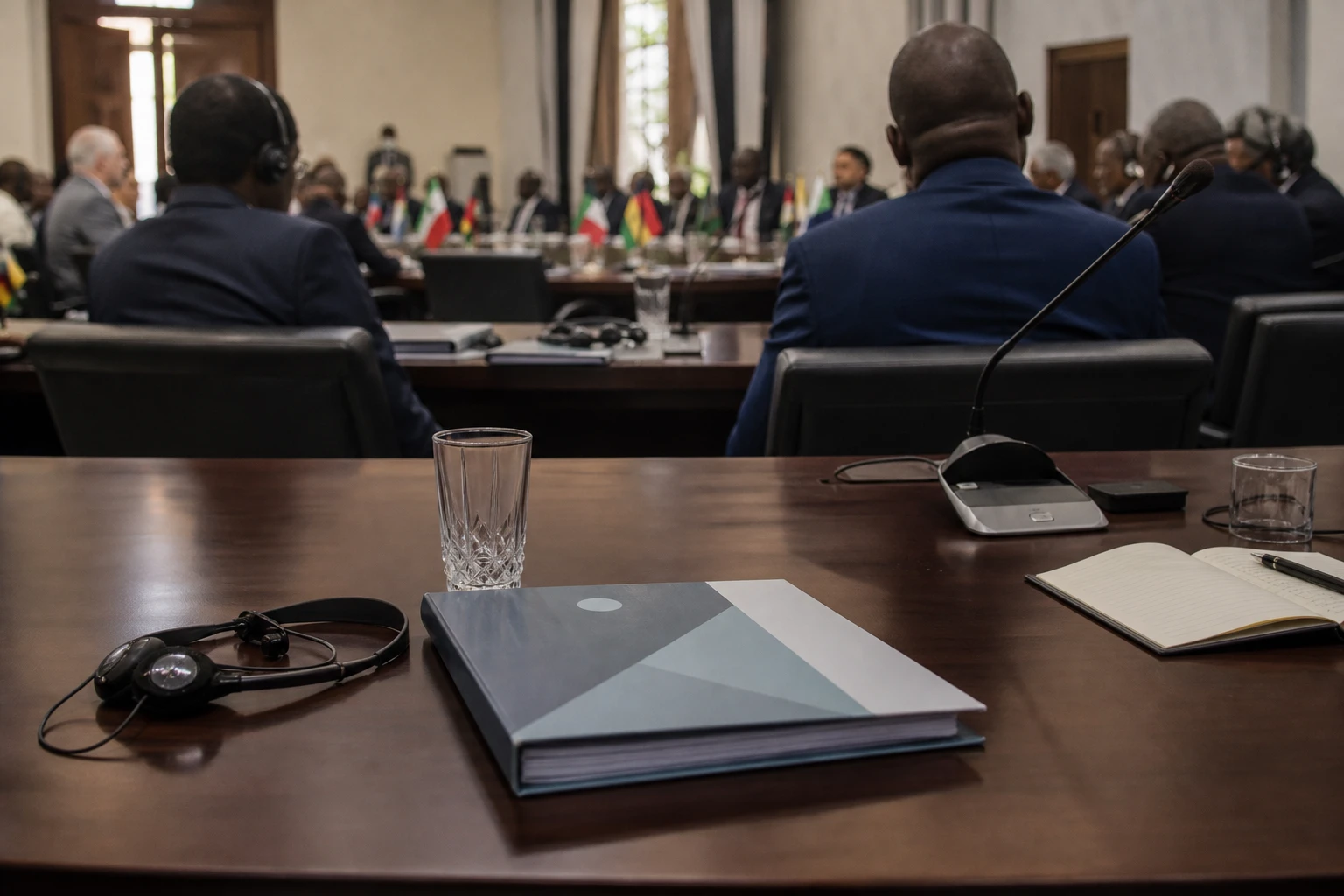
On Monday 27 July 2026, the Dixinn criminal court, sitting at the Conakry Court of Appeal, acquitted Colonel Bienvenu Lamah in the second part of the trial linked to the 28 September 2009 massacre. He was charged with complicity in murders, rapes, abductions and other crimes. Prosecutors had sought a ten-year prison sentence.
A trial set against Guinea’s long quest for justice
On 28 September 2009, thousands of people gathered at Conakry stadium to protest against the prospect of the junta’s then leader, Moussa Dadis Camara, standing in the presidential election scheduled for the following year. The crackdown left at least 156 people dead or missing and at least 109 women and girls subjected to sexual violence, according to the United Nations.
The case has long symbolised the impunity of Guinea’s security forces. The first major trial, which opened in 2022, resulted on 31 July 2024 in the conviction of several officials, including the former junta leader, who was sentenced to 20 years in prison for crimes against humanity. The second part targeted other alleged actors involved in the chain of command and the planning of the operations.
What the Dixinn court examined
In Bienvenu Lamah’s case, prosecutors argued that he had exercised authority over recruits at the Kaléah training centre who were suspected of taking part in the abuses. The defence challenged that account and said there was no evidence that he had commanded the operations or issued orders. The court accepted this argument and found that the evidence presented did not establish his criminal responsibility.
The verdict does not, by itself, close the judicial chapter on 28 September. In cases of this kind, an acquittal or conviction does not put an end to debate over the chain of command, the identification of those who carried out the crimes, the quality of the evidence and the place of victims in the proceedings. In Guinea, these questions remain central because they affect the credibility of the judiciary as much as the collective memory.
What the verdict means for the state, victims and military
For victims, the most sensitive issue remains judicial recognition of the facts and the consistency of rulings. An acquittal does not erase the deaths, disappearances or sexual violence documented over the years by the United Nations and human rights organisations. It can, however, fuel a sense of frustration if the reasoning behind the judgment does not appear sufficiently robust or clear.
For the Guinean state, the case has a wider significance. It shows that a national justice system can investigate a mass crime without waiting for an external tribunal. This is an important issue in a region where political transitions, coups and security-related disputes often leave questions unanswered. Guinea, a member of ECOWAS, is being watched well beyond its borders for its ability to address this past without selectivity.
For the military and security forces, the message is nuanced. On the one hand, the trial is a reminder that a uniform no longer automatically shields its wearer from criminal responsibility. On the other, an acquittal underscores that justice requires individualised evidence, not guilt by association. That standard is essential in a case of such gravity, where the weight of memory can be powerful but the law must remain precise.
A Guinean case with West African implications
The significance of the ruling extends beyond Conakry. In West Africa, several countries are still struggling to reckon with crimes committed during political crises, electoral crackdowns or military transitions. The way Guinea handles the 28 September case could therefore serve as a positive or negative benchmark for the region.
The judicial timetable remains one to watch. The second part of the trial could still have implications on appeal, and the civil parties can pursue the remedies provided for under the law. Meanwhile, the memory of the events of 28 September 2009 continues to shape public debate on judicial reform, the responsibility of the armed forces and the place of victims in Guinea’s political transition.
At continental level, the case is a reminder of a simple truth: transitional justice is worthwhile only if it is rigorous, clear and independent. Guinea is making its way along this path, with its delays, contradictions and progress. The verdict of 27 July 2026 does not erase that journey. It adds another piece to a case that remains one of the most sensitive in the country’s contemporary history.