Algeria
 Egypt
 Libya
 Morocco
 Sudan
 Tunisia
 Benin
 Burkina Faso
 Cabo Verde
 Côte d'Ivoire
 Ghana
 Guinea-Bissau
 Liberia
 Mali
 Mauritania
 Niger
 Nigeria
 Senegal
 Sierra Leone
 The Gambia
 Togo
 Cameroon
 Central African Republic
 Chad
 DR Congo
 Equatorial Guinea
 Gabon
 Republic of the Congo
 São Tomé and Príncipe
 Burundi
 Comoros
 Djibouti
 Eritrea
 Ethiopia
 Kenya
 Madagascar
 Malawi
 Mauritius
 Mozambique
 Rwanda
 Seychelles
 Somalia
 South Sudan
 Tanzania
 Uganda
 Angola
 Botswana
 Eswatini
 Lesotho
 Namibia
 South Africa
 Zambia
 Zimbabwe
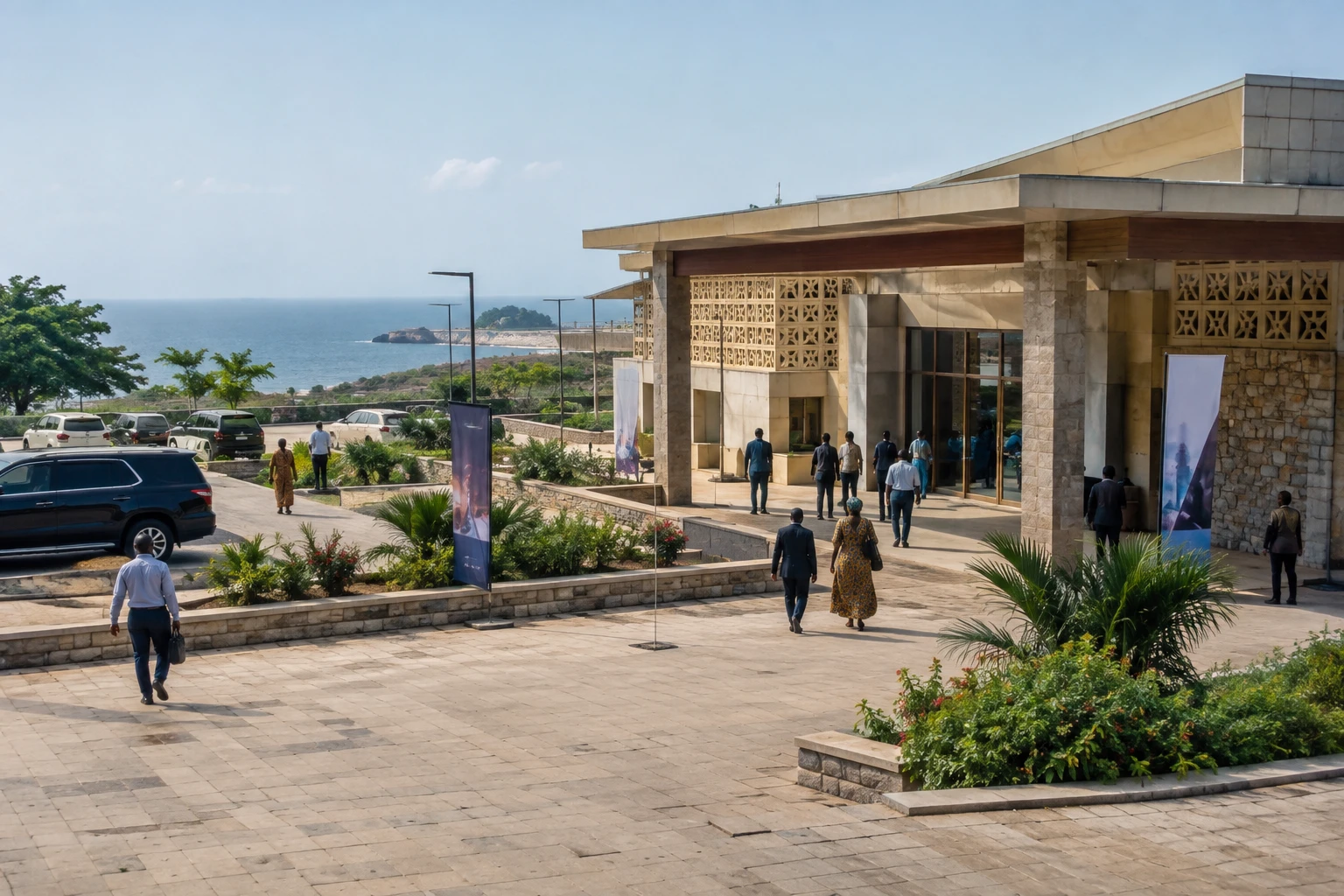
At Kassa, a former bauxite mining area off the coast of Conakry, the mining past serves as the starting point for a very current question: what will remain in Guinea once its iron ore and bauxite deposits have stopped producing? The opening of the Simandou Mining Summit on 11 November 2026 placed this question at the heart of discussions with investors.
From exported ore to lasting activities
The island of Kassa is a reminder that mining in Guinea did not begin with Simandou. Bauxite was already being mined there in the early 1950s, during the colonial period, and then shipped without processing. The deposit was quickly depleted. Today, activity has shifted to the mainland and expanded on a far larger scale. This precedent gives concrete weight to the current promise of creating more value locally.
Guinea exported about 183 million tonnes of bauxite in 2025, according to data compiled in a report by the Guinean Ministry of Mines. The World Bank estimates that the economy grew by 7.3% that year, thanks in particular to the mining boom, but notes that job creation remains a challenge. In other words, increased production does not automatically translate into income and opportunities shared across the population.
The contrast is particularly clear between mining areas, urban centres and activities that remain outside major projects. Mining companies need roads, railways, electricity and specialised services. Agricultural producers, meanwhile, need transport, storage and access to markets. The strategy announced in Kassa aims to bring these needs closer together, but its success will depend on how infrastructure is made accessible beyond mining operators.
Simandou, between promise and economic construction
The Simandou iron ore deposit in the south-east of the country lies at the heart of this ambition. After years of delays and negotiations, mining began on 11 November 2025. The project brings together several operators, including Rio Tinto and Winning Consortium Simandou, around mines, a railway and port facilities. This corridor is intended to carry ore to the coast, but it could also support other trade if its use is expanded.
At the summit, President Mamadi Doumbouya presented Simandou as a starting point rather than an end in itself. The government is promoting the Simandou 2040 programme, a 15-year roadmap valued at more than $200 billion. It includes industry, energy and transport, as well as agriculture, health and education. The African Development Bank has said it supports the programme, while the authorities seek to mobilise private and public capital.
The announced figure represents an investment ambition, not a sum that has already been financed. The gap between the projects included in the programme and those that actually come to fruition will therefore be a key indicator. For Guinean businesses, the challenge is to secure a place in subcontracting contracts and supply chains. For people in mining regions, it is also a matter of assessing the effects on employment, services and travel, beyond temporary construction work.
Refining, transport, training: the tests of transformation
Local processing is one of the main tests. In Boffa, China’s Chalco group has launched a project for an alumina refinery with an announced annual capacity of 1.2 million tonnes. Alumina is the product obtained by processing bauxite, before aluminium is made. Guinea is aiming for several plants by 2030 so that it no longer depends on a single refinery, Friguia. But these facilities require reliable energy, technical skills and sustainable financing.
The same logic applies to gold. The Nimba Gold Refinery, inaugurated in Gbessia, near Conakry, is intended to make it possible to process locally some of the metal destined for export. For these plants to genuinely change the structure of the economy, their supply, actual operations, jobs created and the share of value accruing to the state and the country’s businesses will need to be monitored.
Rail offers another example of the promises and uncertainties. A passenger train made an inaugural journey on the line linked to the mining project, but a trial does not guarantee the introduction of a regular service. In time, broader use could make it easier to travel and transport agricultural products to markets or processing centres. That would, however, require access rules, suitable fares and additional investment.
A Guinean challenge, a West African signal
The summit also comes amid a new political phase. Mamadi Doumbouya, who came to power after the 2021 coup, was sworn in as president in January 2026, following the presidential election in December 2025. Guinea remains a member of ECOWAS, the Economic Community of West African States. The mining project is therefore taking shape in a context where national institutions, governance and regional relations matter as much as investment announcements.
For West Africa, Simandou illustrates a debate shared by several resource-producing countries: how can natural resources be used to drive industrialisation without locking the economy into exporting raw materials? Guinea’s answer will be judged less by speeches than by observable results: operational refineries, available energy, contracts accessible to local businesses and infrastructure that serves both the regions and the capital.
The Simandou Mining Summit runs from 11 to 14 November 2026. The announcements made in Kassa must now be translated into financing, public timelines and monitoring mechanisms. Only then can the wealth extracted from the ground support activities that will continue after the mines have closed.
For institutional data and announcements, see the official Simandou 2040 programme portal, the African Development Bank’s commitment and the World Bank’s 2026 economic assessment.