Algeria
 Egypt
 Libya
 Morocco
 Sudan
 Tunisia
 Benin
 Burkina Faso
 Cabo Verde
 Côte d'Ivoire
 Ghana
 Guinea-Bissau
 Liberia
 Mali
 Mauritania
 Niger
 Nigeria
 Senegal
 Sierra Leone
 The Gambia
 Togo
 Cameroon
 Central African Republic
 Chad
 DR Congo
 Equatorial Guinea
 Gabon
 Republic of the Congo
 São Tomé and Príncipe
 Burundi
 Comoros
 Djibouti
 Eritrea
 Ethiopia
 Kenya
 Madagascar
 Malawi
 Mauritius
 Mozambique
 Rwanda
 Seychelles
 Somalia
 South Sudan
 Tanzania
 Uganda
 Angola
 Botswana
 Eswatini
 Lesotho
 Namibia
 South Africa
 Zambia
 Zimbabwe
In Conakry, a battle over words is really a battle over power
In Guinea, an expression of just a few syllables can become a political signal. When a foreign media outlet describes the head of state as a “putschist”, the debate goes beyond semantics. It touches on the legitimacy of power, the memory of the 2021 coup and control of the public narrative in a country still marked by its transition.
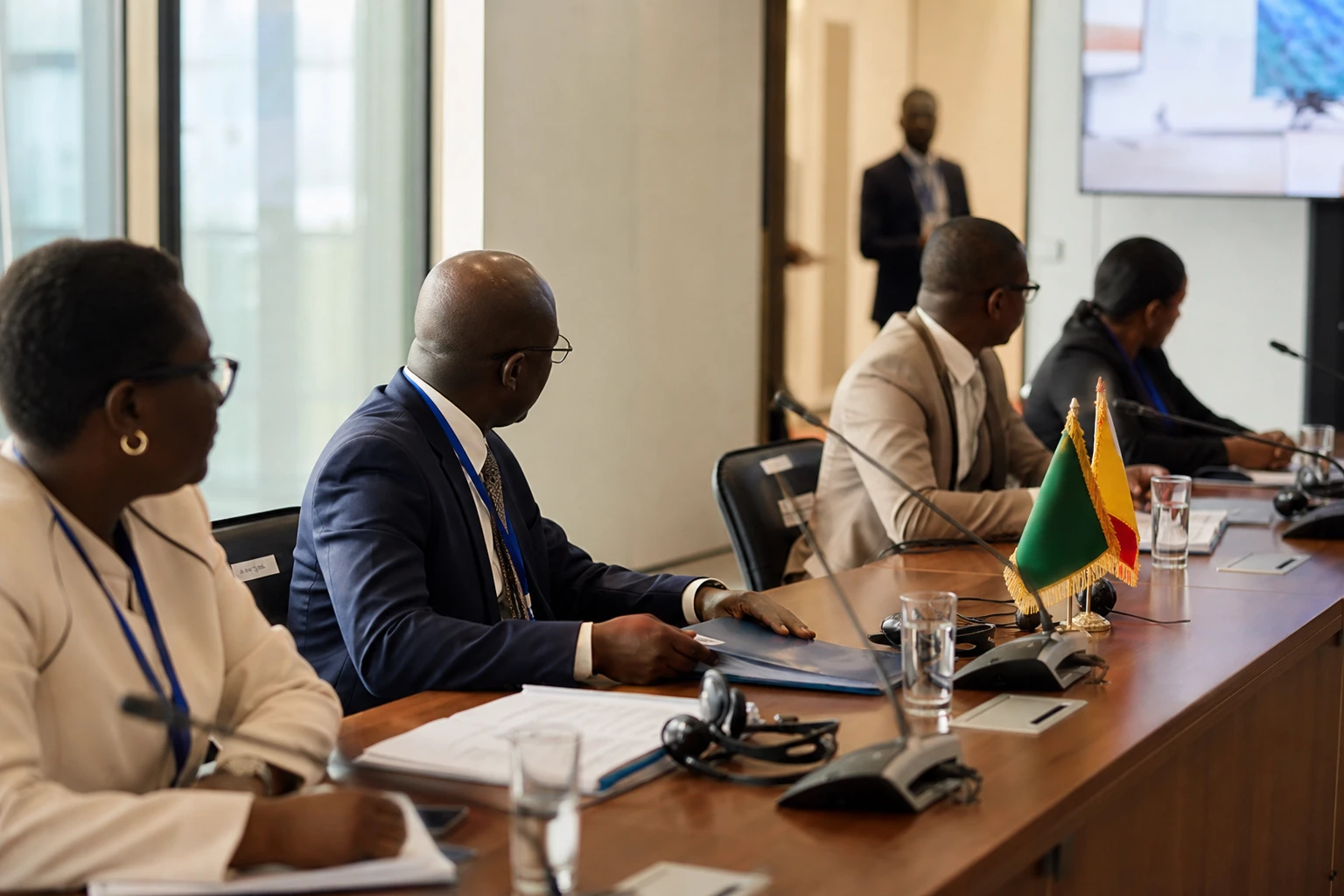
This tension is not an isolated case. From Conakry, the High Authority for Communication, or HAC, arbitrates relations between the state, local media and foreign outlets. Guinean law defines its role as that of a regulator responsible for ensuring compliance with communication rules and pluralism. In the West African context, Guinea remains a sensitive issue for ECOWAS, which is closely monitoring the return to constitutional order.
What the HAC accuses France 24 of
On 16 September 2026, the HAC issued a formal warning to France 24 after a news broadcast aired the previous day, on 15 September 2026, used the expression “putschist president” to refer to Mamadi Doumbouya. Guinean media outlets reporting the decision describe it as an official warning, with sanctions threatened in the event of a repeat offence. The HAC has also called for corrections on the platforms concerned.
The institution’s public position is unequivocal. It considers that the channel used an “inappropriate” term and, in its view, ignored the “legitimacy derived from the ballot box”. The HAC says this language fails to meet the standards of accuracy and balance required of journalism in Guinea. The institution is headed by Boubacar Yacine Diallo, a well-known figure in Guinea’s media landscape.
The reminder matters because the HAC has already taken several decisions against media outlets in 2026. Its official website lists formal warnings and suspensions, evidence of an active regulatory approach during a period that remains tightly controlled politically. In Guinea, then, the issue is not simply one word. It also concerns the space allowed for opposing views and criticism in public life.
A transition becomes an electoral phase
To understand this case, it is necessary to look back at the path taken since the coup of 5 September 2021. Mamadi Doumbouya, then a colonel, overthrew President Alpha Condé. Since then, Guinea has embarked on a lengthy transition, initially under regional pressure, before an electoral timetable gradually got back on track. ECOWAS has supported the process and presented the constitutional referendum of September 2025, followed by the presidential election of 28 December 2025, as steps towards restoring constitutional order.
This timetable has changed the nature of public debate. After the constitutional referendum of 21 September 2025, the December 2025 presidential election led to Mamadi Doumbouya’s election, with 86.72% of the vote, according to provisional results later confirmed by the courts in early January 2026. The African Union subsequently welcomed this development and called for the lifting of sanctions still linked to the transition, while stressing the need to strengthen institutions.
From the Guinean executive’s perspective, calling him a “putschist president” amounts to denying an electoral process now enshrined in Guinean law. For his critics, by contrast, the term recalls the military origins of power and the initial promise of a transition that would end without political capture. Both interpretations coexist. They now shape the debate over civil liberties in Conakry.
What this means for Guineans and the region
This case has tangible effects. For the authorities, it is a way to assert that Guinea’s editorial sovereignty must not be dictated from abroad. For the media, it is a reminder that the space available in Guinea remains narrow, particularly when coverage concerns the head of state. For citizens, it raises a simple question: how much room is left for criticism when regulation can quickly turn into punishment?
The case extends beyond Conakry, however. In West Africa, Guinea is a test for ECOWAS: an end to the transition and a return to elected institutions, but also the treatment of civil liberties during this phase. The regional organisation’s technical mission, deployed in May 2026, shows that the process is still being closely monitored. Meanwhile, the international community is watching to see whether the announced strengthening of institutions is accompanied by genuine space for pluralistic expression.
Across the continent, the stakes are even broader. Guinea exemplifies a pattern that has become increasingly common in West Africa: military transitions seeking electoral validation, followed by institutional normalisation. This sequence does not resolve everything. It shifts the centre of political conflict towards regulatory institutions, supreme courts, electoral commissions and newsrooms. That is where the practical meaning of constitutional order is now being decided, in Conakry and elsewhere.
What happens next will depend on the ability of Guinean institutions to tolerate disagreement without treating it as an attack on the state. It will also depend on the care taken by foreign media, which will need to continue distinguishing between commentary, legal characterisation and editorial phrasing. In a country where the transition has produced an elected government whose path remains contested, every word can still become a political case.