Algeria
 Egypt
 Libya
 Morocco
 Sudan
 Tunisia
 Benin
 Cabo Verde
 Côte d'Ivoire
 Ghana
 Guinea
 Guinea-Bissau
 Liberia
 Mali
 Mauritania
 Niger
 Nigeria
 Senegal
 Sierra Leone
 The Gambia
 Togo
 Cameroon
 Central African Republic
 Chad
 DR Congo
 Equatorial Guinea
 Gabon
 Republic of the Congo
 São Tomé and Príncipe
 Burundi
 Comoros
 Djibouti
 Eritrea
 Ethiopia
 Kenya
 Madagascar
 Malawi
 Mauritius
 Mozambique
 Rwanda
 Seychelles
 Somalia
 South Sudan
 Tanzania
 Uganda
 Angola
 Botswana
 Eswatini
 Lesotho
 Namibia
 South Africa
 Zambia
 Zimbabwe
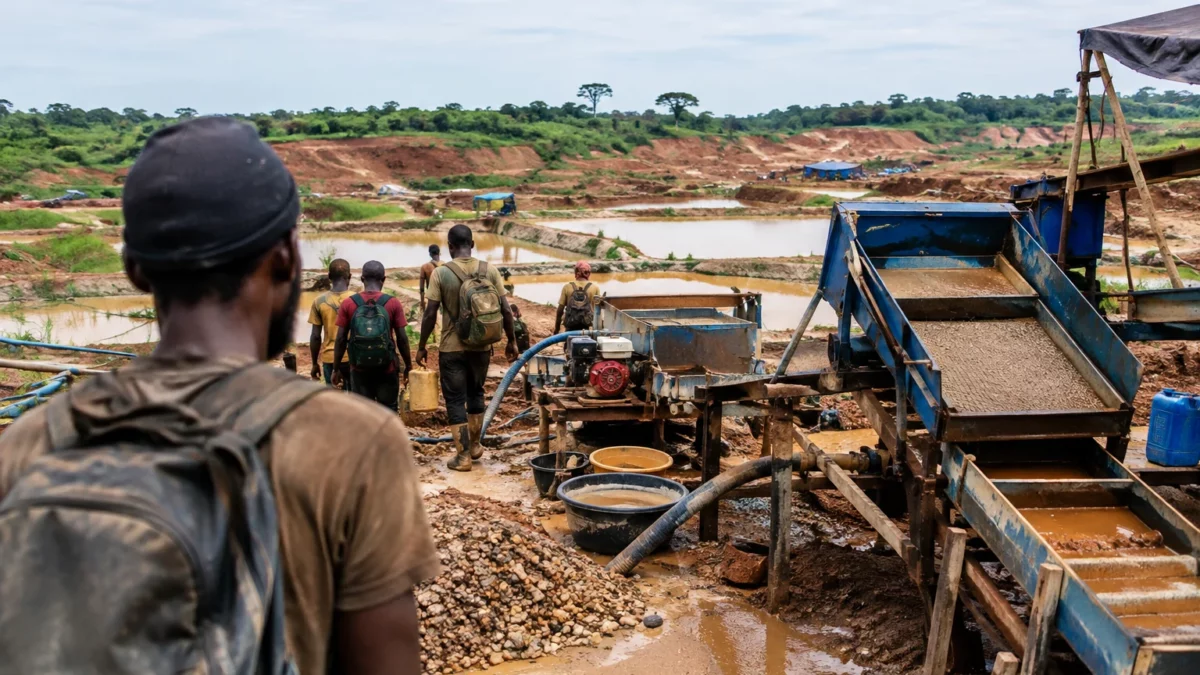
A decision taken in Conakry against a Burkinabè public broadcaster reveals tensions that go beyond a television debate. At the heart of the dispute are the closure of artisanal gold-mining sites in Upper Guinea, the departure of foreign workers and two opposing accounts of how the authorities conducted their operations.
From Siguiri to a broadcaster’s suspension
The disagreement took shape in north-eastern Guinea, around Siguiri, a gold-mining area where artisanal mining attracts workers from several West African countries. The Guinean authorities suspended the activity as part of an operation against mining they describe as illegal or anarchic. They cite, in particular, damage to soil, vegetation and waterways, as well as risks associated with certain chemicals.
The measure, however, affects people whose incomes depend directly on the mining sites. Many of them are Burkinabè nationals. Departures for Mali followed the operations, but accounts differ in how they describe them: some officials and media outlets speak of expulsions, while Conakry presents the intervention as the closure of sites and enforcement of the law. The available evidence does not make it possible to determine precisely the proportions of voluntary departures, forced removals or movements prompted by the loss of work.
On 19 November 2026, the Haute Autorité de la communication (HAC), Guinea’s media regulator, banned broadcasts by Radiodiffusion Télévision du Burkina (RTB) in Guinea until further notice. The decision followed an editorial on Guinea’s policy towards artisanal gold mining. The HAC judged the content hostile to the country and damaging to the image of President Mamadi Doumbouya. The ban also requires the channel to be removed from television packages, reports West Africa Democracy Radio.
Two accounts of the mining operations
In its editorial, RTB criticised what it portrayed as a double standard: small-scale miners were being driven out while large mining companies continued to extract gold. The commentary also questioned the share of mining revenues accruing to the Guinean state. These claims are part of Burkinabè editorial commentary; on their own, they do not constitute a verified account of Guinean mining taxation or contracts.
Conakry, for its part, defends an intervention prompted by environmental damage and the fight against illegal mining. But the question of law enforcement does not remove the question of human consequences or compliance with procedures. It is therefore important to distinguish the reasons given by the authorities, the criticism voiced by RTB and facts established by independent sources.
A Guinean court convicted 224 people in cases linked to illegal gold mining in the country’s north-east: 202 miners and 22 former local officials, according to the Associated Press. This figure refers to those convicted and should not be confused with the total number of people detained or who left the sites. Foreign nationals convicted were given, according to the information provided, a ten-year ban on staying in the country; defence lawyers announced their intention to appeal. The details of these decisions and any subsequent legal developments should be followed separately.
The human toll requires greater caution. Reports circulated in the context of the operations say that ten people died, including five foreign nationals. Burkina Faso’s Security Minister, Mahamadou Sana, also referred to injured people and people who had been shot. These statements are attributed to the Burkinabè authorities; the sources consulted do not make it possible to independently establish every circumstance or the identities of all the victims. The Associated Press report on the clashes also gives a death toll of at least ten, attributed to the authorities.
A local crisis with regional repercussions
For artisanal miners, the closure of the sites first means the loss of an income and, for some, displacement to a neighbouring country. The consequences extend beyond the workers: they affect families, transport operators, small businesses and communities living around the mining areas. Conversely, environmental damage affects local populations, particularly when waterways and land are degraded. A sustainable policy must therefore address environmental protection, the regulation of mining activity and the conditions under which those affected can leave.
The suspension of RTB adds a further issue: the circulation of information. The Guinean authorities cite the protection of the honour and image of the head of state; the broadcaster had published political criticism accompanied by a caricature. The measure restricts the Guinean public’s access to a foreign media outlet at a time when the controversy concerns the treatment of Burkinabè nationals. Whether the ban remains in place or is lifted, and any steps taken between the two states, will be important indicators of how the dispute develops.
The regional context also matters. Guinea remains a member of the Economic Community of West African States (ECOWAS), while Burkina Faso left the organisation with Mali and Niger in January 2025. These different institutional paths do not remove the need for the two countries to manage cross-border movements and mining activities that do not stop at national borders. They do, however, make bilateral dialogue and co-operation with transit countries, including Mali, all the more important.
The case thus goes beyond a face-off between Conakry and Ouagadougou. It highlights a shared challenge in several West African gold-mining areas: enforcing environmental rules without turning migrant workers into scapegoats, and allowing media criticism without resolving political tensions through lasting bans. In the short term, the outcome of the court appeals, the conditions for the return or resettlement of displaced people and RTB’s status in Guinea will show whether the crisis remains contained or widens.