Algeria
 Egypt
 Libya
 Morocco
 Sudan
 Tunisia
 Benin
 Cabo Verde
 Côte d'Ivoire
 Ghana
 Guinea
 Guinea-Bissau
 Liberia
 Mali
 Mauritania
 Niger
 Nigeria
 Senegal
 Sierra Leone
 The Gambia
 Togo
 Cameroon
 Central African Republic
 Chad
 DR Congo
 Equatorial Guinea
 Gabon
 Republic of the Congo
 São Tomé and Príncipe
 Burundi
 Comoros
 Djibouti
 Eritrea
 Ethiopia
 Kenya
 Madagascar
 Malawi
 Mauritius
 Mozambique
 Rwanda
 Seychelles
 Somalia
 South Sudan
 Tanzania
 Uganda
 Angola
 Botswana
 Eswatini
 Lesotho
 Namibia
 South Africa
 Zambia
 Zimbabwe
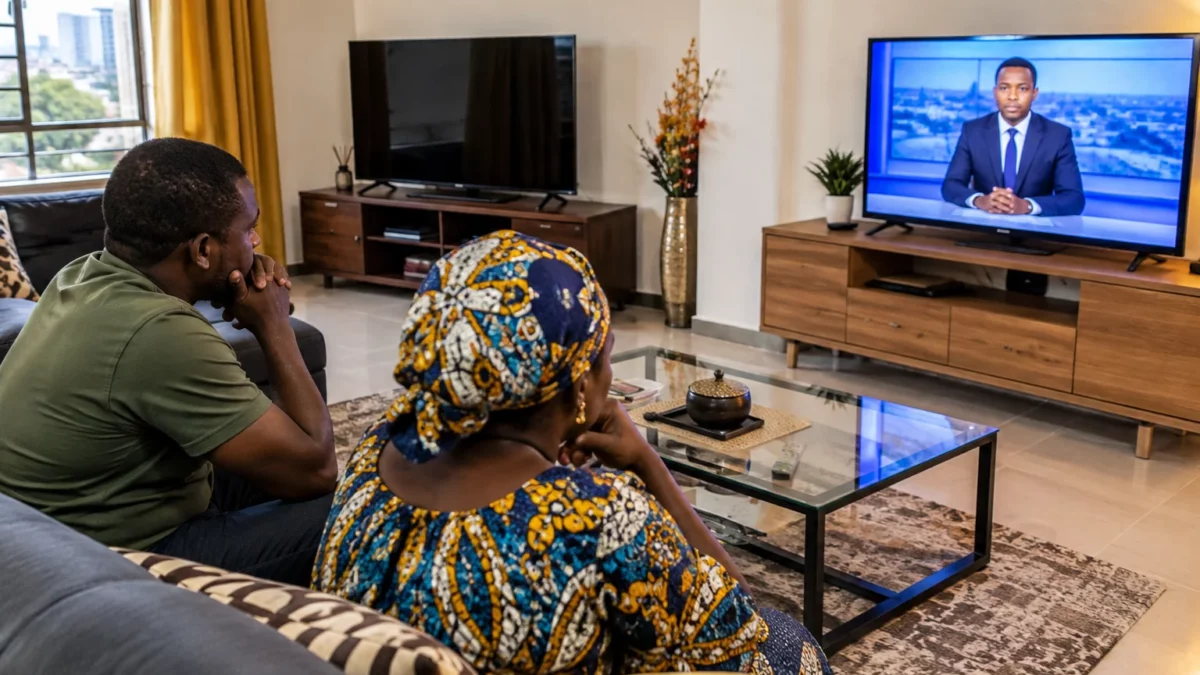
In Siguiri, the campaign against unauthorised artisanal gold mining has already triggered departures and tensions. It is now opening another front: relations between Conakry and Ouagadougou, following a decision to remove Burkina Faso’s public television from packages available in Guinea.
A regulatory measure amid a regional dispute
The Haute Autorité de la communication (HAC), which regulates the media in Guinea, has banned the broadcast of Radiodiffusion Télévision du Burkina (RTB) on Guinean territory. Its decision, signed in Conakry on 19 November 2026, applies “until further notice”. It instructs Canal+ Guinée and other distributors to remove the channel from their offers immediately.
The regulator accuses RTB of broadcasting an editorial on 14 November, accompanied by a caricature of President Mamadi Doumbouya. According to the HAC, the commentary undermines the head of state’s “honour, dignity and image”. This is the Guinean authority’s assessment; it does not, in itself, constitute an independent finding about the content or its effects.
The programme discussed the treatment of foreign workers arrested in artisanal mining areas and criticised what it described as a difference in the severity of enforcement against small-scale operators and industrial mining companies. The Guinean response, followed by the broadcast ban, has thus shifted a disagreement over mining operations into the media arena.
Artisanal gold mining at the heart of local and cross-border tensions
The dispute is part of a campaign launched in early November against artisanal gold mining described by the authorities as illegal or “anarchic”. On 2 November, a joint order banned these activities. The Guinean government cites damage to farmland and waterways among its reasons. In the north-east, around Siguiri, artisanal extraction also supports many households and attracts workers from several West African countries.
Enforcement of the ban has already led to clashes. The Guinean government reported ten deaths and 13 injuries during violence on 11 November in Balato, in Kintinian prefecture. These figures remain a provisional toll issued by the authorities; five of those killed were foreign nationals whose identities had not yet been established. The Associated Press also reported the toll, attributing it to the government.
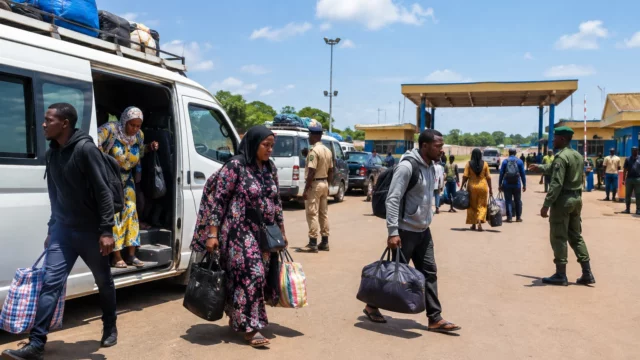
The arrests and departures have a regional dimension. According to the African Press Agency, Guinean authorities announced on 7 November the arrest of 1,263 people of seven nationalities. In Burkina Faso, the National Council for Emergency Relief and Rehabilitation recorded 70,734 people received as part of return movements as of 18 November. These figures describe separate operations and do not mean that everyone received had been expelled by formal decision.
Ouagadougou had already criticised the expulsions. Foreign ministers of the Alliance of Sahel States (AES), meeting on 11 and 12 November, expressed regret over returns they described as massive and uncoordinated, the African Press Agency reports. The Burkinabè government has also called for calm in response to calls for reprisals against Guineans living in Burkina Faso.
Press freedom and the consequences for communities
For viewers, the decision means RTB will disappear from the offers of the distributors targeted in Guinea, with no date announced for a possible review. For operators, the withdrawal order is backed by the threat of sanctions under Guinean law. For the workers concerned and their families, the media dispute does nothing to resolve the conditions for their return or the economic difficulties caused by the halt in activity at the sites.
The measure also raises a question of proportionality: should editorial criticism and a caricature lead to the banning of an entire channel? The HAC cites the protection of the head of state’s image. The available information does not specify whether RTB was invited to respond or whether an appeal has been lodged. It is therefore important to distinguish the reason given by the regulator from a full legal examination of the decision.
The case is all the more sensitive because Guinea has imposed other restrictions on media outlets. Africaho reports that France 24 was suspended by the HAC in September 2026. This precedent is not enough to establish that the two decisions were based on the same grounds, but it places the RTB ban in a wider debate about regulation and access to information.
A test for relations within West Africa
Guinea and Burkina Faso are part of the West African region, where the movement of workers and news networks cross national borders. The crisis is also affecting relations between Conakry and the AES countries, of which Burkina Faso is a member. Diplomatic exchanges and the protection of nationals could now weigh as heavily as the debate over artisanal gold mining.
What happens next will depend on two concrete developments: how long the RTB ban lasts and how the authorities coordinate the return of foreign workers. In the Siguiri region, enforcement of the mining ban and the investigation into the violence in Balato also remain immediate concerns. The response to these issues will show whether the media escalation remains contained or spreads to relations between neighbouring states.