Algeria
 Egypt
 Libya
 Morocco
 Sudan
 Tunisia
 Benin
 Cabo Verde
 Côte d'Ivoire
 Ghana
 Guinea
 Guinea-Bissau
 Liberia
 Mali
 Mauritania
 Niger
 Nigeria
 Senegal
 Sierra Leone
 The Gambia
 Togo
 Cameroon
 Central African Republic
 Chad
 DR Congo
 Equatorial Guinea
 Gabon
 Republic of the Congo
 São Tomé and Príncipe
 Burundi
 Comoros
 Djibouti
 Eritrea
 Ethiopia
 Kenya
 Madagascar
 Malawi
 Mauritius
 Mozambique
 Rwanda
 Seychelles
 Somalia
 South Sudan
 Tanzania
 Uganda
 Angola
 Botswana
 Eswatini
 Lesotho
 Namibia
 South Africa
 Zambia
 Zimbabwe

In Bobo-Dioulasso, the return of workers who went to Guinea in search of gold raises an immediate question: how can emergency reception be turned into a genuine fresh start? For thousands of Burkinabè, the journey home brings a remunerative activity to an end, but does not resolve the loss of income or the search for a new occupation.
A return organised from Mali
The movement is part of an operation launched by the Guinean authorities against artisanal gold mining. The foreign workers concerned left mining sites in north-eastern Guinea, particularly in the Siguiri region. Many travelled through Mali before reaching Burkina Faso. The available figures therefore describe more than movement between two countries: they point to a logistical response involving several states.
On 6 November 2026, an initial convoy of 48 buses brought around 3,400 people to Bobo-Dioulasso. The travellers came from Bamako, where thousands of people had gathered after leaving the Guinean sites. On 9 November, the World Health Organization reported a strained humanitarian situation in Mali, with needs for shelter, water, food, healthcare and child protection. It also said that repatriation to Burkina Faso had begun.
The National Council for Emergency Relief and Rehabilitation (CONASUR), the Burkinabè body responsible for coordinating relief, announced that 37,136 people had been registered by 11 November. They included 36,087 Burkinabè, 1,049 nationals of other countries and 7,988 children. These figures were reported by the Pan-African News Agency. A statement reported by Burkinabè media the following day confirmed the total of 37,136 people, but gave a different breakdown by category. The figures should therefore be read in light of the precise scope used in each statement.
Between forced departure and plans for reintegration
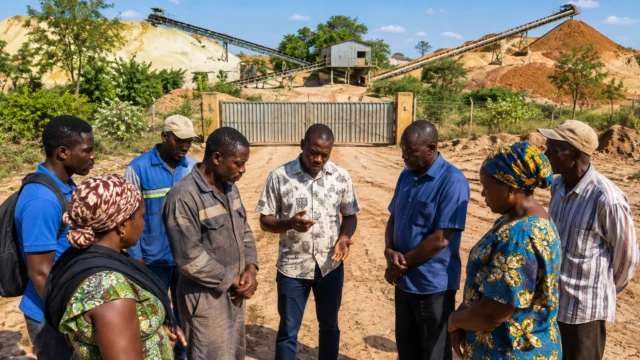
On arrival, some returnees complained of a rushed departure and the loss of belongings or money. A returning miner, quoted in an account gathered in Bobo-Dioulasso, said workers had allegedly been given only 24 hours to leave and had their gold and money taken from them. These allegations have not been independently substantiated in the available information. They should therefore remain attributed to the people making them.
The Burkinabè authorities have announced medical and psychosocial support, as well as arrangements for children and young people. In Bobo-Dioulasso, minors are to be referred to appropriate services and young adults registered before returning to their families. The government has also raised the prospect of resuming education, vocational training and access to employment. Some returnees say they are considering farming or livestock-rearing. These options reflect individual plans; putting them into practice will depend on land, equipment, funding and sustained support.
On 12 November, a coordination meeting bringing together national services and governors highlighted several challenges: medical care, the security of reception sites, identifying people without papers and restoring family links. The authorities also stressed the need to follow up on children of school age and support young adults. This is crucial: announced training becomes a solution only if it leads to usable skills and regular income.
Pressure on families and local authorities
The return affects not only workers who were expelled or forced to leave. Families must take in relatives who may come back without savings or equipment. In their home communities, needs can quickly exceed household means. Children need to return to school; injured or ill people need care; and young adults must find work without being pushed towards another risky migration.
The challenges vary by area. Bobo-Dioulasso serves as a transit and reception hub, while resettlement will also take place in smaller towns and rural areas. The authorities plan to coordinate between central services and CONASUR’s regional structures. It remains to be seen how assistance will be distributed, how many people will actually receive training and how long support will continue. The published data establish the scale of the return, but do not yet detail how many households will be durably reintegrated.
Regional migration linked to artisanal mining
This situation is a reminder that artisanal gold mining extends beyond national borders. Burkinabè workers travel to mining areas in Guinea, while Mali is serving here as a transit and temporary reception country. National decisions taken at extraction sites can therefore have immediate effects on neighbouring countries: transport, accommodation, healthcare and family reunification become shared responsibilities.
Guinea says it is fighting illegal gold mining. Burkina Faso, for its part, must organise the return and offer solutions to people deprived of their livelihoods. These aims are not mutually exclusive, but their implementation must take account of the departure conditions reported by workers and the economic consequences for families. The priority is to verify individual needs and circumstances, without conflating the fight against illegal activity with the treatment of people.
For West Africa, the challenge is a practical one: to improve coordination when workers move between countries to earn a living in the mining economy. Follow-up on returns, access to education and the ability of training programmes to generate income will be the next indicators to watch. In Burkina Faso, the success of the operation will be measured less by the number of people received than by their ability to rebuild a viable livelihood in their communities.