Algeria
 Egypt
 Libya
 Morocco
 Sudan
 Tunisia
 Benin
 Burkina Faso
 Cabo Verde
 Côte d'Ivoire
 Guinea
 Guinea-Bissau
 Liberia
 Mali
 Mauritania
 Niger
 Nigeria
 Senegal
 Sierra Leone
 The Gambia
 Togo
 Cameroon
 Central African Republic
 Chad
 DR Congo
 Equatorial Guinea
 Gabon
 Republic of the Congo
 São Tomé and Príncipe
 Burundi
 Comoros
 Djibouti
 Eritrea
 Ethiopia
 Kenya
 Madagascar
 Malawi
 Mauritius
 Mozambique
 Rwanda
 Seychelles
 Somalia
 South Sudan
 Tanzania
 Uganda
 Angola
 Botswana
 Eswatini
 Lesotho
 Namibia
 South Africa
 Zambia
 Zimbabwe
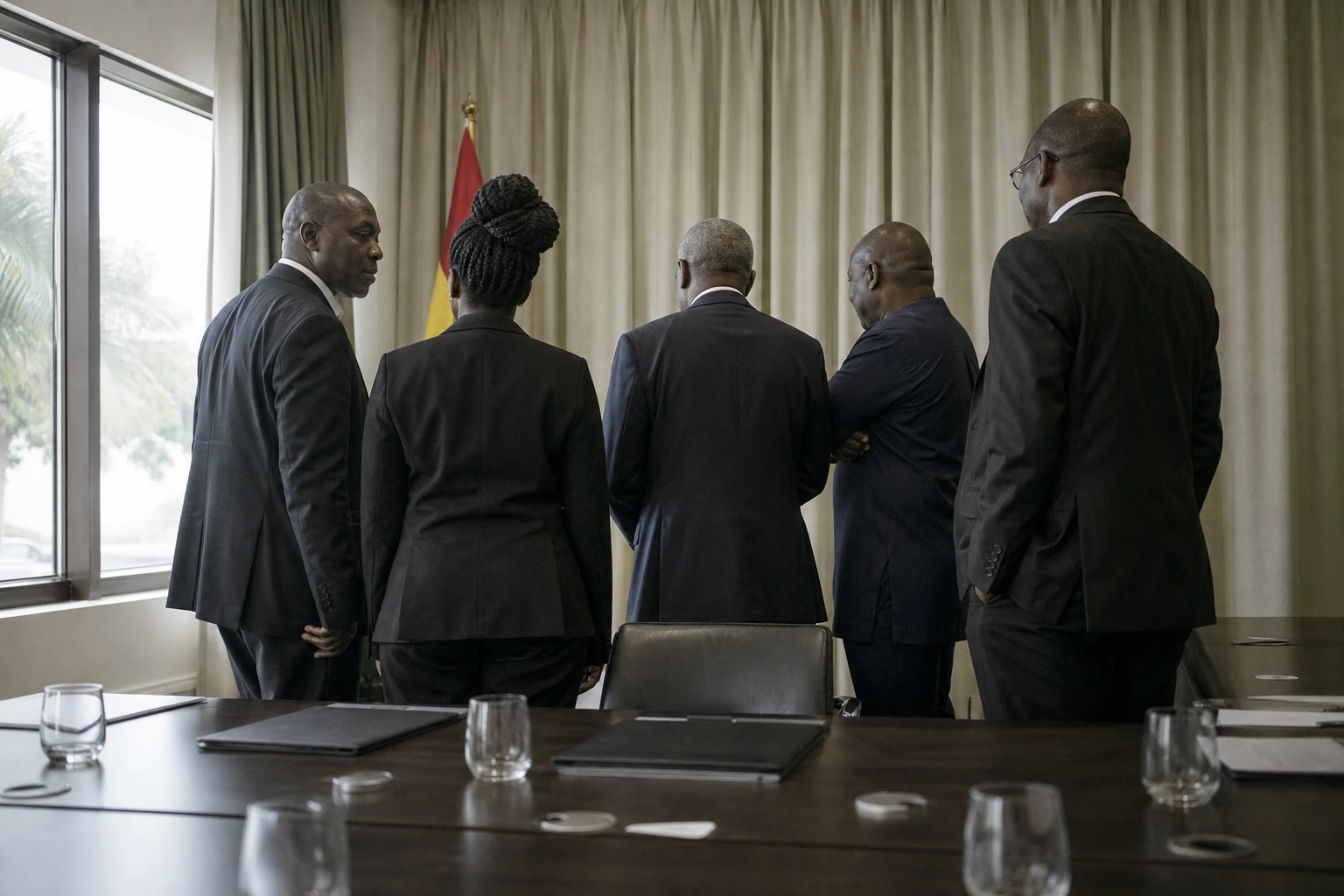
In Accra, the defeat cost Ghana more than three points. It also hastened the end of an already troubled spell in charge. Two days after the 4-2 loss to The Gambia, Carlos Queiroz and the Ghana Football Association ended their partnership on Thursday 1 October 2026.
Split follows two qualifying defeats
The decision comes after a deeply troubled start to the Black Stars’ campaign. Ghana first lost 2-0 to Côte d’Ivoire, before going down 4-2 at home to The Gambia on Tuesday 29 September at Accra Sports Stadium.
The second match left a particularly painful impression. Ghana had a two-goal lead before gradually giving way to the Scorpions. The Confederation of African Football confirmed The Gambia’s comeback and Ghana’s position without a point after two Group C matches. CAF’s report on the second matchday describes one of the most striking results of this international window.
The standings will nevertheless depend on the full course of the group stage. The group also includes Somalia, as well as Côte d’Ivoire and The Gambia. Results in the coming matchdays will therefore be crucial in assessing Ghana’s real chances of reaching the 2027 Africa Cup of Nations, jointly hosted by Kenya, Tanzania and Uganda.
The Ghana Football Association announced a separation “by mutual agreement”. In its statement, it thanked Carlos Queiroz for his work since taking up the role and for his contribution to preparations for the 2026 World Cup. The GFA’s official statement does not yet name the next head coach or give a timetable for the appointment.
A brief spell marked by instability
The Portuguese coach’s departure brings a spell of a few months to a close. Carlos Queiroz was appointed in the spring to guide the Black Stars towards the 2026 World Cup. His first contract was due to end after the tournament, before a further extension was announced on 2 September.
The renewal therefore lasted only a few weeks. It was meant to open a new chapter focused on qualifying for the 2027 Africa Cup of Nations. Yet September’s two defeats quickly reignited criticism of the tactical choices, the coherence of the project and the team’s ability to hold on to a lead.
The available figures illustrate this fragility. After taking charge of Ghana in seven matches, Queiroz leaves with one win, two draws and four defeats. The Black Stars scored five goals and conceded 10. These figures alone do not sum up a coach’s work. They do, however, help explain the pressure that became difficult to contain after the defeat to The Gambia.
Before the split, the coach had acknowledged his share of responsibility. In a statement reported by the Ghana News Agency, he accepted the weight of the defeat while arguing that simply changing the coach would not automatically resolve the problems facing Ghanaian football. The statement reported by the Ghana News Agency thus highlights an issue that goes beyond the dugout.
GFA faces continuity challenge
The Ghana Football Association’s immediate priority is now to avoid another period of drift. The country has made several changes at the helm of its national team in recent years. Each transition brings new choices of players, a different technical set-up and little time to adapt.
This instability affects the players called up first and foremost. It makes it harder to build understanding, especially when international camps last only a few days. It also weighs on younger players, who need a stable framework to establish themselves alongside the Black Stars’ senior players.
The debate is therefore about more than Carlos Queiroz himself. The association will need to clarify the next coach’s role, the length of his contract and the targets he will be set. It will also need to explain how player development, talent scouting and preparation of the senior team will fit together.
The criticism in Ghana after the defeat to The Gambia reflects these expectations. The Ghana News Agency reported calls from several sports journalists and commentators for changes to the technical staff. The reactions gathered by the GNA show that the criticism concerns results as much as the overall direction of the national project.
Stakes for Ghana and West Africa
Ghana remains one of African football’s historic powers. Yet its absence from the 2025 Africa Cup of Nations already marked a significant setback for a team that has won the continental title four times. Another failure to qualify in 2027 would have more serious sporting and institutional consequences.
In Group C, Côte d’Ivoire and The Gambia have gained a valuable advantage after the first two matchdays. Somalia also has an important role in shaping the group. Ghana will therefore have to rebuild quickly into a team capable of taking points both away and at home.
This situation comes amid increasingly fierce competition in West Africa. The Economic Community of West African States, ECOWAS, brings together associations facing disparities in resources as well as growing sporting competition. The progress of teams such as The Gambia is a reminder that historical prestige no longer guarantees results.
The next step will be appointing Queiroz’s successor and preparing for the upcoming qualifying matches. For Ghana, this is no longer simply about turning a page. The Black Stars must now establish a stable project, restore confidence and protect their chances in a campaign that has barely begun.