Algeria
 Egypt
 Libya
 Morocco
 Sudan
 Tunisia
 Benin
 Burkina Faso
 Cabo Verde
 Ghana
 Guinea
 Guinea-Bissau
 Liberia
 Mali
 Mauritania
 Niger
 Nigeria
 Senegal
 Sierra Leone
 The Gambia
 Togo
 Cameroon
 Central African Republic
 Chad
 DR Congo
 Equatorial Guinea
 Gabon
 Republic of the Congo
 São Tomé and Príncipe
 Burundi
 Comoros
 Djibouti
 Eritrea
 Ethiopia
 Kenya
 Madagascar
 Malawi
 Mauritius
 Mozambique
 Rwanda
 Seychelles
 Somalia
 South Sudan
 Tanzania
 Uganda
 Angola
 Botswana
 Eswatini
 Lesotho
 Namibia
 South Africa
 Zambia
 Zimbabwe
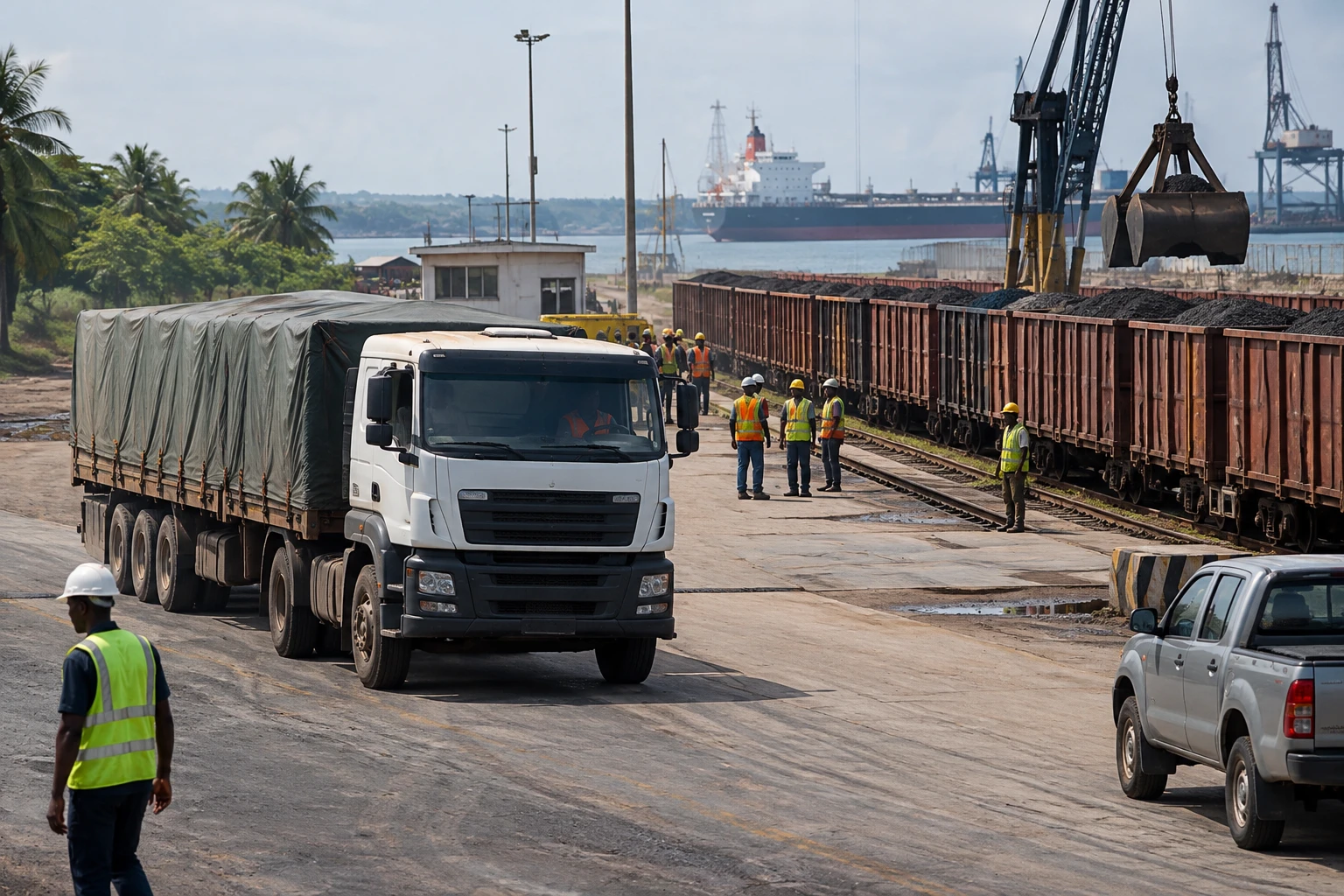
Extracting manganese is not enough to build an industry. For Côte d’Ivoire, the challenge is now to turn already substantial mining output into jobs, expertise and industrial revenues. The public strategy sets a target. But decisive steps remain between a processing goal and an operating plant.
An industrial target in the national strategy
Presented on 9 November 2026, the Integrated Mineral Resources and Energy Policy (PIRME) aims to coordinate investment in mining, oil and energy through to 2040. The government says it wants to process 1.25 million tonnes of manganese locally each year. The strategy also envisages 150 tonnes of refined gold a year and estimated investment of 38,000 billion CFA francs in the sectors concerned.
Manganese is used in steelmaking, notably in the form of ferromanganese and silicomanganese. Some derived products are also used in battery supply chains. Processing the ore locally could therefore diversify activity beyond extraction. However, the PIRME does not yet specify which plant would process the manganese, on what timetable or for which markets.
National statistics put production at 1.117 million tonnes in 2025, compared with about 1.03 million in 2024. This figure, published by the National Statistics Agency, places the stated ambition close to current annual output. It does not mean that industrial processing capacity for this quantity is already in place.
Projects are under way, but their progress matters
A private-sector project could contribute to this trajectory. India’s Nava Limited has presented a project for a silicomanganese plant in Côte d’Ivoire, with a stated capacity of 31,500 tonnes a year. This capacity remains far below the national target of 1.25 million tonnes. Available public information does not confirm whether construction has begun or when production is due to start.
It is therefore important to distinguish the volume of ore that the authorities aim to process from the output of processed products at a plant. These volumes are not directly comparable. Feasibility will depend in particular on financing, a reliable supply, access to competitively priced energy, transport infrastructure and sales contracts.
The PIRME links its ambitions to transport facilities, including a mineral port at San Pedro and railways dedicated to mining freight. These infrastructure projects could connect production sites with industrial plants and markets. Their delivery, cost and alignment with the needs of mining regions will be as important as investment announcements.
Regional competition to capture more value
In the region, Gabon is also pushing for local processing. On 6 November 2026, Gabonese authorities signed a memorandum with South Manganese Investment concerning a proposed metallurgical complex at M’Bembélé. The announced investment amounts to 116.7 billion CFA francs. This is a project agreement, not proof that a facility has already been built or is operating.
A separate protocol, concluded in July between Gabon and Eramet, provides for the study of options to process up to 700,000 tonnes of ore a year by the end of 2031. The company says the studies still need to establish the technical and economic viability of the proposed facilities. These projects illustrate a regional trend, but their implementation remains to be seen.
In Ghana, Ghana Manganese Company is preparing a refinery estimated to cost $450 million, near its Nsuta mine. The Ghana News Agency had already reported project preparation announcements in 2024. Here too, announcements must be distinguished from work actually under way. South Africa’s experience also shows that a processing industry depends on practical conditions: Transalloys halted production in July 2026, notably amid high electricity costs, according to information provided in the initial source material, which has not been cross-checked here against a second independent source.
Delivery will be the real test
For the Ivorian authorities, processing more ore could broaden the industrial base and retain a greater share of the value in the country. For companies, the equation depends on costs, energy and demand. For mining areas and their residents, the benefits will also depend on jobs created, skills transferred and the local effects of infrastructure and extractive activities.
Across West Africa, these choices form part of a drive for more integrated value chains. Côte d’Ivoire and Ghana are members of ECOWAS, the Economic Community of West African States. Gabon is in Central Africa: its projects offer a continental point of comparison, but not the same regional framework. Competition between producers could attract capital and industrial partners, while increasing the importance of access to electricity and markets.
The next tangible measure, then, will be less the number of targets announced than the publication of financed projects, verifiable timelines and capacities actually brought into operation. For Côte d’Ivoire, the PIRME sets a direction. The ability to turn that direction into competitive facilities will determine whether manganese becomes a lasting industrial lever rather than an ore that is mainly exported.