Algeria
 Egypt
 Libya
 Morocco
 Sudan
 Tunisia
 Benin
 Burkina Faso
 Cabo Verde
 Côte d'Ivoire
 Guinea
 Guinea-Bissau
 Liberia
 Mali
 Mauritania
 Niger
 Nigeria
 Senegal
 Sierra Leone
 The Gambia
 Togo
 Cameroon
 Central African Republic
 Chad
 DR Congo
 Equatorial Guinea
 Gabon
 Republic of the Congo
 São Tomé and Príncipe
 Burundi
 Comoros
 Djibouti
 Eritrea
 Ethiopia
 Kenya
 Madagascar
 Malawi
 Mauritius
 Mozambique
 Rwanda
 Seychelles
 Somalia
 South Sudan
 Tanzania
 Uganda
 Angola
 Botswana
 Eswatini
 Lesotho
 Namibia
 South Africa
 Zambia
 Zimbabwe
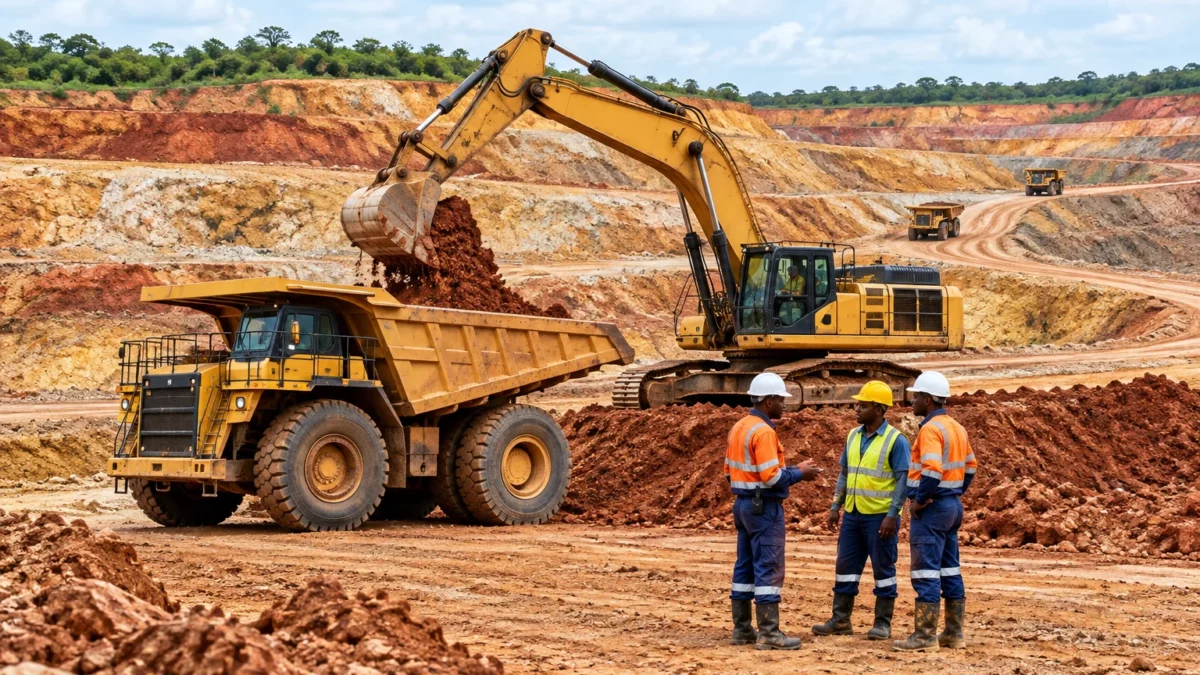
When a country earns revenue from gold, oil or bauxite, the question is not just how much it collects. It is also what these resources leave behind: roads, railways and industries capable of creating value in Ghana.
From scattered revenues to a common framework
Ghana wants to bring revenues from its extractive resources under a new law. Presented to parliament on 12 November 2026, when the 2027 budget was submitted, the proposal is intended to replace the law that currently governs oil revenues. It is expected to come into force in 2027.
The proposed framework would cover oil, gold, lithium, bauxite and other mineral resources. Finance Minister Cassiel Ato Forson says the current rules distribute revenues across several areas of public spending instead of focusing them on major national investments. The bill must still go through the legislative process: the government’s announcement does not mean the law has been passed.
The stakes are high in a country where the Finance Ministry estimates the annual infrastructure deficit at $37 billion over the next three decades. The figure, given in October 2025, describes an estimated financing need; it does not mean that this amount is missing from the state budget every year.
Two major projects, promises to be tested
The first project cited is a motorway between Accra, the capital, and Kumasi, in the south-central part of the country. The announced route is 198.7 kilometres long. According to the minister, the account dedicated to the project held $2.2 billion and 9 billion cedis as at 11 November 2026, or about $3 billion in total.
This figure is an official statement about available funds, not proof that the motorway has been completed or that its final cost has been settled. The budget presented to parliament estimates construction costs at $2.98 billion, following the studies cited by the government. The start of construction, actual spending and cost controls will therefore be key indicators.
The second project is a railway line on the Western Railway corridor. The funding planned for 2027 and 2028 is to draw on oil revenues paid into the budget and mining royalties. The announced route would link the port of Takoradi to mining areas, including Awaso and Nyinahin, via Nsuta.
The government presents rail as a way to transport bauxite and manganese to processing facilities. The promise therefore extends beyond transport: it concerns the possibility of processing more raw materials in the country rather than exporting them without further processing. But the benefits will also depend on industrial capacity, access to energy and agreements reached with the communities concerned.
Transparency, a condition for trust
Allocating mining revenues to identified projects can make their use easier to follow. It could also limit the dispersal of funds, provided the rules specify the amounts involved, the selection criteria and audit mechanisms. Without regular publication of revenues, contracts and spending, a dedicated fund alone cannot guarantee transparent management.
The choice also involves a budgetary trade-off. Revenue earmarked for a motorway or railway is no longer available for other priorities, such as health, education or maintaining existing roads. The expected benefits — lower logistics costs, jobs and smoother trade — will therefore have to be weighed against opportunity costs and the actual impact on users.
The benefits will not be the same everywhere. Mining companies and transport operators could benefit more directly from improved rail links. People in the regions along the route will expect accessible jobs, fair compensation where land is acquired and lasting services. For traders and small businesses, the impact will also depend on transport costs and practical access to the new infrastructure.
A Ghanaian issue in a connected region
Ghana is a member of ECOWAS, the Economic Community of West African States. More efficient road and rail routes could facilitate trade with neighbouring countries and landlocked Sahelian states. However, the regional reach of the projects will depend on their connections to existing networks, border procedures and the ability of the infrastructure to serve different types of users, not just the extractive sectors.
The debate speaks to a broader question for African resource-producing countries: how can revenues from natural resources be converted into assets that remain useful over the long term? In Ghana, the next step will be parliamentary scrutiny of the law announced for 2027. The oversight arrangements, project timelines and publication of spending will show whether the change in framework actually delivers infrastructure and shared benefits.