Algeria
 Egypt
 Libya
 Morocco
 Sudan
 Tunisia
 Benin
 Burkina Faso
 Cabo Verde
 Côte d'Ivoire
 Guinea
 Guinea-Bissau
 Liberia
 Mali
 Mauritania
 Niger
 Nigeria
 Senegal
 Sierra Leone
 The Gambia
 Togo
 Cameroon
 Central African Republic
 Chad
 DR Congo
 Equatorial Guinea
 Gabon
 Republic of the Congo
 São Tomé and Príncipe
 Burundi
 Comoros
 Djibouti
 Eritrea
 Ethiopia
 Kenya
 Madagascar
 Malawi
 Mauritius
 Mozambique
 Rwanda
 Seychelles
 Somalia
 South Sudan
 Tanzania
 Uganda
 Angola
 Botswana
 Eswatini
 Lesotho
 Namibia
 South Africa
 Zambia
 Zimbabwe
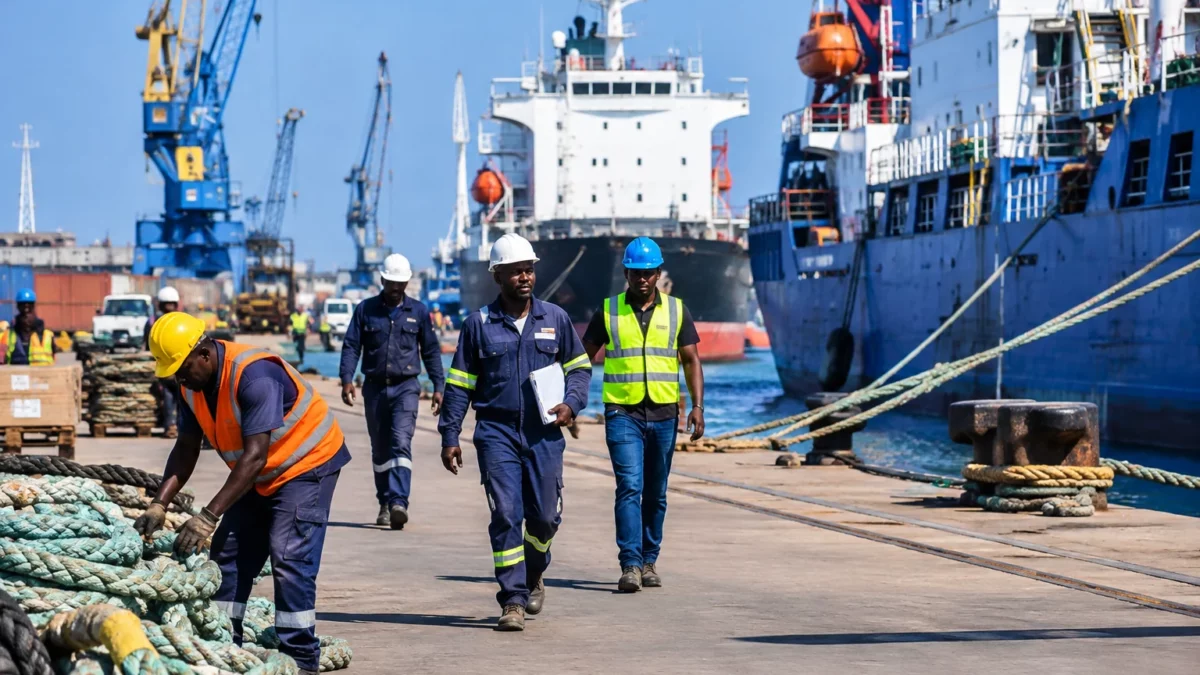
Repairing a ship in the Gulf of Guinea can still mean several days at sea before work can even begin. In Takoradi, a shipyard is set to bring these services closer to commercial routes and offshore oil facilities. For Ghana, the stakes go beyond maintenance: the aim is also to retain more economic activity and expertise in the region.
Takoradi, a commercial port and base for offshore activity
Located in western Ghana, the port of Takoradi handles cargo and supports operations linked to the Jubilee and TEN offshore oil fields. In 2025, it handled 11.4 million tonnes, or 27.7% of national maritime traffic, according to the Ghana Ports Authority. The Jubilee and TEN fields are about 72 nautical miles from the port. Ghana Ports Authority data on Takoradi confirm these figures.
This role is part of a broader ambition: to make Takoradi a maritime services hub, not just a transit point for raw materials and cargo. The port also serves operators in the Sahel, particularly in Burkina Faso, Mali and Niger. At regional level, ECOWAS — the economic integration organisation for West African countries — is seeking to strengthen trade among its members. Closer repair services could contribute to this momentum, though they cannot alone guarantee an increase in regional trade.
Financing secured as work gets under way
The Shiprite project provides for a repair and dry-docking facility for commercial vessels and those supporting offshore activities. Its total cost is estimated at US$137 million. The US$94 million syndicated financing brings together several lenders; Afreximbank is contributing US$50 million as mandated lead arranger and lead lender. The African Development Bank, the Trade and Development Bank (TDB) and Petra Trust Company Limited are also among the financial partners.
Two stages should be distinguished: the senior debt financing agreement was announced in June 2024, while financial close and the start of construction were marked in November 2026. The Ghana News Agency reports that the groundbreaking ceremony took place in Takoradi on 10 November. The shipyard is being developed by Prime Meridian Docks Ghana Limited under a 25-year concession with the Ports Authority. The Ghana News Agency reports on the start of construction, while Global Trade Review had reported on the 2024 debt agreement.
Under the project timetable, the first phase is due to be completed in 18 months. The facility will be able to accommodate vessels up to 200 metres long. It will include a floating dock and repair equipment. The stated aim is to create up to 430 direct jobs and develop local skills. This figure remains a forecast linked to the facility becoming operational, not a tally of jobs already created.
Shorter journeys, but also skills development
A lack of suitable infrastructure in the Gulf of Guinea forces vessels to travel to more distant shipyards, including Walvis Bay in Namibia and Las Palmas in Spain. The developer PIDG estimates that these journeys can take between 10 and 14 days. Time spent at sea and out of service incurs fuel and downtime costs; it can also mean that some maintenance spending leaves the region. PIDG’s presentation of the project sets out these issues and the planned features of the shipyard.
For shipowners, a service in Takoradi could therefore shorten some journeys and limit periods of unavailability. For Ghana’s economy, however, the benefits will depend on the share of contracts awarded to local companies, the training of technicians and the facility’s ability to attract regional customers. The jobs announced are in specialised occupations: their creation does not automatically mean the skills will be available as soon as the facility opens.
The distribution of benefits also warrants attention. Maintenance companies, suppliers and skilled workers could gain new contracts. Port and logistics activity could also increase. But for the benefits to reach small businesses and workers in the region, there will need to be tangible links with local suppliers, training pathways and genuine access to technical roles. PIDG says it is targeting women for 30% of direct jobs; this goal will need to be assessed as the shipyard becomes operational.
A test for industrial services in West Africa
Shiprite is part of a broader trend: financing infrastructure that enables African economies to provide more services to the continent’s transport and energy supply chains. But a single project is not enough to transform a maritime corridor. Competitiveness will also depend on port turnaround times, equipment quality, security, repair costs and the regularity of commercial links.
The shipyard will therefore need to be watched on two fronts: whether it meets its announced timetable and what results it delivers after opening. The number of vessels served, the share of local procurement, the jobs actually filled and the training of technicians will help measure whether Takoradi becomes a service centre for the Gulf of Guinea. For Ghana and its neighbours, the challenge is to turn a port investment into lasting industrial capacity.