Algeria
 Egypt
 Libya
 Sudan
 Tunisia
 Benin
 Burkina Faso
 Cabo Verde
 Côte d'Ivoire
 Ghana
 Guinea
 Guinea-Bissau
 Liberia
 Mali
 Mauritania
 Niger
 Nigeria
 Senegal
 Sierra Leone
 The Gambia
 Togo
 Cameroon
 Central African Republic
 Chad
 DR Congo
 Equatorial Guinea
 Gabon
 Republic of the Congo
 São Tomé and Príncipe
 Burundi
 Comoros
 Djibouti
 Eritrea
 Ethiopia
 Kenya
 Madagascar
 Malawi
 Mauritius
 Mozambique
 Rwanda
 Seychelles
 Somalia
 South Sudan
 Tanzania
 Uganda
 Angola
 Botswana
 Eswatini
 Lesotho
 Namibia
 South Africa
 Zambia
 Zimbabwe
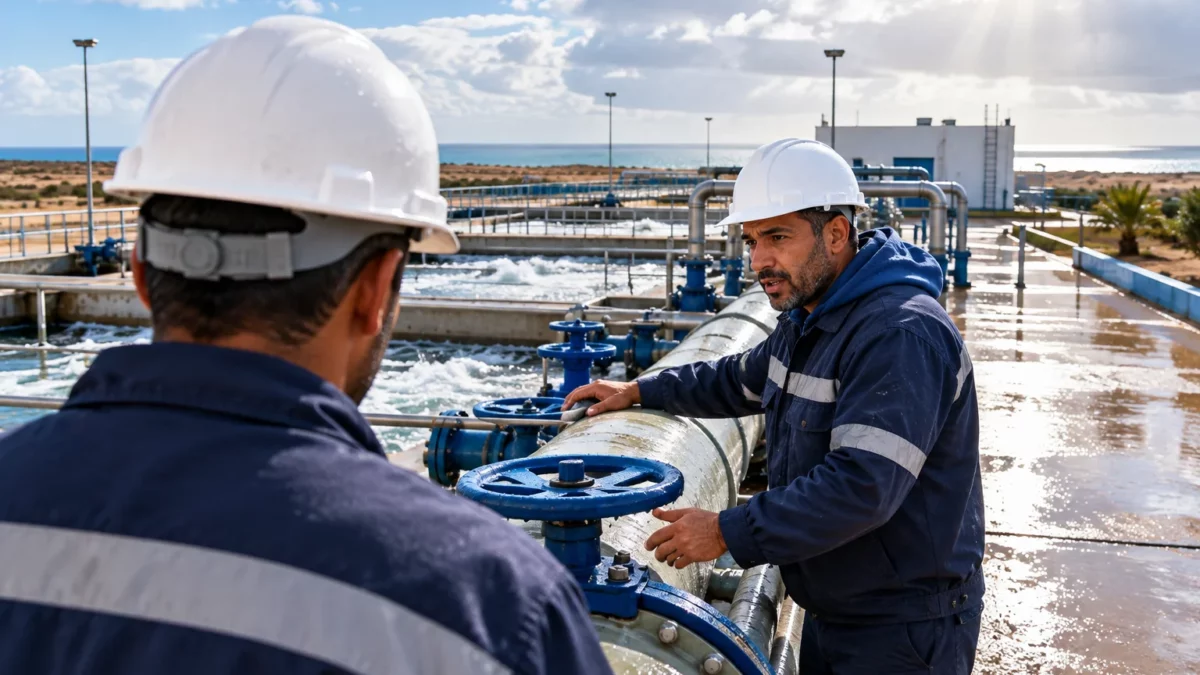
In Dakhla, access to drinking water and wastewater treatment are taking on a growing role in infrastructure projects. On 24 November 2026, a French financing agreement worth €15 million was announced to strengthen these services. Beyond the construction work, the loan is part of a political rapprochement that remains tied to an unresolved territorial issue.
Funding for networks and the wastewater treatment plant
The French Development Agency (AFD) and the Dakhla-Oued Eddahab Regional Multi-Service Company signed the agreement in Dakhla, in the presence of France’s ambassador to Morocco, Philippe Lalliot, and wali Ali Khalil. The loan is intended to fund work on drinking water and sanitation networks, as well as the expansion of the city’s wastewater treatment plant, reports Moroccan daily L’Opinion, citing the MAP news agency. Medi1News had reported the ambassador’s visit and the planned signing of the loan.
The €15 million sum relates to Dakhla. It should not be confused with a separate €35 million financing package for the Laâyoune region. An AFD document published in June 2026 confirms the existence of this loan for water and sanitation services in Laâyoune. The two operations therefore concern separate projects in two different regions.
The summary of the Laâyoune project says the work is intended to improve services for more than 580,000 residents and address, in particular, the effects of climate change. This figure does not describe the population benefiting from the Dakhla loan. The information consulted does not yet specify a detailed timetable for the work or the number of households concerned in the city.
Water, a public service and resilience issue
For residents, the project’s effectiveness will first be measured by tangible results: continuity of supply, water quality, the network’s ability to keep pace with urban growth and wastewater treatment. Expanding the treatment plant could also reduce the discharge of inadequately treated wastewater. The benefits will nevertheless depend on the work being completed, its maintenance and transparency about its cost and beneficiaries.
These issues extend beyond the urban centre. Investment in networks directly benefits connected households and economic activities that depend on a reliable supply. Less well-served neighbourhoods and residents in outlying areas may feel the effects later. The available information does not detail how the benefits will be distributed among these groups.
In arid territories, pressure on resources makes water management particularly strategic. Funding for networks and sanitation infrastructure is one part of the response, but it does not by itself resolve questions of long-term availability, consumption or governance. Monitoring results will therefore be just as important as the loan announcement.
A partnership in a disputed territorial context
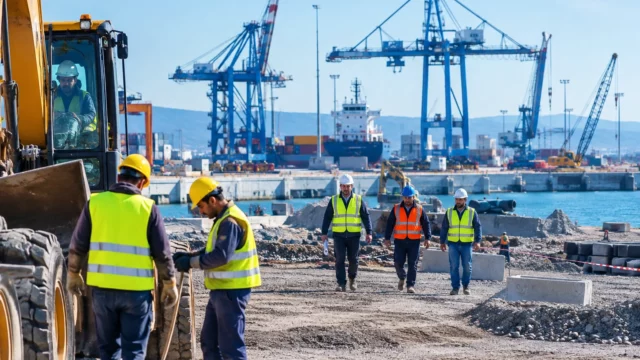
Philippe Lalliot’s visit on 23 and 24 November took place in Dakhla, a city administered by Morocco in the territory of Western Sahara. The ambassador also visited the Dakhla Atlantique port construction site and met regional officials. According to the Moroccan press, he presented the financing as implementation of the commitment made by Emmanuel Macron during his state visit to Morocco in October 2024.
The visit follows a shift in France’s position. In July 2024, Paris said it considered that “the present and future of Western Sahara lie within the framework of Moroccan sovereignty” and backed the autonomy plan proposed by Rabat. French diplomacy maintains this position while stating its support for a negotiated political solution under the auspices of the United Nations.
The international framework remains contested, however. The UN lists Western Sahara as a non-self-governing territory whose final status has not been settled. The Security Council did not renew MINURSO’s mandate before it expired on 31 October 2026; the mission’s withdrawal began the following day. This development highlights that investment and diplomatic positions do not, on their own, settle the territory’s status or the question of Sahrawi self-determination.
Benefits to be tracked beyond Dakhla
For Rabat, the financing helps equip Dakhla and supports a development strategy for the southern regions. For Paris, it gives concrete expression to the rapprochement with Morocco. But a development loan is also a financial commitment: its impact will depend on the quality of the infrastructure, public access to it and its continued operation over time.
Across North Africa, the issue sits within a context of strained relations between Morocco and Algeria, while the Arab Maghreb Union, a regional organisation established to promote cooperation among its members, remains largely paralysed. The Dakhla financing does not alter this balance. Rather, it shows that bilateral economic partnerships are moving forward while regional mechanisms and negotiations on Western Sahara struggle to produce a settlement accepted by all parties.
The next indicators will therefore be local and diplomatic: the timetable for the work, actual improvements to water and sanitation services, and the progress of international efforts after MINURSO’s departure. In Dakhla, the immediate issue is access to an essential service. Its political significance, however, will remain tied to a question whose outcome has yet to be determined.