Algeria
 Egypt
 Libya
 Sudan
 Tunisia
 Benin
 Burkina Faso
 Cabo Verde
 Côte d'Ivoire
 Ghana
 Guinea
 Guinea-Bissau
 Liberia
 Mali
 Mauritania
 Niger
 Nigeria
 Senegal
 Sierra Leone
 The Gambia
 Togo
 Cameroon
 Central African Republic
 Chad
 DR Congo
 Equatorial Guinea
 Gabon
 Republic of the Congo
 São Tomé and Príncipe
 Burundi
 Comoros
 Djibouti
 Eritrea
 Ethiopia
 Kenya
 Madagascar
 Malawi
 Mauritius
 Mozambique
 Rwanda
 Seychelles
 Somalia
 South Sudan
 Tanzania
 Uganda
 Angola
 Botswana
 Eswatini
 Lesotho
 Namibia
 South Africa
 Zambia
 Zimbabwe
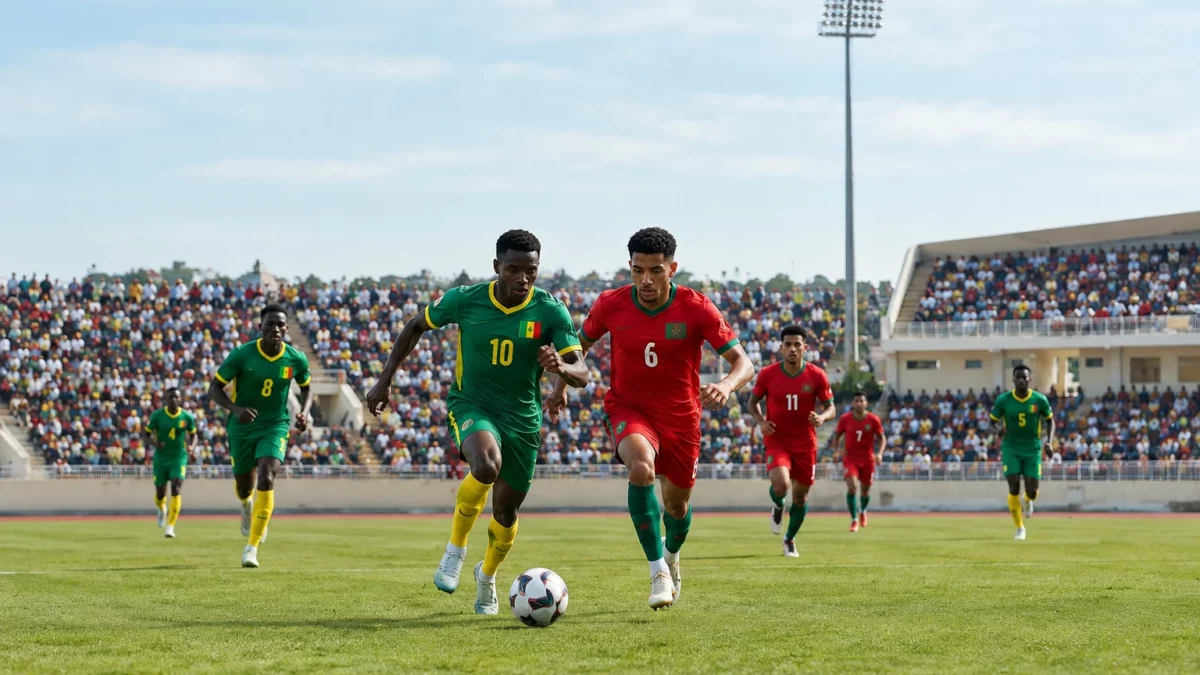
Can a trophy change hands several months after the final whistle? For Senegal, this question ceased to be theoretical on 24 November 2026. The Court of Arbitration for Sport (CAS) overturned the decision that had awarded the 2025 Africa Cup of Nations (AFCON) final to Morocco and confirmed the result achieved on the pitch.
A final turned into a rules dispute
The dispute began in Rabat on 18 January 2026. Senegal beat Morocco 1-0 after extra time, thanks to a goal from Pape Gueye. But the end of normal time had been interrupted by a Senegalese protest after a penalty was awarded to Morocco. Senegal’s players had temporarily left the pitch. After they returned, the match resumed; the penalty was missed, and Senegal then scored the decisive goal.
The Confederation of African Football (CAF), which organises continental competitions, initially saw its disciplinary committee reject Morocco’s protest. On 17 March, its appeals committee overturned that decision. Applying Articles 82 and 84 of the regulations, it declared Senegal to have forfeited the match and recorded a 3-0 victory for Morocco. The Senegalese Football Federation (FSF) challenged this interpretation before CAS, an independent tribunal based in Lausanne.
The referee’s role at the heart of the ruling
CAS issued its decision on 24 November, following a closed-door hearing on 8 October. According to information provided by the tribunal and reported by Reuters, the arbitral panel found that the referee had made no error of law in allowing the match to resume. It therefore upheld Senegal’s appeal and overturned the decision of CAF’s appeals committee. The 1-0 score is confirmed and the title goes to Senegal. The award was unanimous, according to CAS Director General Matthieu Reeb.
The decisive point, then, is not only the players’ temporary departure. It also concerns the referee’s authority during the match: he chose to restart play, and both teams resumed the game. CAS thus favoured the course of play that had been allowed to stand on the pitch over the forfeit subsequently imposed by CAF’s appeals body.
This outcome does not mean that the conduct of the Senegalese players did not prompt debate. It means that, in this case, CAS did not uphold the administrative sanction chosen by the appeals committee. The tribunal reinstated the sporting result without erasing the controversy that marked the final.
An institutional issue in Dakar and Rabat
For Senegal’s players, supporters and federation, the decision ends several months of uncertainty over the honours list. It officially restores a victory secured in a match, after a period in which the two federations defended competing decisions. In Morocco, it removes the benefit of the 3-0 score recorded by CAF in March. The case therefore pits less two groups of supporters against each other than it exposes the very real consequences of a disagreement over how rules should be interpreted.
The case also poses a governance question for CAF: how can it ensure a consistent interpretation of its regulations and confidence in its disciplinary procedures? Its appeals committee had based its decision on Articles 82 and 84. CAS subsequently concluded that the referee’s decision during the match should be respected in the circumstances of this game. For African federations, this precedent is a reminder that an internal decision can be reviewed by an independent sports tribunal, although an appeal does not guarantee the desired outcome.
The case also saw a procedural development in the hours before the announcement. Reuters reports that the Moroccan federation sought the recusal of a CAS arbitrator after flagging a possible telephone conversation between him and the FSF president. Reuters says it was unable to confirm whether the call took place or what its subject was. CAS said that, at that stage, the request did not provide sufficient grounds to delay notification of the award. The allegation must therefore remain attributed and, on its own, does not allow any conclusion to be drawn about the tribunal’s impartiality.
A precedent followed across African football
The decision goes beyond the contest between Senegal and Morocco. It concerns how AFCON regulations apply when players briefly leave the pitch and then resume the match on the referee’s decision. Federations, referees and CAF will have to take this reasoning into account when managing future high-stakes matches. The ruling does not rewrite the regulations by itself, but it will shape the interpretation of the respective responsibilities of the referee, the teams and disciplinary bodies.
In West Africa, where Senegal is a member of ECOWAS, the case has also fuelled debate far beyond national borders. But its continental significance lies first and foremost in CAF’s credibility and federations’ confidence in its appeals mechanisms. The title now belongs to Senegal; the next challenge will be for African bodies to learn the lessons of this lengthy legal battle without allowing administrative controversies to overshadow the game.