
 Algeria
 Egypt
 Libya
 Morocco
 Sudan
 Tunisia
 Benin
 Burkina Faso
 Cabo Verde
 Côte d'Ivoire
 Ghana
 Guinea
 Guinea-Bissau
 Liberia
 Mali
 Mauritania
 Niger
 Nigeria
 Senegal
 Sierra Leone
 The Gambia
 Togo
 Cameroon
 Central African Republic
 Chad
 Equatorial Guinea
 Gabon
 Republic of the Congo
 São Tomé and Príncipe
 Burundi
 Comoros
 Djibouti
 Eritrea
 Ethiopia
 Kenya
 Madagascar
 Malawi
 Mauritius
 Mozambique
 Rwanda
 Seychelles
 Somalia
 South Sudan
 Tanzania
 Uganda
 Angola
 Botswana
 Eswatini
 Lesotho
 Namibia
 South Africa
 Zambia
 Zimbabwe
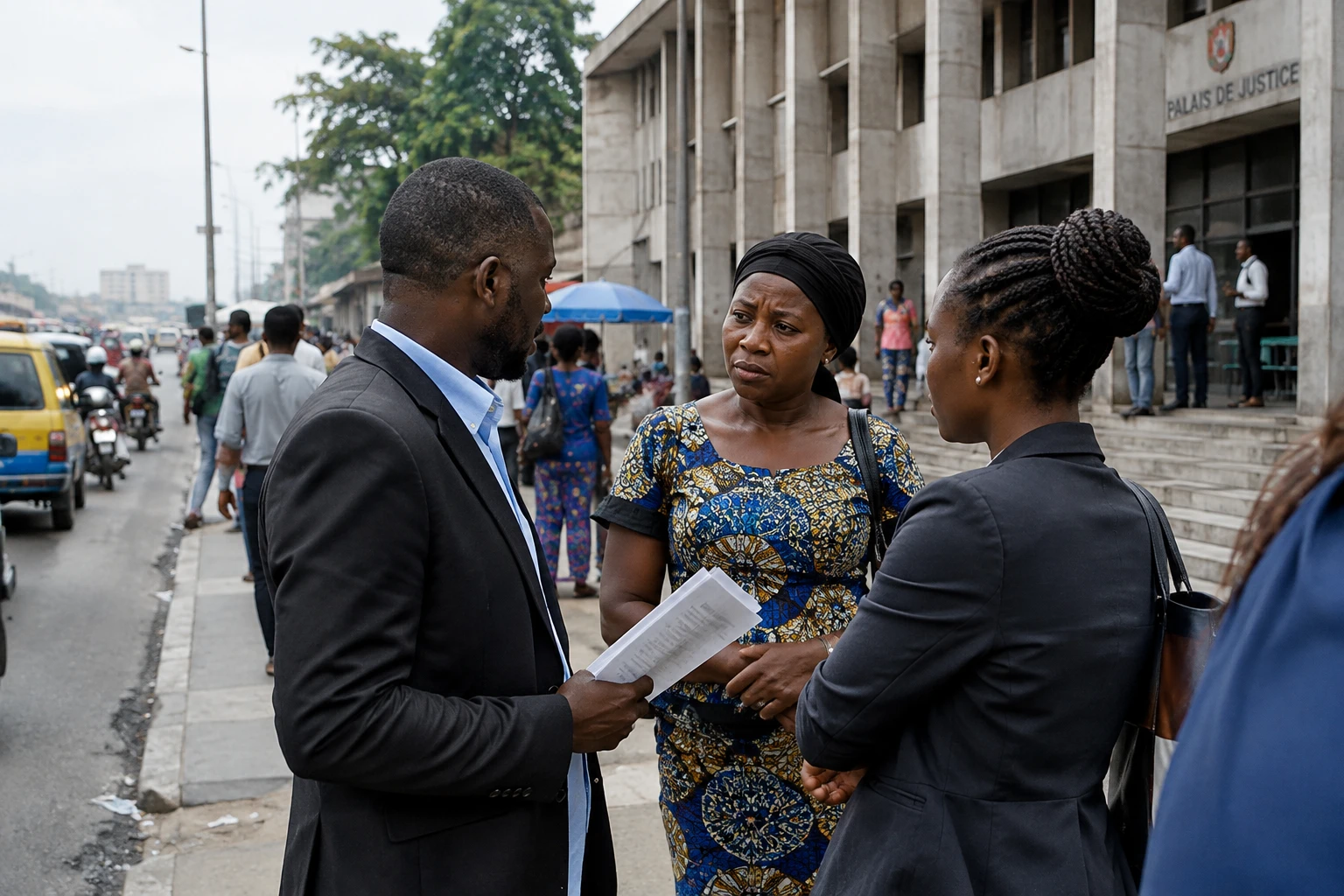
In Kinshasa, a judicial decision has taken on significance beyond the case of a single opposition figure. Prince Epenge’s transfer to Makala comes as the authorities had just ordered the suspension of new admissions to the prison, which is already operating far beyond capacity.
A contested procedure, facts still to be established
Prince Epenge Wemakoko chairs the Action for Democracy and Development in Congo (ADDCongo) and speaks for the Lamuka opposition coalition. He was arrested on 25 October 2026 at N’djili airport, as he was due to travel to Rome for a meeting of the Article 64 Coalition (C64), a grouping of opposition parties. His party initially denounced his arrest by unidentified individuals. In the following days, he was located at the National Cyber Defence Council, then brought before the Kinshasa-Gombe prosecutor’s office. Radio Okapi reported his party’s initial statements.
The proceedings concern, among other things, the “dissemination of false rumours”, in connection with Epenge’s statements after the death of Manassé Lomboto, head of security for ADDCongo. He died following violence during an opposition march in Kinshasa on 15 September. The C64 coalition accuses Force du progrès, which is linked to the UDPS, of being responsible for his death. This accusation has not been established as a judicial fact. An investigation has been announced, and Lomboto’s body remained in the morgue pending its outcome, according to Actualité.cd.
On 30 October, Epenge’s application for provisional release was rejected. The following day, he was transferred to Makala Central Prison. His lawyer, Clément Muza, confirmed the transfer and said the defence had not been informed in advance. These details come from the lawyer and Congolese media; the judicial authorities were not quoted in the reports consulted explaining publicly why Makala was chosen.
Makala at the centre of an administrative contradiction
The context makes the transfer particularly sensitive. On 22 October, the justice minister had ordered the suspension of admissions to Makala, except in exceptional cases authorised by a court. The circular aimed to curb overcrowding and health and security risks. According to official figures reported by Radio Okapi, the facility held at least 16,155 people, despite having an initial capacity of 1,500 places. A ministerial visit on 15 October had put the number of detainees at 16,238, including more than 11,000 in pre-trial detention.
The suspension of admissions therefore provides for a judicial exception. In the absence of an official explanation of its basis in the information available, it is not possible to conclude that the transfer breached the circular. But the gap between the announcement of a drive to reduce overcrowding and this new admission calls for clarification of the rule applied and the safeguards in place for detainees.
Overcrowding affects more than political figures. It puts pressure on access to healthcare, food and hygiene for all detainees, as well as on the capacity of prison staff. The authorities have announced assessments ahead of humanitarian and conditional releases. Yet, according to figures provided by Makala’s management, more than 11,000 detainees are awaiting trial: slow proceedings and the use of pre-trial detention are therefore at the heart of the problem, beyond the shortage of places alone.
Freedom of expression and the right to a fair trial
For the defence, the central issue is also the treatment of political speech concerning the death of an activist. The charge must be examined in fair proceedings, with access to lawyers and the opportunity to challenge the evidence relied upon. At this stage, public information confirms that proceedings are under way, but does not make it possible to determine Epenge’s responsibility or the substance of his statements about the violence on 15 September.
Martin Fayulu and the secretary-general of his party, ECiDé, have denounced the transfer. Devos Kitoko said it risked reinforcing the idea that violence was the only way to make oneself heard. This is his political assessment, not an independent finding about the justice system’s motives. ECiDé also says it rejects armed struggle and favours judicial and political channels, according to the interview published by Actualité.cd.
For Kinshasa residents, the case is playing out in national institutions: the prosecutor’s office, the court of first instance and the prison administration. It also concerns detainees’ relatives and people awaiting trial, whose conditions of detention depend on decisions to reduce overcrowding. For opposition parties, it comes as the C64 was seeking to bring its positions closer together in Rome, a meeting Epenge was unable to attend.
A national issue watched across the region
The DRC is a member of the Southern African Development Community (SADC), a regional organisation bringing together states in southern Africa, as well as the Economic Community of Central African States (ECCAS). At this stage, the case has not prompted any confirmed regional reaction in the sources consulted. Its significance nevertheless extends beyond Kinshasa: it tests the ability of institutions to address accusations of spreading false information without unduly restricting political debate, while ensuring the safety of detainees.
The next steps to watch are judicial and administrative: the reasons for keeping Epenge in detention, the defence’s effective access to its client, the outcome of the investigation into Manassé Lomboto’s death, and the application of the suspension of admissions to Makala. These decisions will make it possible to distinguish the statements of the various sides from the facts that the investigation and the courts can establish.



