
 Algeria
 Egypt
 Libya
 Morocco
 Sudan
 Tunisia
 Benin
 Burkina Faso
 Cabo Verde
 Côte d'Ivoire
 Ghana
 Guinea
 Guinea-Bissau
 Liberia
 Mali
 Mauritania
 Niger
 Nigeria
 Senegal
 Sierra Leone
 The Gambia
 Togo
 Cameroon
 Central African Republic
 Chad
 Equatorial Guinea
 Gabon
 Republic of the Congo
 São Tomé and Príncipe
 Burundi
 Comoros
 Djibouti
 Eritrea
 Ethiopia
 Kenya
 Madagascar
 Malawi
 Mauritius
 Mozambique
 Rwanda
 Seychelles
 Somalia
 South Sudan
 Tanzania
 Uganda
 Angola
 Botswana
 Eswatini
 Lesotho
 Namibia
 South Africa
 Zambia
 Zimbabwe
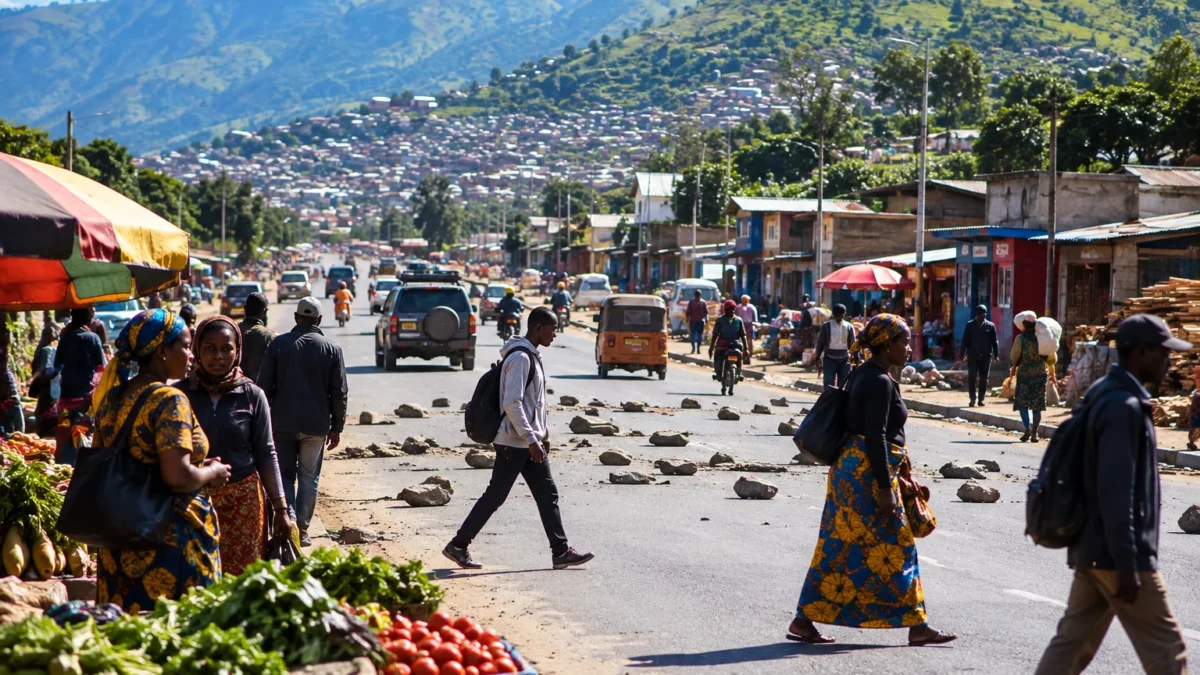
In the Democratic Republic of the Congo, September’s human rights toll highlights two overlapping realities: persistent violence in the east and tensions surrounding the exercise of public freedoms. The monthly report by the United Nations Joint Human Rights Office (UNJHRO) records a sharp increase in documented cases compared with August.
A rising toll, with a discrepancy to clarify
The UNJHRO documented 694 human rights violations and abuses in September 2026, affecting at least 1,843 people. The Office compares this total with the 491 cases and 1,294 victims it gives for August, representing increases of 39.51% and 41.4%, respectively. It says at least 15% of the victims were women.
A methodological point should, however, be noted: the September monthly report compares the number of August victims with 1,294, while the August report published by the UNJHRO gives a figure of 1,264. Both documents report 491 violations for August, but differ by 30 victims. In the absence of an explanation in the material consulted, the figures cited by the September report should be treated as its own, without concealing this discrepancy.
The September tally divides the victims into 1,223 men, 277 women, 154 children and 189 people whose age or sex could not be determined. These categories add up to 1,843 people. They represent cases documented by the Office, not a comprehensive count of all abuses committed in the country.
The east accounts for most documented cases
Provinces affected by armed conflict account for 623 of the 694 recorded violations, or 91% of the total. North Kivu leads with 477 cases, followed by Ituri (70) and South Kivu (65). The UNJHRO links the deterioration to continued attacks and clashes, as well as violations committed in the course of law enforcement and the administration of justice.
Armed groups are identified as the main alleged perpetrators in the tally, with 542 cases attributed to them. The Office assigns 287 to AFC/M23, 105 to the Wazalendo, 31 to the Democratic Forces for the Liberation of Rwanda (FDLR) and 30 to the Allied Democratic Forces (ADF). It also attributes 81 violations to state agents, including 36 to members of the FARDC and 29 to the Congolese National Police. These figures attribute documented cases; they do not replace a judicial decision on individual responsibility.
Violations of physical integrity — ill-treatment and gunshot or knife wounds — are the most frequent category, with 240 cases. The report also records 154 violations of liberty and security, 116 of the right to life and 106 of the right to property. Conflict-related sexual violence remains particularly difficult to measure: the Office warns that obstacles to access and communication, especially in South Kivu, may prevent cases from being reported. A fall in reports therefore does not necessarily mean an actual decline in violence.
Freedom issues extend beyond conflict-hit provinces
The report does not limit its findings to war zones. In provinces it classifies as unaffected by armed conflict, the UNJHRO documented 66 violations, down from 79 in August. It attributes 35 of these to FARDC soldiers and 28 to police officers. In Kinshasa, it records 16 cases in this category.
Nationwide, the Office also links September’s increase to restrictions on civic space and the crackdown on demonstrations organised by the Coalition Article 64 (C64), an opposition platform. The 15 September mobilisation was aimed, among other things, at proposed constitutional changes and a referendum, according to Congolese reports. The National Human Rights Commission had called on the authorities to prevent violence and deployed observers. It later announced that it was preparing separate reports on the demonstrations of 15 and 22 September.
This sequence places the authorities under a clear obligation: to ensure security while protecting the right to peaceful assembly guaranteed by the Congolese Constitution. For residents of Kinshasa and other cities, restrictions can have a direct impact on political participation. In the east, civilians face instead the cumulative effects of attacks, displacement and difficult access to services. The realities differ, but documenting abuses and ensuring access to remedies remain central in both contexts.
A challenge for protection and regional monitoring
The pressure on civilians is part of a protracted displacement crisis. The September report cites an estimate of 6.1 million people internally displaced as at 30 September, attributed to the United Nations Office for the Coordination of Humanitarian Affairs. The figure is a reminder that human rights abuses are not limited to recorded incidents: they also uproot families and complicate their return, safety and livelihoods.
The situation in the Congo also bears on African efforts to promote peace and protect civilians. Armed groups and displacement cross borders, while security cooperation and diplomatic processes involve several states in the region. For the African Union and regional organisations, the challenge is to link political commitments to verifiable monitoring of ceasefires, civilian protection and accountability for alleged perpetrators. In DR Congo, the next reports from the National Human Rights Commission and the UNJHRO will help clarify what happened during the September demonstrations and establish whether documented abuses are declining or shifting elsewhere.
Detailed data are available in the UNJHRO report on September 2026 and its August 2026 report. The announced publication of the National Human Rights Commission’s observations is another element of institutional monitoring.



