Algeria
 Egypt
 Libya
 Morocco
 Sudan
 Tunisia
 Benin
 Burkina Faso
 Cabo Verde
 Côte d'Ivoire
 Ghana
 Guinea
 Guinea-Bissau
 Liberia
 Mali
 Mauritania
 Niger
 Nigeria
 Senegal
 Sierra Leone
 The Gambia
 Togo
 Cameroon
 Central African Republic
 Chad
 Equatorial Guinea
 Gabon
 Republic of the Congo
 São Tomé and Príncipe
 Burundi
 Comoros
 Djibouti
 Eritrea
 Ethiopia
 Kenya
 Madagascar
 Malawi
 Mauritius
 Mozambique
 Rwanda
 Seychelles
 Somalia
 South Sudan
 Tanzania
 Uganda
 Angola
 Botswana
 Eswatini
 Lesotho
 Namibia
 South Africa
 Zambia
 Zimbabwe
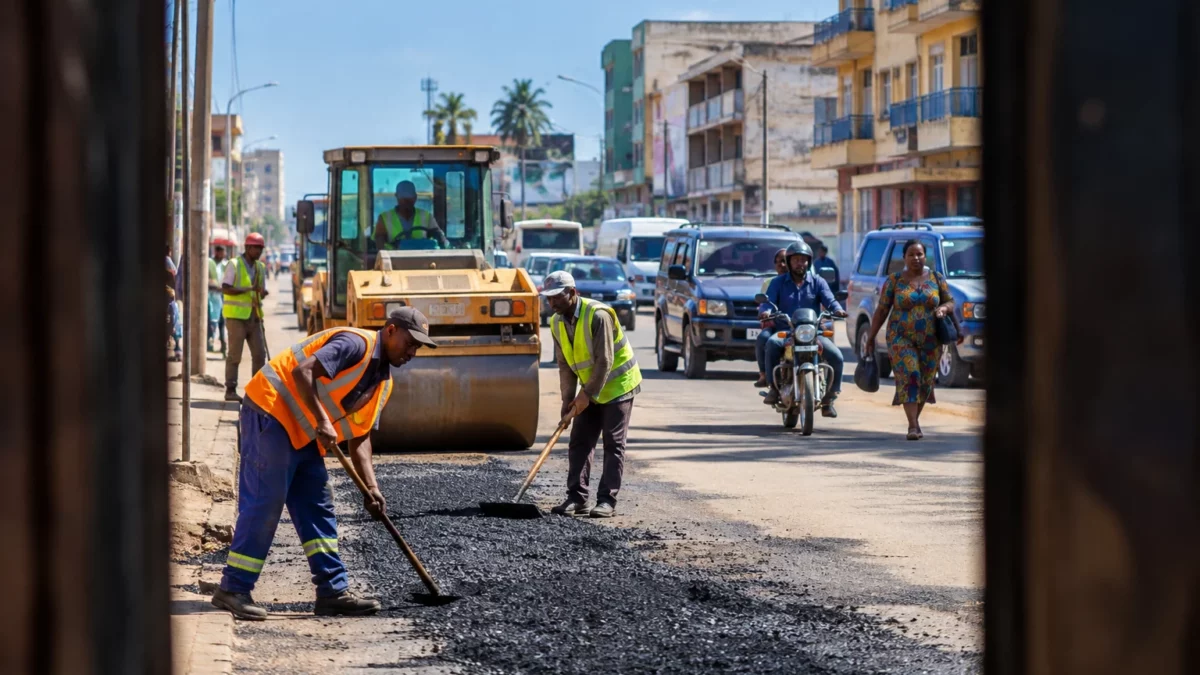
A road, a power line or a water network cannot be built on a promise of funding. In the Democratic Republic of the Congo (DR Congo), the debate is now also about how to prepare these projects, choose their partners and protect public finances.
The government wants to make greater use of public-private partnerships, or PPPs: long-term agreements in which a private company helps finance, build or operate public infrastructure. But attracting capital is not enough. The quality of contracts and the allocation of risks will affect the final cost for the state and users.
A development plan with considerable needs
The reference framework is the 2024-2028 National Strategic Development Plan (PNSD). The official document puts the estimated cost of planned measures over five years at $94.74bn. Predictable funding totals $50.55bn, or 53.4% of the overall amount. The plan therefore identifies a shortfall of $44.19bn.
Infrastructure and regional planning account for 33.89% of the PNSD’s needs. Transport, energy, water and communications are therefore central to the effort. These investments concern major economic routes as well as access to services in secondary cities and provinces. The official 2024-2028 PNSD document details the costs and planned funding.
This ambition comes in a country with extensive infrastructure needs and limited budgetary capacity. The plan already envisages mobilising the private sector, while also strengthening public resources and programme monitoring. It also recognises that project delivery remains a central challenge: financing a construction project does not guarantee it will be completed on time or meet local needs.
A bill accepted for consideration, not yet a law
On 16 November 2026, Guylain Nyembo, the Minister of State for Planning, presented a draft law on PPPs to the National Assembly. MPs declared it admissible the following day, according to Actualite.cd. This step opens parliamentary scrutiny; it does not mean the bill has been passed or has come into force. The parliamentary tracker TalaTala lists it as under consideration.
The bill aims to replace Law No. 18/016 of 9 July 2018. The proposed change covers the entire lifecycle of a project, from identification to oversight, rather than just the contract signed with a company. The text, which comprises 119 articles according to the parliamentary report, notably provides for prior financial assessment, more thorough preparation and stronger monitoring.
The government is also proposing a fund dedicated to project preparation. The aim is to present investors with better-defined proposals: available studies, estimated costs and clearly assigned responsibilities. The bill also provides for open tenders as the standard method of awarding contracts. Unsolicited proposals would remain possible, but the company making one would have no automatic right to the contract.
Attracting investors without shifting risks on to the public
A PPP can bring funding, technical expertise and the capacity to deliver. In return, the state may commit to future payments or provide guarantees. If these commitments are poorly assessed, the bill can weigh on budgets long after construction is complete. The reform therefore provides for assessing projects’ financial sustainability and publishing approved contracts, according to the parliamentary debate report.
The issue is all the more important because benefits and costs are not always distributed in the same way. A project that is profitable for an operator does not guarantee affordable services for households. Major corridors can facilitate the transport of goods, while remote communities risk being left out if contracts favour only the most lucrative routes. Tariffs, service obligations and oversight mechanisms will therefore need to be clear.
The role of Congolese companies is another concern. The bill announces measures to encourage their participation, local subcontracting and skills transfer. Their impact, however, will depend on the detailed rules, access to contracts and enforcement. Decentralisation also matters: in August 2026, the Congolese Press Agency reported that an expert had called for provinces and local authorities to be more closely involved in PPP projects. This debate highlights the importance of governance that extends beyond Kinshasa.
A reform to be tested over time
In scrutinising the bill, MPs will need to clarify who assesses financial commitments, who publishes contracts and how authorities oversee construction. Transparency does not depend on legislation alone: it requires accessible information, institutions capable of checking projects and penalties for breaches. The government says it wants to protect public finances and state assets; those safeguards will need to be reflected in the provisions passed and in their implementation.
The issue extends beyond national borders. DR Congo is a member of the Southern African Development Community (SADC), a regional co-operation bloc that focuses, among other things, on infrastructure and trade. Transport and energy projects can therefore affect cross-border links and trade corridors. But their regional impact will depend on their actual delivery, maintenance and alignment with the priorities of the Congolese people.
The next step is parliamentary: debates will need to turn the announced principles into precise rules. The test afterwards will not be the number of contracts signed. It will be the infrastructure actually delivered, the quality of services, the management of public commitments and the share going to local companies. For DR Congo, mobilising private capital could help close the PNSD funding gap; it does not remove the need for transparent budgetary choices or sustained public oversight.