
 Algeria
 Egypt
 Libya
 Morocco
 Sudan
 Tunisia
 Benin
 Burkina Faso
 Cabo Verde
 Côte d'Ivoire
 Ghana
 Guinea
 Guinea-Bissau
 Liberia
 Mali
 Mauritania
 Niger
 Nigeria
 Senegal
 Sierra Leone
 The Gambia
 Togo
 Cameroon
 Central African Republic
 Chad
 Equatorial Guinea
 Gabon
 Republic of the Congo
 São Tomé and Príncipe
 Burundi
 Comoros
 Djibouti
 Eritrea
 Ethiopia
 Kenya
 Madagascar
 Malawi
 Mauritius
 Mozambique
 Rwanda
 Seychelles
 Somalia
 South Sudan
 Tanzania
 Uganda
 Angola
 Botswana
 Eswatini
 Lesotho
 Namibia
 South Africa
 Zambia
 Zimbabwe
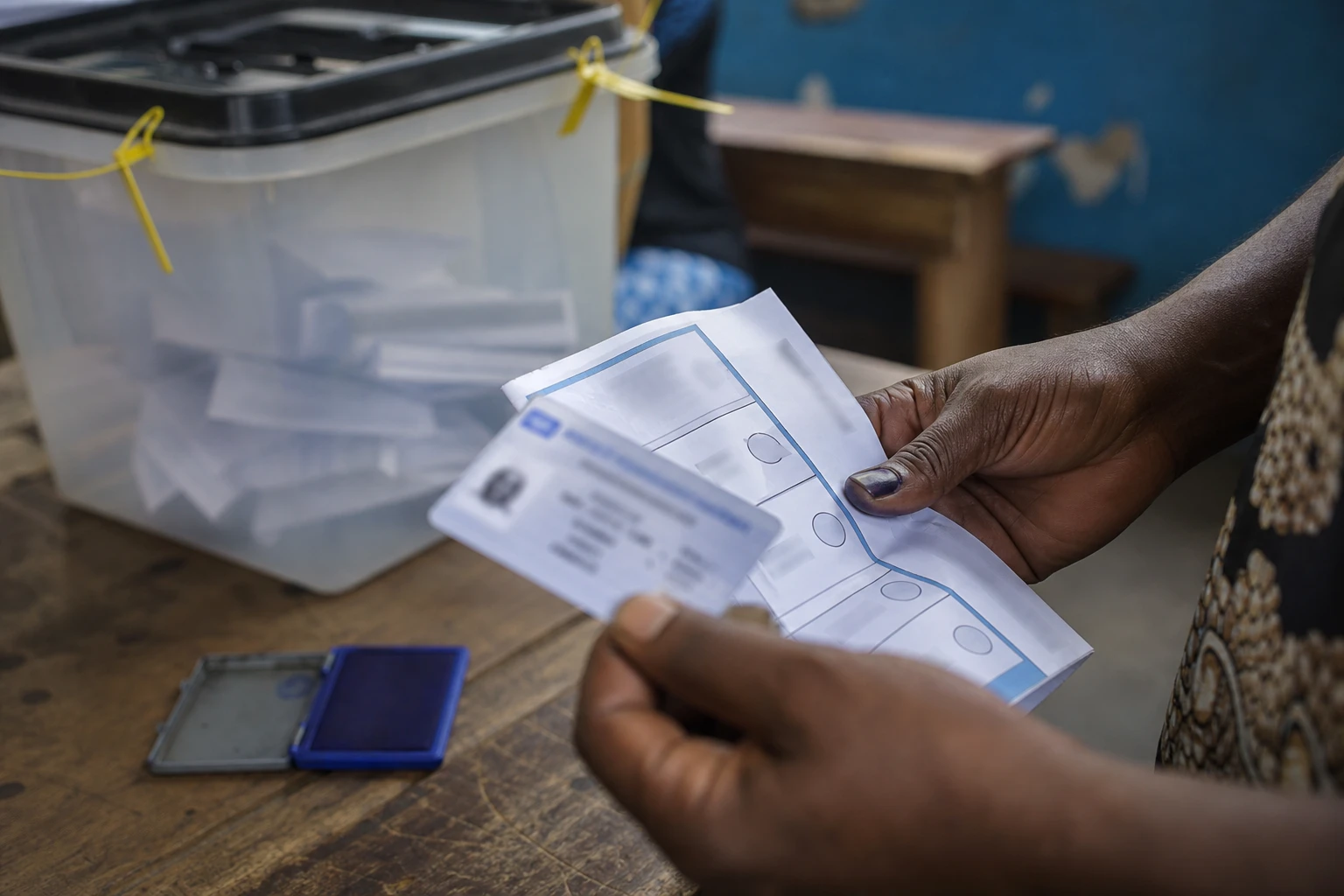
In Kinshasa, the constitutional debate is also part of daily life
In Kinshasa, discussion of a referendum law is no mere legal matter. It touches on the duration of power, trust in institutions and how Congolese people want to shape the country’s political future. In a capital where every crisis is felt keenly, many see the institutional timetable as a more tangible issue than a dispute over legal wording.
The Democratic Republic of the Congo remains a vast state, heavily exposed to security pressures in the east, tensions between the centre and the provinces, and strong demands for stability. The country also sits in regional forums where the Congolese question carries significant weight, from the Southern African Development Community to the East African Community, not to mention mediation efforts linked to the Great Lakes. In this context, any reform affecting central institutions quickly extends beyond Kinshasa alone.
A bill that revives questions over the presidential term limit
The heart of the debate lies in a clear rule: the Congolese Constitution provides for a five-year presidential term, renewable once only. It also stipulates that the Constitutional Court rules on disputes over referendums and reviews the constitutionality of laws before their promulgation. This is the foundation of opponents’ concerns as a bill on referendums advances through the institutions.
In recent weeks, Parliament has examined and adopted a bill setting out the conditions for organising a referendum, presented by the majority as a means of providing legal clarity. Congolese media have reported that the Senate continued examining the bill, while opposition and civil society figures saw it as a mechanism that could reopen the constitutional debate. The alarm is not abstract: it reflects a country whose political memory bears the imprint of crises sparked by institutional amendments seen as imposed.
Institutionally, the Constitutional Court has a central role. It can be asked to rule on whether a law complies with the Constitution, and it also adjudicates disputes over referendums. Its president, Dieudonné Kamuleta Badibanga, has publicly described the High Court as the guardian of this oversight, explaining the political significance of any ruling in this case.
In Kinshasa, popular support faces a wary opposition
In the capital, residents interviewed defended the bill in the name of stability, protecting the country and the need to “readjust” the institutions. This kind of argument often recurs when people hope the state will become more effective, particularly when insecurity, urban unemployment and governance difficulties fuel frustration. But public support is not enough to settle the constitutional debate. Above all, it shows that some Congolese associate reform with the idea of a stronger state, not necessarily with an individual staying in power.
By contrast, the opposition has taken to the streets and pursued legal remedies. In Kinshasa, a protest against the referendum law turned violent on 12 June 2026, according to several local and international sources, with injuries and clashes denounced by human rights organisations. The National Human Rights Commission subsequently met political leaders to document the incidents, a sign that the issue has moved beyond Parliament and is already affecting the management of public order.
President Félix Tshisekedi, who came to power in 2019 and was confirmed in office after the December 2023 election, says he is not seeking a third term. But at a press conference in May 2026, he also said he would accept one if “the people” wanted it. The remark has fuelled controversy because it leaves open the question of the institutional framework through which such popular will could be expressed.
What the reform would change, beyond the People’s Palace
The real issue is not only the possibility of holding a referendum. It is how the Democratic Republic of the Congo organises succession, term limits and the interpretation of popular sovereignty. If the government can rewrite the rules of the game without broad consensus, distrust can quickly take hold among parties, provinces and intermediary bodies. Conversely, if the debate remains governed by the law and constitutional oversight, the country may still avoid a lasting crisis of legitimacy.
For the leaders, the argument is one of institutional effectiveness, modernisation and overcoming deadlock. For the opposition, the risk runs deeper: that a technical bill could become an instrument for extending time in power. For the urban population, especially in Kinshasa, the question is even more immediate: if political debate monopolises public space, what room is left for social priorities, the cost of living, services and security?
This is therefore a sensitive moment. The DRC is entering a phase in which every word about the Constitution is viewed through the prism of power dynamics, popular expectations and crises in the east. Across the sub-region, the issue will be closely watched by Great Lakes partners, African mediation organisations and neighbouring states, because stability in the DRC directly influences the balance in Central and Southern Africa. What happens next will depend less on slogans than on how institutions in Kinshasa uphold the limits of the law and ensure a clear political timetable.



