Algeria
 Egypt
 Libya
 Morocco
 Sudan
 Tunisia
 Benin
 Burkina Faso
 Cabo Verde
 Côte d'Ivoire
 Ghana
 Guinea
 Guinea-Bissau
 Liberia
 Mali
 Mauritania
 Niger
 Nigeria
 Senegal
 Sierra Leone
 The Gambia
 Togo
 Cameroon
 Central African Republic
 Chad
 Equatorial Guinea
 Gabon
 Republic of the Congo
 São Tomé and Príncipe
 Burundi
 Comoros
 Djibouti
 Eritrea
 Ethiopia
 Kenya
 Madagascar
 Malawi
 Mauritius
 Mozambique
 Rwanda
 Seychelles
 Somalia
 South Sudan
 Tanzania
 Uganda
 Angola
 Botswana
 Eswatini
 Lesotho
 Namibia
 South Africa
 Zambia
 Zimbabwe
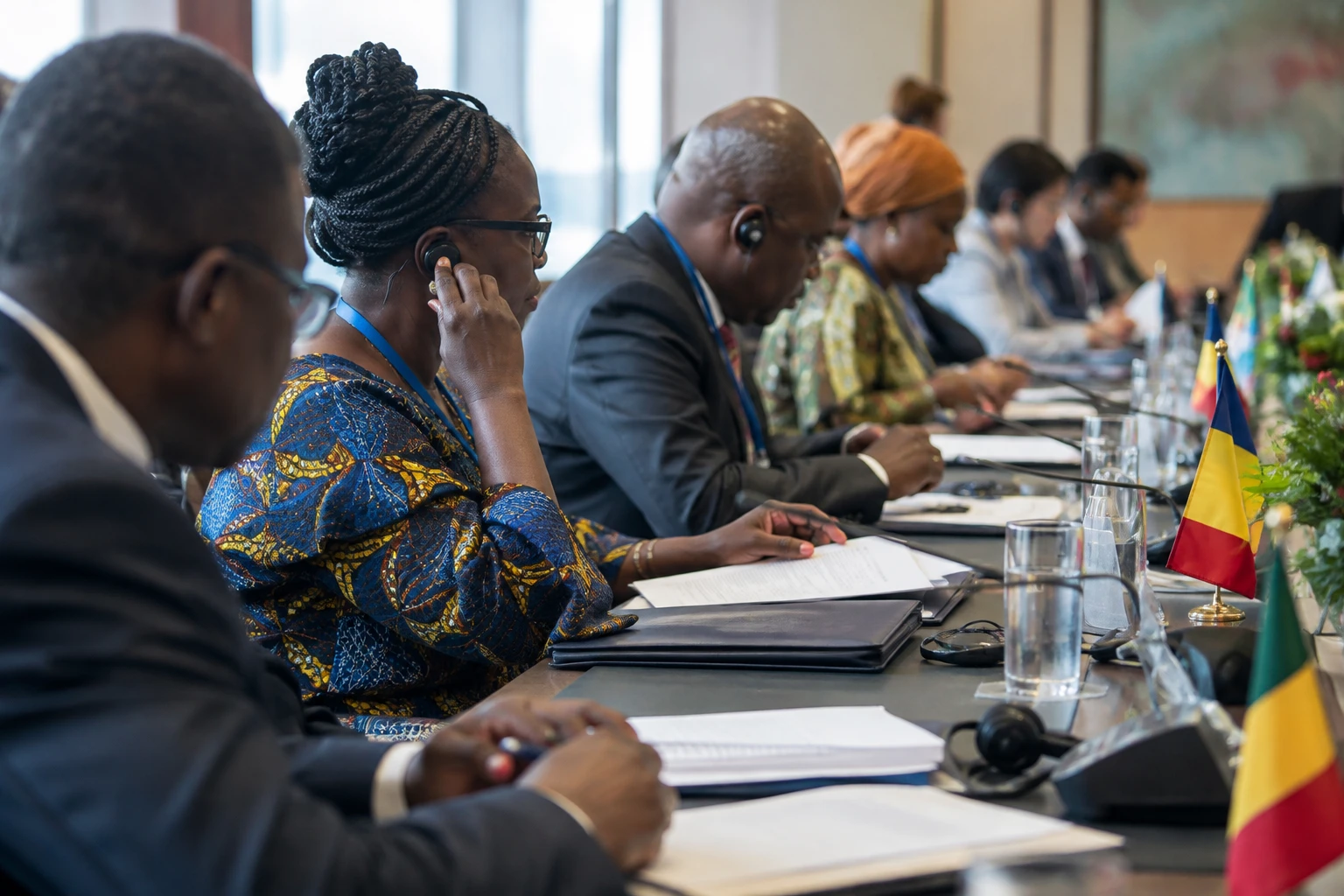
In Phnom Penh, the contest to lead the International Organisation of La Francophonie (OIF) is putting a rarely tested rule to the test: seek agreement first, then vote if no compromise emerges. On 14 November, the Democratic Republic of the Congo (DRC) announced that it was prepared to withdraw Juliana Lumumba from the race. But this opening alone does not guarantee a joint candidacy.
A process that can go to a vote
The 20th Francophonie Summit is being held on 15 and 16 November 2026 in the Cambodian capital. Heads of state and government are to designate, among other things, the person who will lead the OIF for the 2027-2030 term. The organisation brings together states and governments linked by the use of French and carries out political, cultural and educational cooperation initiatives.
Four people are competing: incumbent secretary-general Louise Mushikiwabo, put forward by Rwanda; Juliana Lumumba for the DRC; Coumba Bâ for Mauritania; and Dacian Cioloș for Romania. Under the rules announced by the OIF, consensus is the preferred option. If members cannot agree, a simple-majority vote is provided for. This is the first time the revised electoral procedure has been fully applied to this appointment. The electoral arrangements for the Phnom Penh summit specify that only the 53 full members take part in the choice.
Kinshasa offers to withdraw, but no agreement has been reached
At the end of the 48th Ministerial Conference of La Francophonie, a preparatory meeting for the summit, Congolese Foreign Minister Thérèse Kayikwamba Wagner announced that her country had informed member states of its readiness to withdraw Juliana Lumumba. The stated aim: to facilitate the emergence of a consensus candidate and avoid a vote that, in Kinshasa’s view, could deepen divisions.
The distinction matters. On 14 November, the DRC expressed its willingness to withdraw from the process in favour of a compromise; the announcement did not mean that all the candidates had withdrawn or that a new joint choice had been agreed. The Congolese minister’s statements confirm that Kinshasa presents its move as a concession and expects a comparable step from other states.
The DRC has also said it is ready to consider a joint approach around Dacian Cioloș, a former Romanian prime minister. He thanked Kinshasa for its support for his vision. This option does not, however, amount to an appointment: heads of state and government must decide in Phnom Penh, and the other candidacies remain decisive.
Rwanda, for its part, is standing by Louise Mushikiwabo’s candidacy and intends to see the process through, including to a vote if no consensus is reached. This disagreement highlights the limits of the Congolese initiative: a unilateral withdrawal is not enough to produce a compromise. Rwanda’s position is also reported in Actualite.cd’s coverage of the meeting.
An election shaped by Great Lakes tensions
The rivalry between Kinshasa and Kigali gives this succession significance beyond the OIF’s internal workings. The two countries disagree over the conflict in eastern DRC, where violence and regional power dynamics weigh on their diplomatic relations. In this context, the contest between two candidates associated with these states can be interpreted as an extension of their tensions, even though the arguments put forward by each delegation also concern the organisation’s cohesion and future.
The issue directly concerns Central Africa and the Great Lakes region. The DRC and Rwanda belong to several regional cooperation frameworks, including the East African Community and the Southern African Development Community. These organisations are not conducting the OIF election, but their diplomatic efforts and the situation between the two neighbours form the backdrop to the crisis of confidence.
For Kinshasa, supporting the principle of a compromise candidate may help prevent the vote from becoming a diplomatic duel. But the move also carries a domestic political cost: Juliana Lumumba’s candidacy represented the DRC’s presence in a major international contest. The minister described the choice as a sacrifice, while presenting the OIF’s cohesion as a priority.
The OIF’s credibility at stake
The issue is not limited to who will occupy the secretary-general’s office. The organisation must show that its rules can resolve competing candidacies without turning every disagreement between states into a lasting confrontation. A vote would comply with the announced mechanism, but its outcome could be politically contested by delegations that do not accept it. Conversely, a negotiated compromise would preserve the appearance of unity without erasing the differences that made it necessary.
The meeting is being held under the theme “Investing anew in peace for shared prosperity and lasting stability”. The summit is also due to adopt a declaration and a resolution on crises and peacebuilding. How leaders handle this election will therefore send a concrete signal about their ability to apply, within the OIF itself, the principles of dialogue set out in their texts.
The next milestone is the closed-door meeting of heads of state and government on 16 November. It remains to be seen whether the Congolese declaration prompts other withdrawals, whether Dacian Cioloș becomes the rallying point for an agreement, or whether the process ends in a vote. For both the DRC and Rwanda, the outcome will be watched beyond Phnom Penh: it will shed light on the role Great Lakes diplomacy intends to play in Francophone and continental institutions.