Algeria
 Egypt
 Libya
 Morocco
 Sudan
 Tunisia
 Benin
 Burkina Faso
 Cabo Verde
 Côte d'Ivoire
 Ghana
 Guinea
 Guinea-Bissau
 Liberia
 Mali
 Mauritania
 Niger
 Nigeria
 Senegal
 Sierra Leone
 The Gambia
 Togo
 Cameroon
 Central African Republic
 Chad
 Equatorial Guinea
 Gabon
 Republic of the Congo
 São Tomé and Príncipe
 Burundi
 Comoros
 Djibouti
 Eritrea
 Ethiopia
 Kenya
 Madagascar
 Malawi
 Mauritius
 Mozambique
 Rwanda
 Seychelles
 Somalia
 South Sudan
 Tanzania
 Uganda
 Angola
 Botswana
 Eswatini
 Lesotho
 Namibia
 South Africa
 Zambia
 Zimbabwe
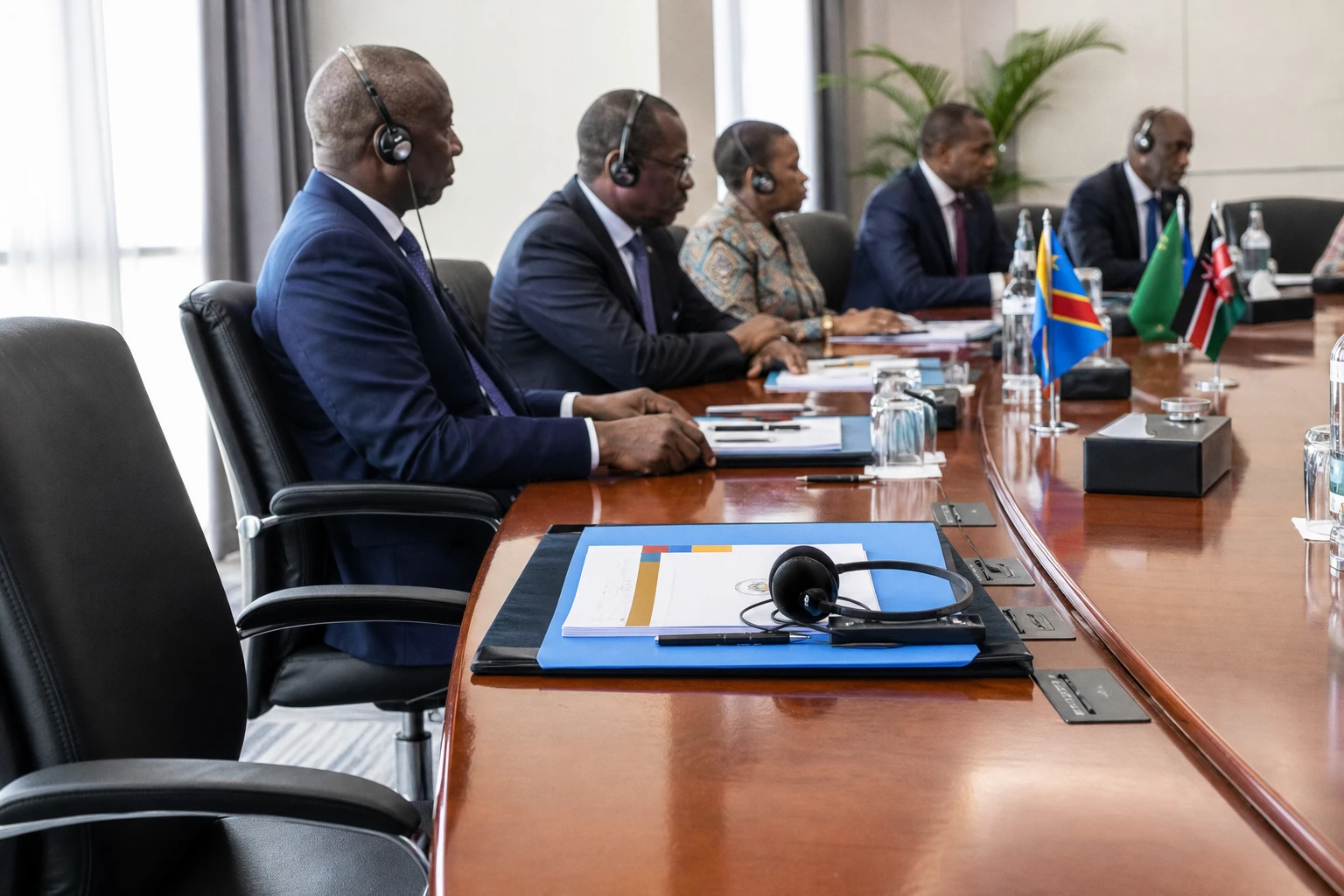
In Kinshasa, the debate over the Constitution goes beyond the political calendar
In the Congolese capital, the real issue is not just a piece of legislation. It is the place the Constitution will retain, or not, in a country where every revision is viewed through the prism of power, the streets and regional balances. In the Democratic Republic of the Congo, even the smallest institutional development can quickly become a battle over the future of the presidential term.
This development comes as the Democratic Republic of the Congo faces a period of heightened political and security tensions. In Kinshasa, debate over the referendum law has joined discussions on national dialogue, while the east of the country remains marked by war, population displacement and the lasting effects of insecurity. In this context, the constitutional question is no mere legal detail: it affects trust between institutions and the people they govern.
What the law says, and how political actors interpret it
The Congolese Constitution is clear on two central points. First, the president of the Republic is elected for five years, with only one possible renewal. Second, the republican form of the state and the principle of universal suffrage are among the provisions that cannot be amended. The text also states that sovereignty belongs to the people and is exercised, in particular, through referendums.
Within this framework, Parliament adopted a bill setting out the conditions for organising a constitutional referendum, before President Félix Tshisekedi referred it to the Constitutional Court for prior review. The head of state presented this move as a constitutional check, within the normal functioning of the institutions. But the Court subsequently said it had no jurisdiction to consider a petition filed before the text’s final adoption and before it had been transmitted for promulgation. In other words, it did not rule on the substance of the bill; it ruled on the admissibility of the petition.
It is precisely this ambiguity that is fuelling tensions. The ruling majority presents the referendum law as a technical framework intended to fill a legal gap around a procedure provided for in the Constitution. Voices close to the government argue that it is a routine parliamentary exercise and that the text contains no provision on the presidential term itself. The opposition, by contrast, sees it as a preliminary step towards more profound change, potentially opening a new institutional chapter.
C64 hardens its tone but sticks to political action
In response, the C64 coalition has decided to toughen its language while remaining within the bounds of civic protest. It maintains that no one may serve more than two presidential terms, citing Articles 70 and 220 of the Constitution. It has also set 15 August as a deadline for the convening of an inclusive national dialogue, failing which it says it reserves the right to announce further action.
The emergence at the forefront of Prince Epenge, a figure in the Lamuka coalition and C64 spokesperson, gives this episode broader significance than a simple reaction from opposition figures. He represents an opposition seeking to turn a legal controversy into political mobilisation. The choice is strategic. It shifts the debate from the language of lawyers to that of legitimacy, popular sovereignty and the exercise of power.
But this strategy also has its limits. In the DRC, the streets remain a powerful instrument, especially in Kinshasa, where any demonstration can quickly be interpreted as a test of strength. The opposition must therefore contend with a dual challenge: maintaining pressure without giving the government grounds to accuse it of destabilisation, and winning over a public already concerned about the economy, security and basic services.
A signal for all of Central Africa
Beyond Kinshasa, the affair resonates across Central Africa. In a region where constitutional transitions are often seen as barometers of stability, how the DRC handles the referendum debate will matter as much as the text itself. The country carries considerable weight in the Southern African Development Community, of which it is a member, and its political trajectory influences balances in the Great Lakes region as well as discussions at the African Union.
What happens next will depend on three concrete milestones: what follows the announced national dialogue, the political outcome of the referendum file after its passage before the Constitutional Court, and the institutions’ ability to prevent the controversy from turning into a street crisis. In the DRC, that is often where the heart of the problem lies: a procedure may seem technical, but it can quickly become a test of trust between the state and the people. It is this test, far more than a simple vote on a law, that is now playing out in Kinshasa.