
 Algeria
 Egypt
 Libya
 Morocco
 Sudan
 Tunisia
 Benin
 Burkina Faso
 Cabo Verde
 Côte d'Ivoire
 Ghana
 Guinea
 Guinea-Bissau
 Liberia
 Mali
 Mauritania
 Niger
 Nigeria
 Senegal
 Sierra Leone
 The Gambia
 Togo
 Cameroon
 Central African Republic
 Chad
 Equatorial Guinea
 Gabon
 Republic of the Congo
 São Tomé and Príncipe
 Burundi
 Comoros
 Djibouti
 Eritrea
 Ethiopia
 Kenya
 Madagascar
 Malawi
 Mauritius
 Mozambique
 Rwanda
 Seychelles
 Somalia
 South Sudan
 Tanzania
 Uganda
 Angola
 Botswana
 Eswatini
 Lesotho
 Namibia
 South Africa
 Zambia
 Zimbabwe
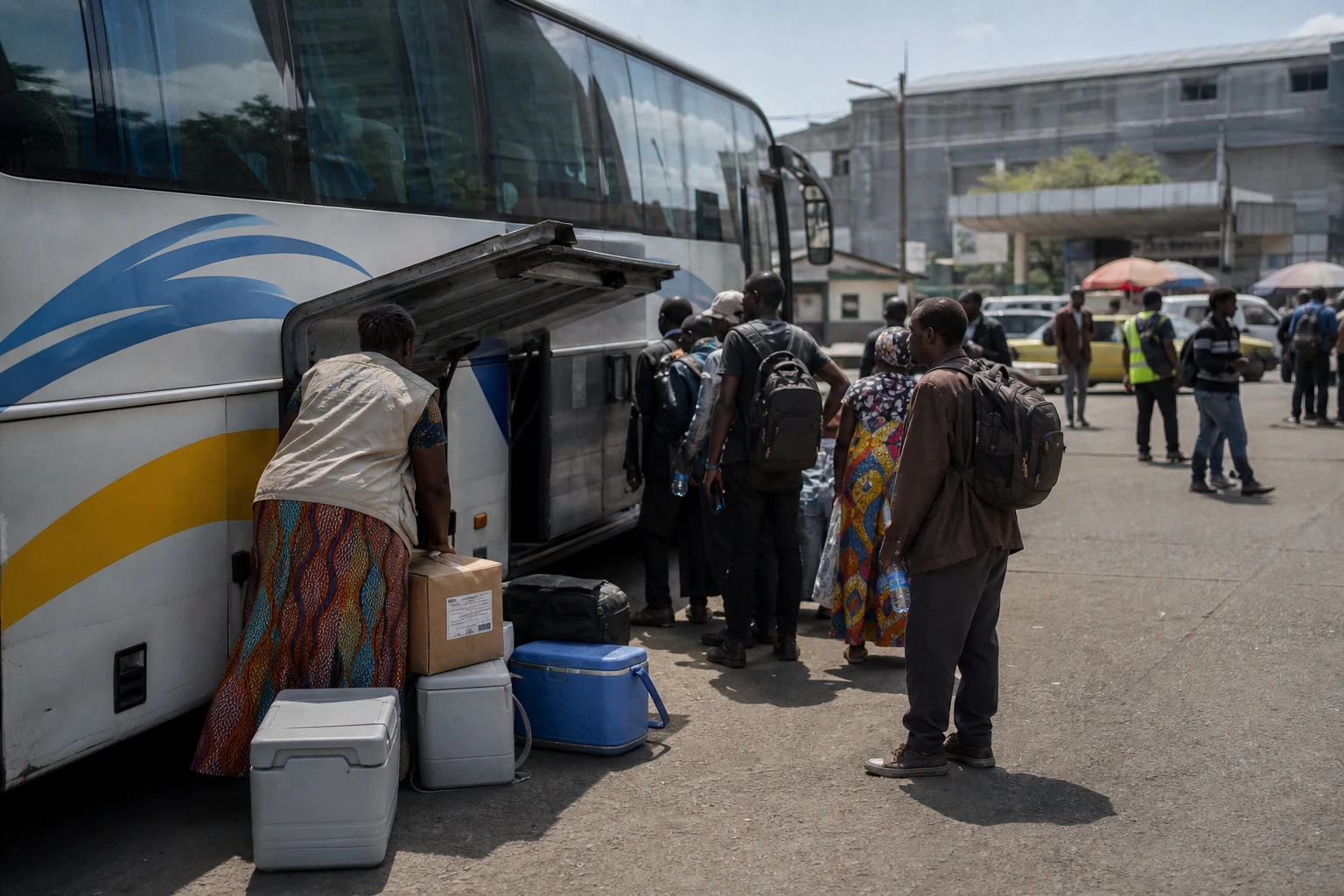
In Kinshasa and the eastern provinces, ceasefire announcements still run up against a brutal reality: weapons continue to displace people, while health and humanitarian emergencies unfold along the same fragile roads. Addressing the United Nations Security Council, a civil society representative from South Kivu called for diplomatic commitments to finally produce visible results for Congolese people.
Active diplomacy, but an unstable situation on the ground
On 29 September 2026, the Security Council considered the situation in the Democratic Republic of the Congo. James Swan, the UN secretary-general’s special representative and head of MONUSCO, described a series of diplomatic initiatives launched over recent months.
The Washington process deals mainly with security issues between the DRC and Rwanda. The Doha process brings together the Congolese government and the Congo River Alliance-March 23 Movement, known by the acronym AFC/M23. The African Union is also seeking to coordinate its own mediation efforts.
These efforts have produced a few signs of easing tensions. Talks between Kinshasa and AFC/M23 resumed in Switzerland in August 2026. They resulted in a roadmap for the next stages of negotiations. Fifteen detainees were also transferred by the International Committee of the Red Cross on 7 August.
The expanded joint verification mechanism, known as EJVM+, has now moved from political declaration to its first field operations. A mission visited Minembwe, in South Kivu, from 24 to 25 August. Another was deployed to Masisi, in North Kivu, from 10 to 12 September. MONUSCO provided the teams with transport, communications and medical support.
Yet these advances do not mean the fighting has stopped. James Swan reported continued clashes in Masisi and Walikale, in North Kivu. In the South Kivu highlands, government forces, Wazalendo groups and AFC/M23 remain engaged in fighting around several localities.
Civilians caught between fighting, parallel administrations and displacement
The use of heavy weapons and drones is worsening the impact on residents. It is causing new displacement and disrupting essential services. Humanitarian convoys must contend with blocked roads, areas controlled by multiple actors and security guarantees that are difficult to verify.
Addressing diplomats, Néné Bintou Iragi, president of the South Kivu Civil Society Office Coordination, summed up the gravity of the situation with a phrase that became the symbol of her intervention: “The east is no longer in crisis. It is in collapse.”
The civil society leader accused AFC/M23 of imposing a parallel administration in areas under its control. She said taxes were being collected from residents and targeted abuses committed against civilians. These allegations must be examined by the relevant investigative mechanisms, as the parties to the conflict offer opposing accounts of responsibility.
The crisis is not confined to the front lines. In several areas of North and South Kivu, farmers are struggling to reach their fields. Traders are seeing their routes shrink. Displaced families are increasingly dependent on urban markets, as incomes fall and prices rise.
The situation also remains tense in Ituri. The Allied Democratic Forces, affiliated with the Islamic State organisation according to the United Nations, continue to target civilians, mining sites and economic routes. This threat further complicates the movement of medical and humanitarian teams between Ituri and North Kivu.
Minerals at the heart of the balance of power
Néné Bintou Iragi placed the exploitation of natural resources at the heart of her analysis. In her view, the war is driven not only by military or community rivalries, but also by revenues from control of mining areas and trade routes.
The South Kivu representative called for the strengthening of the UN Group of Experts and the International Commission of Inquiry on the DRC. She also wants the economic networks financing armed groups to be targeted, beyond the military commanders alone.
Her intervention poses a practical question for companies that buy gold, cassiterite, coltan or wolframite. They must be able to demonstrate the origin of their supplies and publish their due diligence procedures. This requirement applies to foreign actors, as well as traders and regional networks that facilitate the export of minerals.
For Congolese people, the issue goes beyond commercial traceability. It concerns the state’s ability to collect mining revenues, secure mining areas and fund public services. In territories controlled by armed groups, illegal taxation deprives local authorities of resources and strengthens the de facto authority of military actors.
Ebola adds a health emergency to the security crisis
The Ebola outbreak is further complicating the situation. As of 26 September 2026, the Democratic Republic of the Congo had recorded 8,067 confirmed cases and 3,901 deaths, according to official health response data reported by Actualité.cd and corroborated by Anadolu Agency.
Ituri remains the epicentre of the outbreak. Cases have also been reported in North Kivu and several other provinces. The outbreak is linked to the Bundibugyo strain of the Ebola virus, which is different from the strain that caused the major outbreak in Kivu in 2018-2020.
Restricted mobility, insecurity and mistrust are complicating the work of health workers. Teams must obtain security guarantees before reaching certain areas. In Tshopo, stocks of frozen doses of the ERVEBO vaccine were also declared insufficient in several areas, according to the health bulletin cited by Actualité.cd.
This situation illustrates the cumulative effects of the crises. A health centre closed for lack of security can no longer treat patients. An impassable road slows the delivery of medicines. A displaced family may delay a consultation or abandon contact monitoring for fear of crossing a dangerous area.
Turning agreements into tangible protection
The UN’s revised 2026 humanitarian plan calls for $2.13bn to help 10.7 million vulnerable people. As of 28 September, it was only 50.5% funded, according to information presented to the Security Council.
This shortfall directly affects displaced people, as well as the communities hosting them. It weighs on food programmes, healthcare, education and access to water. Rural areas often bear a heavier burden, as public services are already less available there than in Goma, Bukavu or Bunia.
For Néné Bintou Iragi, a military response alone cannot resolve the crisis. She is advocating inclusive political dialogue, diplomacy and the rebuilding of trust. James Swan also stressed the need to turn the commitments made in Washington and Doha, and by the African Union, into measurable results.
The next step will therefore be verification. EJVM+ missions will have to document ceasefire violations. The Congolese authorities, AFC/M23, Rwanda and the mediators will have to respond to the reports produced. At the same time, MONUSCO will have to continue protecting civilians and facilitating humanitarian access, as its mandate reaches a decisive moment.
At the regional level, the crisis in eastern DRC directly concerns the East African Community, SADC, the International Conference on the Great Lakes Region and the African Union. It tests their ability to coordinate initiatives, monitor commitments and put people at the centre of peace processes.



